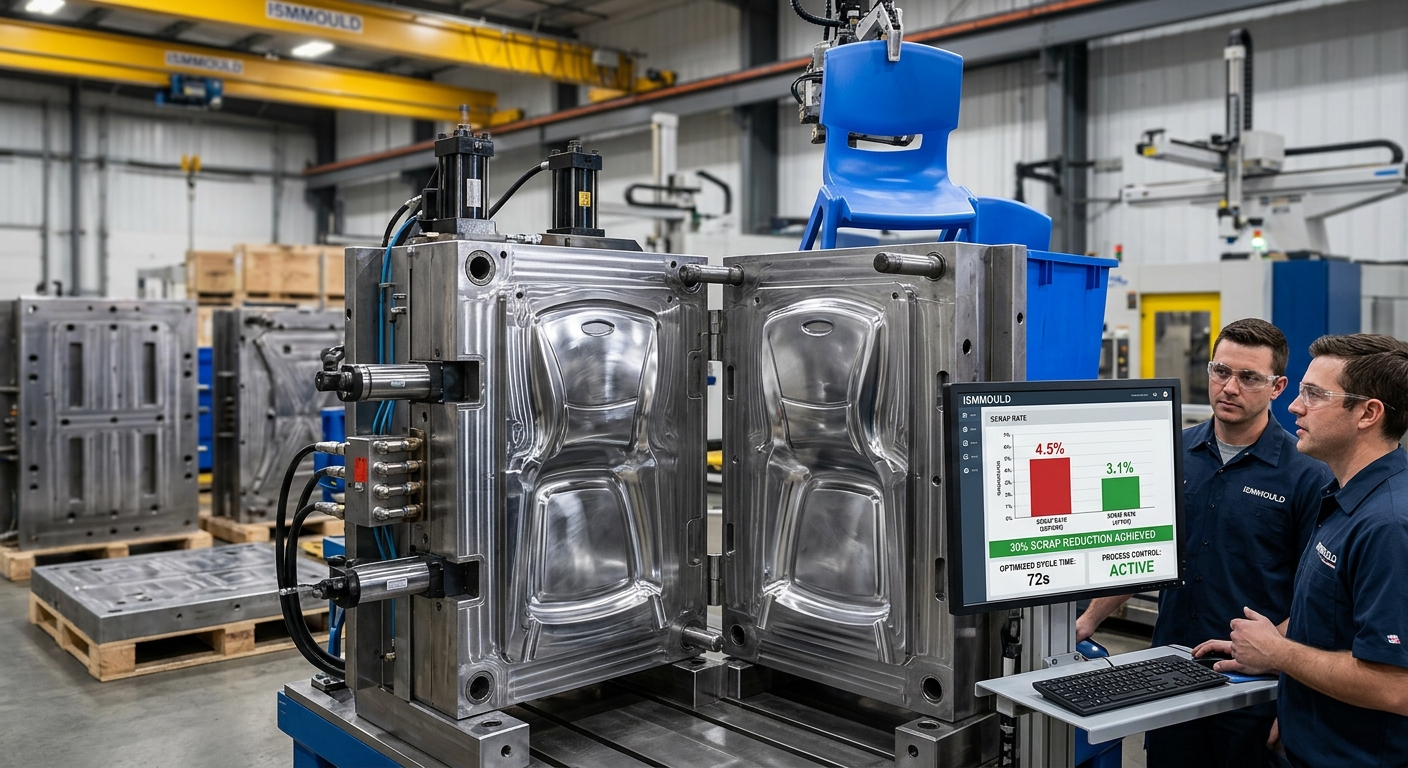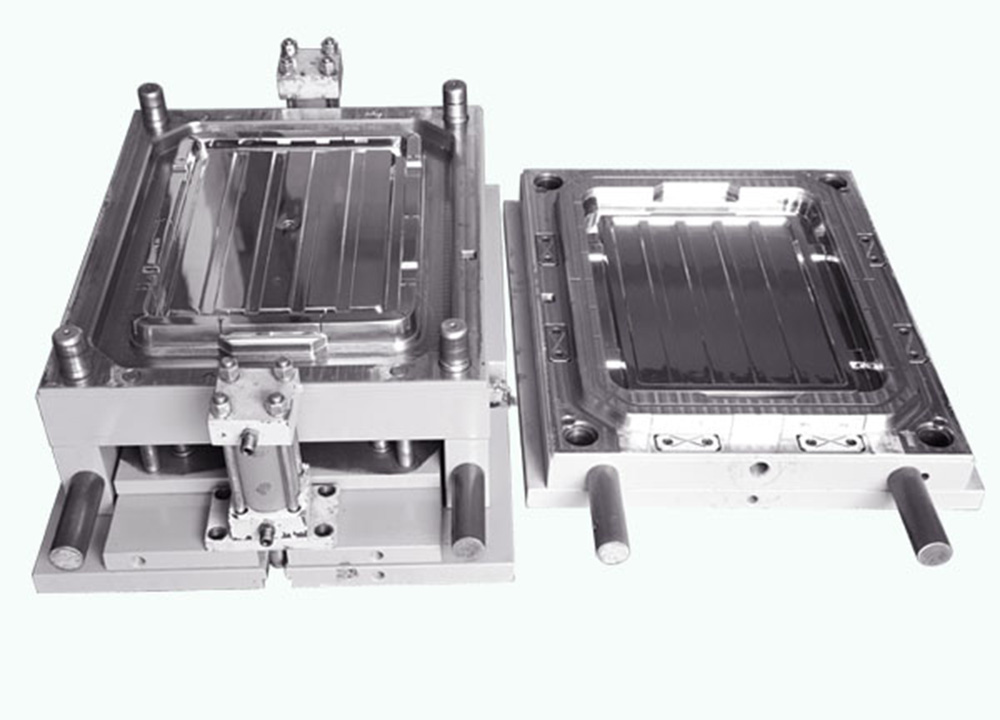

For many returnable containers and logistics crates, an anti-slip pattern on the top surface or handles is not optional—it's essential for worker safety, automated handling, and stacking stability. However, molding consistent, durable textures presents two major challenges: pattern uniformity across large surfaces and wear resistance over millions of cycles.
At ISM, we specialize in anti-slip pattern container molds that deliver sharp, even textures that last. Here's how we do it.
1. Why Anti-Slip Patterns Are Challenging to Mold
| Challenge | Description | Consequence of Failure |
|---|---|---|
| Non-uniform etching | Depth varies across large cavity surface | Some areas too aggressive, others too smooth |
| Wear during production | Abrasion from plastic flow and part ejection | Pattern fades, loses grip |
| Draft angle conflict | Deep patterns require more draft | May interfere with nesting function |
| Ejection difficulty | Texture increases part-to-cavity friction | Parts stick, require higher ejection force |
ISM's goal: A pattern that is uniform across the entire container, retains grip after 500,000+ shots, and does not compromise functionality.
2. Types of Anti-Slip Patterns ISM Offers
| Pattern Type | Best For | Grip Level | Wear Resistance |
|---|---|---|---|
| Diamond (woven) | General-purpose containers | High | Excellent |
| Convex dots | Light-duty totes, handles | Medium | Good |
| Linear ribs | Pallet tops, heavy loads | Very high | Excellent |
| Leather grain | Cosmetic + grip combination | Low-Medium | Moderate |
| Custom logo/text | Branded containers | Variable | Depends on depth |
ISM most popular: Diamond pattern (0.3–0.5mm depth, 2–3mm spacing) for best balance of grip, wear life, and moldability.
3. How ISM Achieves Pattern Uniformity
Method 1: Precision Chemical Etching
Chemical etching is the industry standard for mold textures. ISM works with certified etching partners to ensure:
| Parameter | ISM Specification |
|---|---|
| Depth tolerance | ±0.03mm across entire cavity |
| Pattern consistency | No visible variation between cavity and core |
| Edge definition | Sharp, no feathering |
| Repeatability | Same pattern on multiple cavities (multi-cavity molds) |
Process: Cavity surface is masked, chemically etched, then inspected under magnification.
Method 2: EDM Texturing (For Harder Steels)
When cavities are made from H13 or higher-hardness steel (common for high-volume molds), ISM uses EDM texturing:
Electrode machined with reverse pattern
Electrical discharge burns texture into cavity surface
Advantage: Extremely consistent depth, works on hardened steel (HRC 50+)
Method 3: Laser Texturing (Premium Option)
For the most demanding applications, ISM offers laser texturing:
| Feature | Benefit |
|---|---|
| Computer-controlled depth | ±0.005mm precision |
| No chemical waste | Environmentally friendly |
| Any pattern geometry | Unlimited design flexibility |
| Post-heat-treatment capability | Texture applied after hardening |
ISM recommendation: Laser texturing for high-volume molds (1M+ shots) or extremely complex patterns.
4. How ISM Ensures Wear Resistance
Patterns fade over time due to:
Abrasion from plastic flow (especially glass-filled materials)
Ejection friction as parts slide out
Cleaning with brushes or chemicals
ISM's Wear-Resistance Strategy
| Technique | Effect on Wear Life |
|---|---|
| Pattern applied after hardening | Texture in steel HRC 48–52, not soft steel |
| DLC coating over texture | Adds 8–12x wear resistance |
| Shallower pattern in high-flow areas | Reduces erosion at gate region |
| Smooth transition at pattern edges | No sharp steps to abrade |
ISM standard for high-volume anti-slip container molds: H13 cavity + AlTiN or DLC coating applied over the etched texture.
Coated vs. Uncoated Pattern Life
| Condition | Pattern Life (shots before visible wear) |
|---|---|
| Uncoated, P20 steel | 50,000–100,000 |
| Uncoated, H13 steel | 150,000–250,000 |
| H13 + AlTiN coating | 500,000–800,000 |
| H13 + DLC coating | 800,000–1,500,000 |
5. Design Considerations for Anti-Slip Patterns
Draft Angle
Textures increase the effective draft angle needed.
| Pattern Depth | Minimum Draft (without texture) | Minimum Draft (with texture) |
|---|---|---|
| 0.2 mm | 1.0° | 1.5° |
| 0.3 mm | 1.0° | 2.0° |
| 0.5 mm | 1.0° | 2.5–3.0° |
ISM rule: Add 0.5–1.0° of draft for every 0.1mm of pattern depth.
Pattern Location Strategy
| Location | ISM Recommendation |
|---|---|
| Top surface (full) | Diamond pattern, 0.3mm depth |
| Handles only | Convex dots or linear ribs, 0.4mm depth |
| Base (non-stacking surface) | No pattern needed (adds cost, no benefit) |
| Fork entry areas | Avoid pattern (reduces sliding friction for pallet jacks) |
Gate Placement Relative to Pattern
Gate placement affects pattern wear. Avoid placing gate directly over textured areas—high-velocity melt erodes texture faster.
| Gate Placement | Pattern Wear Risk |
|---|---|
| Away from texture (on smooth surface) | Low |
| Edge of textured area | Medium |
| Directly on texture | High (not recommended) |
6. Ejection Considerations for Textured Parts
Textures increase friction between part and cavity. ISM addresses this through:
| Solution | Benefit |
|---|---|
| Larger ejector pins | Distribute force over larger area |
| More ejector pins | Reduce stress on textured surfaces |
| Air-assist ejection | Break vacuum before pin contact |
| Stripper plate (for deep textures) | Even ejection force across entire part |
| Polished texture on ejection side | Texture on cavity only, not core (if possible) |
7. Pattern Measurement & Quality Control
ISM verifies pattern quality before mold shipment:
| Test | Method | Acceptance Criterion |
|---|---|---|
| Depth measurement | Laser profilometer | ±0.03mm of specification |
| Visual uniformity | 10x magnification inspection | No missing or blurred areas |
| Grip test | Coefficient of friction measurement | 0.5–0.8 (depending on application) |
| Sample part inspection | Mold 50 parts, inspect each | Consistent pattern transfer |
8. Case Study: Anti-Slip Pattern on 800×600mm Logistics Crate
Customer requirement: Diamond anti-slip pattern on top rim of 800×600mm crate. Material: Copolymer PP. Production: 600,000 parts/year. Pattern must remain effective for 3 years (1.8M shots).
ISM Solution
| Parameter | Specification |
|---|---|
| Pattern type | Diamond, 0.35mm depth, 2.5mm spacing |
| Cavity steel | H13 (HRC 52) |
| Texturing method | Laser texturing (after hardening) |
| Coating | DLC (2 microns) over entire textured surface |
| Draft angle | 2.5° on textured walls |
| Gate placement | 4-point hot runner on smooth side walls (away from texture) |
| Ejection | 12 ejector pins + air-assist |
Results
| Metric | Outcome |
|---|---|
| Pattern depth variation | ±0.02mm (across 600mm length) |
| Initial coefficient of friction | 0.72 |
| After 1,000,000 shots | 0.68 (still above customer requirement of 0.60) |
| Visual inspection at 1M shots | Pattern sharp, no visible wear |
Customer feedback: "Three years in production. The pattern still grips like new. No complaints from warehouse staff."
9. Common Pattern Problems & ISM Solutions
| Problem | Cause | ISM Solution |
|---|---|---|
| Pattern shallow in center | Etching uneven | Use EDM or laser texturing, not chemical |
| Pattern fading at gate | Melt erosion | Move gate away from texture, add coating |
| Parts sticking | Too much friction | Increase draft, add air-assist, polish core |
| Pattern inconsistent between cavities | Poor process control | Single etching/EDM setup for all cavities |
| Raised burrs on pattern edges | Over-etching | Reduce etch time, post-polish |
10. Maintenance Tips for Anti-Slip Pattern Molds
To maximize pattern life, ISM recommends:
| Action | Frequency | Why |
|---|---|---|
| Avoid steel brushes for mold cleaning | Always | Scratches pattern surface |
| Use plastic or brass tools only | Always | Prevents damage |
| Inspect pattern area during maintenance | Every 100,000 shots | Catch wear early |
| Re-coat if coating wears through | Every 500,000–800,000 shots | Restore wear protection |
Conclusion
A durable, uniform anti-slip pattern on a container mold requires the right combination of texturing method, steel hardness, coating, and design geometry. At ISM, we deliver anti-slip pattern container molds that provide consistent grip from the first shot to the millionth.
Whether you need diamond patterns for warehouse crates, custom logos for branded containers, or specialized textures for wet environments, ISM has the solution.
Contact ISM today to discuss your anti-slip pattern container mold project.