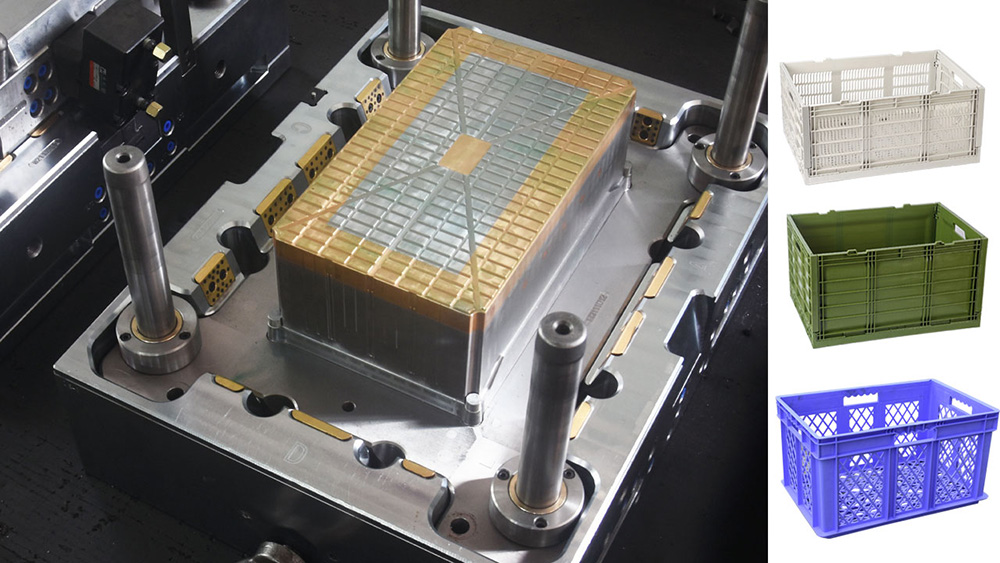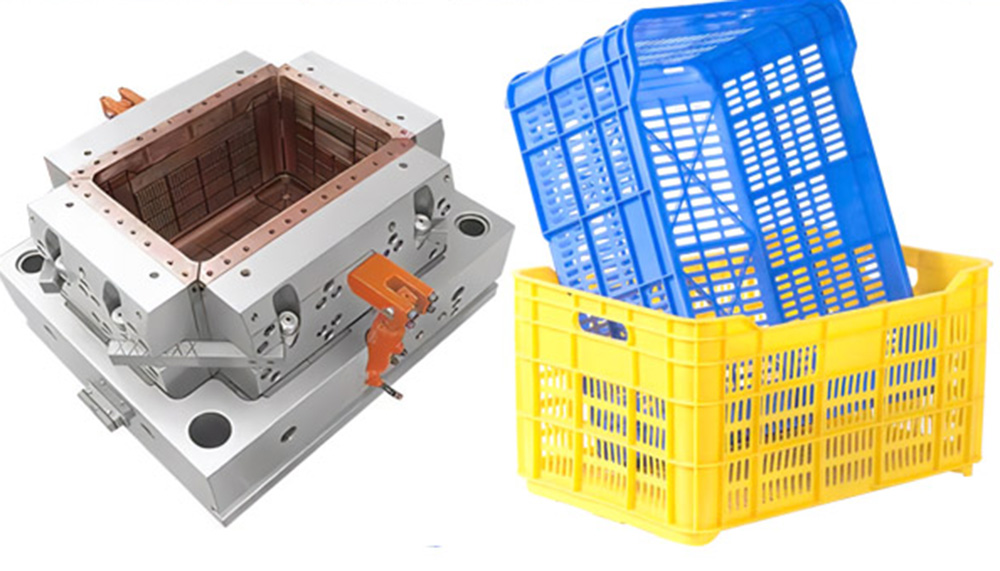

For most mold manufacturers, the focus remains on the final product—the mold itself. At ISM, we think differently. We believe that true value lies not just in the mold, but in how it is designed, produced, maintained, and upgraded over its entire lifecycle. That's why ISM applies modular design thinking to reshape plastic mold production processes. The result? Faster delivery, lower costs, easier maintenance, and greater long-term flexibility for our customers.
1. What Is Modular Design Thinking in Mold Manufacturing?
Traditional mold manufacturing treats every project as a one-off custom build. Every cavity, core, cooling line, and ejector system is designed from scratch. This approach is time-consuming, expensive to modify, and difficult to maintain.
Modular design thinking changes this by:
Breaking down a mold into standardized functional modules (e.g., base plate, cavity inserts, core inserts, cooling units, ejector assemblies).
Using interchangeable components across different mold families.
Allowing rapid reconfiguration for size variations or design updates.
Result: ISM delivers molds faster, with higher consistency and lower engineering redundancy.
2. How ISM Applies Modular Thinking Across Mold Types
A. Container Molds (Tote Boxes & Crates)
ISM designs container mold families with:
Interchangeable cavity inserts for different external dimensions (e.g., 300x200mm, 400x300mm, 600x400mm) using the same mold base.
Standardized wall thickness modules that maintain consistent shrinkage behavior.
Common cooling interface plates that connect to any injection machine.
B. Pallet Molds
For pallet mold production, modular thinking enables:
Swappable anti-slip pattern inserts (diamond, oval, custom logos) without rebuilding the entire cavity.
Replaceable wear plates in high-friction areas, extending mold life.
Modular runner systems for hot runner or cold runner conversion.
C. Chair Molds
In chair mold design, ISM uses:
Interchangeable seat and back inserts to create multiple chair models from one mold base.
Standardized hinge modules for folding chair applications.
Quick-change logo or texture inserts for customer branding flexibility.
3. Key Benefits of ISM's Modular Approach
| Traditional Mold Manufacturing | ISM Modular Mold Production |
|---|---|
| Long lead time (6–10 weeks) | Reduced lead time (3–5 weeks) |
| Costly full-mold modifications | Low-cost insert replacement only |
| Extended maintenance downtime | Quick swap of worn modules |
| One mold = one product | One mold base = multiple variants |
| High engineering cost per project | Engineering investment amortized across modules |
4. Faster Delivery Without Sacrificing Quality
Because ISM maintains a library of pre-engineered, pre-tested mold modules, we can:
Start CNC machining on standard base plates before final cavity design is complete.
Reduce design time by 30–40% per project.
Parallel-process multiple modules (base, cavities, cooling) for shorter overall production time.
Example: A recent customer needed two sizes of stackable containers. With modular design, ISM delivered both molds in 4 weeks—less than half the industry average.
5. Easier Maintenance & Lower Spare Parts Inventory
Modular molds are service-friendly molds. ISM customers benefit from:
Standardized spare parts (ejector pins, guide bushings, wear plates) shared across multiple molds.
Hot-swappable cavity inserts that can be replaced without disassembling the entire mold.
Clear module identification for fast troubleshooting and part ordering.
Result: Maintenance time reduced by up to 50%, and spare parts inventory costs cut significantly.
6. Future-Proofing Your Mold Investment
Product designs evolve. Market demands change. With a modular mold from ISM, you don't buy a completely new mold for every update. Instead, you:
Replace only the cavity insert for a new container depth or chair contour.
Add texture or logo updates with minimal cost.
Upgrade cooling performance by swapping cooling modules, not rebuilding the mold.
Result: Extended mold relevance and lower long-term tooling investment.
7. Sustainability Through Modular Thinking
Modular design is inherently more sustainable. By reusing mold bases and standardizing components, ISM reduces:
Steel consumption per new mold project.
Machining waste from repeated base plate production.
Shipping weight and volume for spare parts inventory.
Result: A smaller environmental footprint without compromising production performance.
8. Real-World Application: Family Mold for Multi-Size Totes
A logistics customer needed three different tote box sizes (300x200, 400x300, and 500x400mm). Traditional approach: three separate molds.
ISM's modular solution:
One common mold base with interchangeable cavity frames.
Shared cooling and ejector systems.
Each size produced by swapping only the cavity insert set.
Customer savings:
40% lower total tooling investment.
50% shorter total lead time.
One machine setup for all three sizes.
Conclusion – ISM Goes Beyond Manufacturing
At ISM, we don't just build molds. We build systems that make your plastic mold production faster, more flexible, and more cost-effective. By applying modular design thinking, we reshape plastic mold production processes to deliver reduced lead time, mold maintenance efficiency, and cost-effective tooling for container, pallet, and chair molds.
Whether you need a single mold or a family of tools, ISM's modular approach gives you more value—not just at delivery, but for years of production to come.
Contact ISM today to discuss how modular design thinking can transform your next mold project.