
Choosing the right mold for your plastic product is not a one-size-fits-all decision. A container mold, pallet mold, and plastic chair mold each have unique functional requirements, production volumes, and quality standards. Selecting the wrong design parameters can lead to warpage, short mold life, low output, or high rejection rates.
This mold selection guide from ISM walks you through the critical design parameters you must evaluate for each product type—so you can make an informed investment that delivers long-term value.
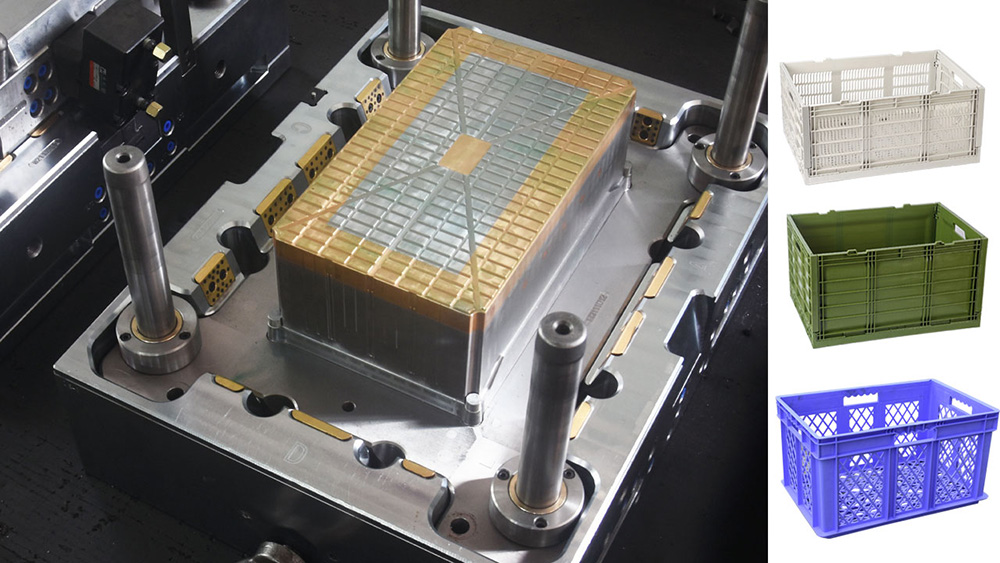
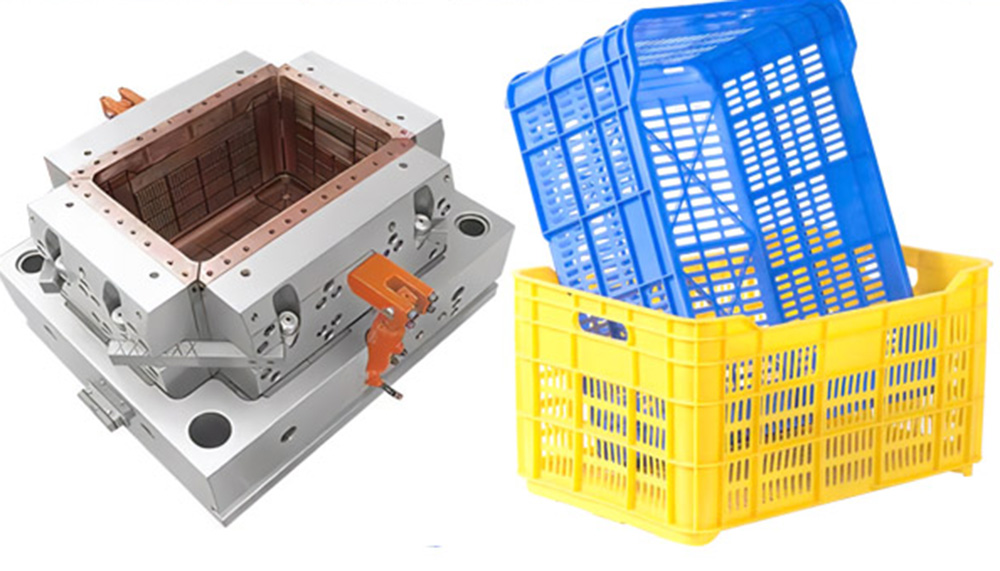
Part 1: Container Mold (Tote Box / Crate Mold) – Key Design Parameters
Containers are typically thin-walled, high-volume products requiring dimensional consistency and stackability.
1. Wall Thickness & Uniformity
Target: 1.5–3.0 mm, as uniform as possible.
Why it matters: Non-uniform walls cause differential shrinkage and warpage, affecting stackability and automated handling.
2. Shrinkage Rate
Typical values: PP 1.2–1.8%, HDPE 1.5–2.5%.
Action: ISM adjusts cavity dimensions based on material grade and flow direction.
3. Gate Location & Type
Preferred: Multi-point hot runner or fan gates along the long edge.
Avoid: Single small gate at center—leads to flow marks and weak weld lines.
4. Cooling System
Requirement: Conformal cooling channels near thin-walled areas.
Impact: Reduces cycle time (typically 15–30 seconds) and prevents hot spots.
5. Ejection System
Design: Large-diameter ejector pins or stripper plate for even push.
Risk: Insufficient ejectors cause part deformation during demolding.
6. Stacking & Nesting Features
Parameter: Precise rib geometry and draft angles (1–2°).
Consequence: Poor design leads to unstable stacking or jamming.
Part 2: Pallet Mold – Key Design Parameters
Pallets must withstand heavy dynamic loads, racking, and impact. Molds must be robust for long production runs.
1. Part Weight & Material Distribution
Typical range: 5–15 kg per pallet.
Challenge: Avoid sink marks on top surface while maintaining structural ribs underneath.
2. Rib Design for Load Capacity
Parameter: Rib height-to-width ratio ≤ 3:1, with base radius ≥ 0.5T (T = wall thickness).
Why: Thin, tall ribs cause filling difficulties and air traps.
3. Flatness Control
Acceptable tolerance: ±1.5 mm over 1200 mm length.
How ISM achieves it: Balanced cooling, symmetrical gate layout, and post-mold fixturing design.
4. Impact Resistance Zones
Critical areas: Corner feet, entry/exit edges.
Design solution: Local thickening (1.2–1.5x nominal wall) and flow leaders to avoid weld lines at high-stress zones.
5. Mold Steel Grade
Recommendation: P20 or 718H for 500k–1M cycles; H13 for glass-filled materials.
ISM standard: Vacuum heat-treated tool steel with anti-wear coating on sliding surfaces.
6. Anti-Slip Pattern Design
Parameter: Diamond or convex dot pattern, depth 0.3–0.8 mm.
Consideration: Too deep = difficult ejection; too shallow = poor grip.
Part 3: Plastic Chair Mold – Key Design Parameters
Chairs require aesthetic surfaces, ergonomic shapes, and structural strength under dynamic loads (e.g., leaning, sitting, stacking).
1. Surface Finish & Texture
Requirement: High-polish (SPI-A2) for visible surfaces; textured (MT-11010) for hiding flow lines.
ISM approach: Interchangeable texture inserts for design flexibility.
2. Draft Angles
Typical values: 2–3° on vertical side walls; 4–5° on deep ribs.
Risk: Insufficient draft causes scratching or part sticking.
3. Gate Placement for Aesthetics
Best practice: Submarine or tunnel gate on underside (seat bottom, leg underside).
Avoid: Gate on visible top surface unless post-machining is acceptable.
4. Rib & Boss Design for Strength
Parameter: Rib thickness = 0.5–0.7 x nominal wall; boss outer diameter = 2 x screw diameter.
Consequence: Oversized ribs create sink marks on the seating surface.
5. Cooling for Warpage Control
Challenge: Complex 3D shapes cool unevenly.
ISM solution: Conformal cooling with bafflers and bubbler tubes in tall legs and backrest areas.
6. Hinge & Folding Mechanism (for stacking/folding chairs)
Parameter: Living hinge thickness 0.2–0.4 mm with radius transitions.
Failure mode: Sharp corners cause hinge cracking after few cycles.
7. Mold Material for High Gloss & Wear
Recommendation: Stainless steel (S136) or NAK80 for cosmetic surfaces; P20 for structural areas.
ISM standard: Corrosion-resistant steel for high-humidity environments or regrind material use.
Quick Reference Comparison Table
| Design Parameter | Container Mold | Pallet Mold | Plastic Chair Mold |
|---|---|---|---|
| Typical wall thickness | 1.5–3.0 mm | 3–6 mm (variable) | 2.5–4.5 mm |
| Primary material | PP, HDPE | PP, HDPE | PP, ABS, PS |
| Most critical quality | Stackability, flatness | Load capacity, impact | Surface finish, strength |
| Cooling challenge | Thin-wall hot spots | Thick core cooling | 3D complex geometry |
| Gate type | Multi-point hot runner | Large fan or edge gate | Submarine or valve gate |
| Ejection method | Stripper plate or many pins | Large pins + air assist | Pins + stripper ring |
| Expected mold life (shots) | 500k–1M | 500k–800k | 300k–500k (cosmetic) |
| Draft angle (min.) | 1–2° | 2–3° | 2–3° (3–5° for ribs) |
Final Checklist Before Choosing Your Mold
Ask your mold supplier (and yourself) these questions:
For containers: Will the mold maintain flatness after 100,000 cycles? Is cooling designed for thin-wall speed?
For pallets: Can the mold handle glass-filled material if needed? Are high-impact zones reinforced?
For chairs: Is the gate hidden from visible surfaces? Will cooling prevent sink marks on the seating area?
At ISM, we answer these questions with engineering data, simulation reports, and real-world case studies. Every mold selection guide we provide is tailored to your specific production environment.
Conclusion – Choose ISM for Parameter-Perfect Molds
Understanding container mold design parameters, pallet mold specifications, and plastic chair mold features is the first step toward a successful tooling investment. The second step is partnering with an experienced manufacturer who applies these parameters correctly.
ISM delivers molds engineered for your product's unique demands—whether you need high-speed thin-wall containers, heavy-duty pallets, or aesthetically perfect chairs.
Contact ISM today for a personalized mold consultation. Let us help you select the right design parameters from the start.