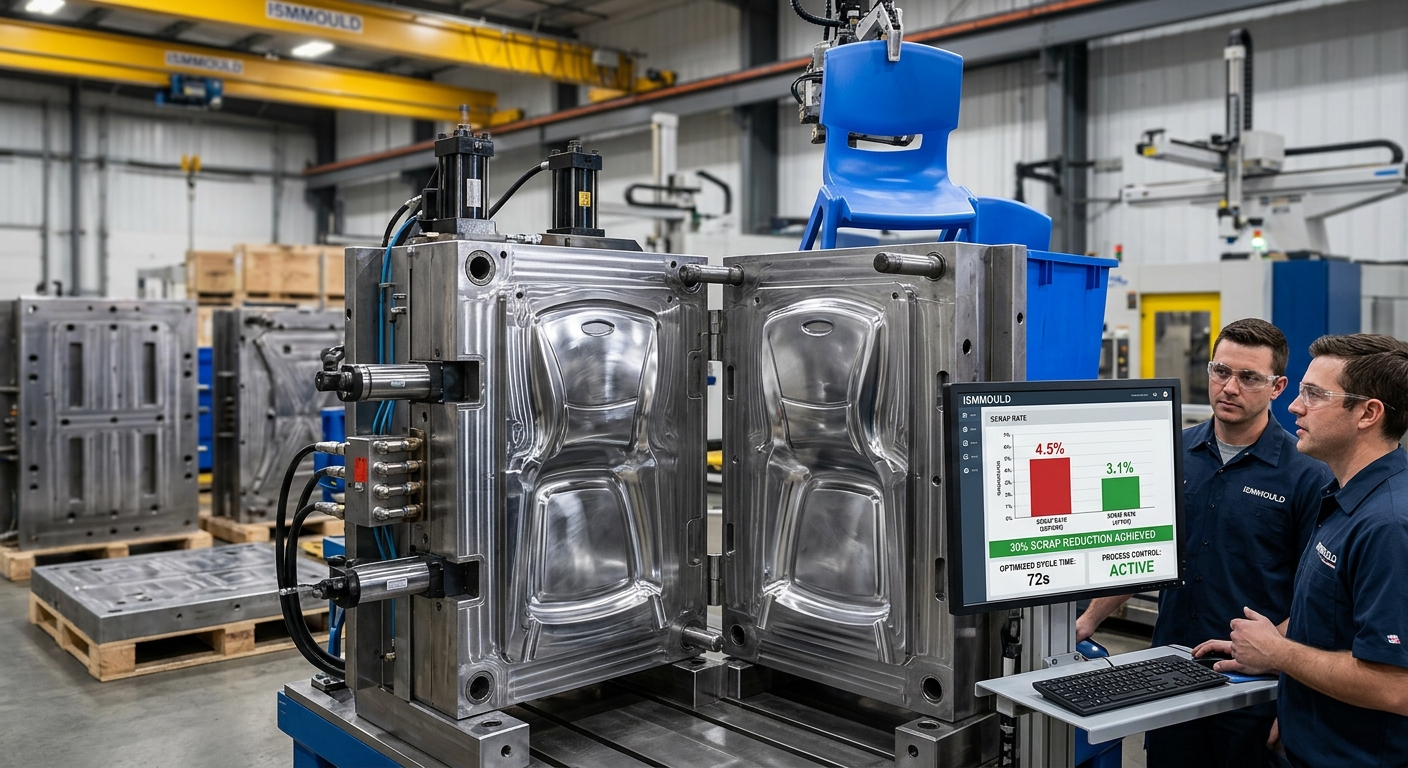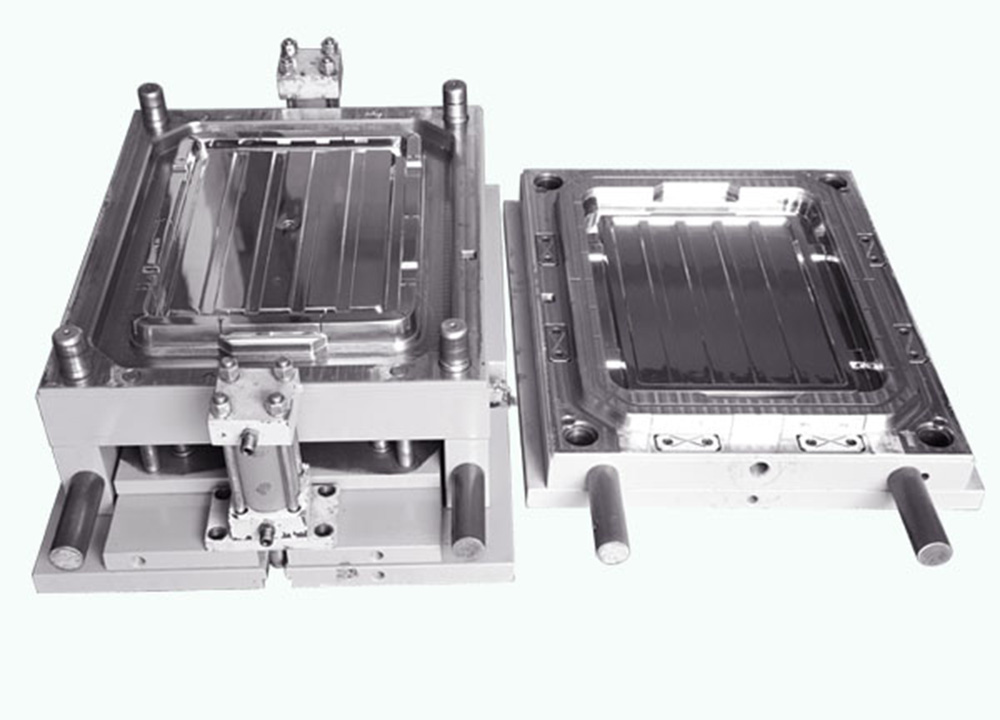

A successful mold trial is the foundation of a smooth production launch. Yet many customers skip critical pre-trial checks and discover problems only after the mold is mounted on the machine — wasting time, material, and money.
At ISM, we provide every customer with a practical pre-trial checklist to ensure your mold trial runs efficiently and delivers reliable results. Here is our recommended step-by-step guide.
1. Before the Mold Arrives at Your Facility
| Check Item | Action | Why It Matters |
|---|---|---|
| Machine specifications verified | Confirm clamping force, tie-bar distance, ejector stroke, and nozzle tip match the mold design | Prevents fitment issues |
| Material ready | Have raw material (virgin or recycled) on hand with drying completed as required | Avoids delays waiting for material prep |
| Auxiliary equipment ready | Water supply, hydraulic units, and electrical connections prepared | Ensures smooth hookup |
| Installation team briefed | Team understands mold weight, lifting points, and handling instructions | Prevents safety incidents |
2. Visual Inspection Before Installation
| Check Item | Action | Why It Matters |
|---|---|---|
| Shipping damage | Inspect crate and mold for dents, rust, or shifted components | Avoids installing a damaged mold |
| Identification marks | Confirm mold number and cavity markings match your records | Ensures correct tooling |
| Surface condition | Check polished surfaces and parting lines for scratches or debris | Prevents surface defects on parts |
| Cooling ports | Verify water ports are clean and free of blockages | Ensures proper cooling flow |
| Electrical connections | Check sensors, thermocouples, and switches for visible damage | Prevents sensor failure during trial |
3. Pre-Installation Cooling System Check
| Check Item | Action | Why It Matters |
|---|---|---|
| Water flow direction | Confirm inlet/outlet markings and connect accordingly | Reverse flow reduces cooling efficiency |
| Water pressure | Verify cooling circuit pressure matches mold specifications | Prevents leaks or insufficient flow |
| Water quality | Use filtered, softened water to prevent scale buildup | Extends cooling channel life |
| Leak test | Pressurize cooling circuits and check for leaks | Prevents water damage to mold or machine |
4. Installation into the Injection Molding Machine
| Check Item | Action | Why It Matters |
|---|---|---|
| Crane capacity | Ensure crane or hoist can handle mold weight | Prevents safety hazards |
| Lifting points | Use designated lifting eye bolts only | Maintains safe, balanced lifting |
| Tie-bar clearance | Slide mold between tie bars without forcing | Prevents mold or machine damage |
| Locating ring alignment | Center mold on machine platen | Prevents nozzle misalignment |
| Clamp force verification | Confirm clamp force setting matches mold design | Prevents flash or short shots |
| Ejector rod alignment | Align ejector rods with mold ejection holes | Prevents binding or pin damage |
5. Hook-Up and Function Checks
| Check Item | Action | Why It Matters |
|---|---|---|
| Cooling connections | Connect all water lines per the mold's diagram | Ensures proper temperature control |
| Hydraulic connections | Connect core pulls or valve gates (if applicable) | Enables demolding functions |
| Electrical connections | Connect sensors, thermocouples, and limit switches | Provides real-time process data |
| Ejector test | Manually cycle ejector plate to verify full stroke | Prevents part sticking or damage |
| Core pull test | Cycle side actions or lifters to verify smooth movement | Confirms demolding mechanism works |
6. Material Preparation for Trial
| Check Item | Action | Why It Matters |
|---|---|---|
| Material drying | Dry material per supplier recommendations (especially for recycled or hygroscopic materials) | Prevents surface defects, degradation |
| Hopper loading | Load material into hopper, verify it feeds correctly | Avoids feed interruptions |
| Regrind content (if used) | Confirm regrind ratio matches mold design assumptions | Maintains consistent melt flow |
| Color verification | Confirm colorant is added in correct proportion | Prevents color mismatch |
7. Process Parameter Setup
| Check Item | Action | Why It Matters |
|---|---|---|
| Melt temperature | Set barrel zone temperatures per material spec | Prevents degradation or poor flow |
| Mold temperature | Set cooling water temperature per design recommendation | Ensures proper cooling and cycle time |
| Injection speed | Start low, gradually increase to avoid overfill or jetting | Prevents flash or short shots |
| Injection pressure | Set within recommended range | Balances fill quality and clamp force |
| Holding pressure and time | Set for dimensional stability and sink prevention | Prevents warpage or voids |
| Cooling time | Set based on mold design simulation | Avoids premature ejection |
| Back pressure | Set for proper melt homogenization | Ensures consistent shot weight |
8. First Shot and Short Shot Sequence
| Step | Action | What to Check |
|---|---|---|
| 1. Short shot at 50% fill | Run partial shot with low injection pressure | Melt front progression, gate fill pattern |
| 2. Short shot at 75% fill | Increase fill gradually | Weld line location, air traps |
| 3. Full shot | Complete injection cycle | Flash, short shots, part ejection |
| 4. Visual inspection | Check the first full part | Sink marks, gate vestige, surface defects |
| 5. Dimensional check | Measure critical dimensions | Compare to print or cavity dimensions |
9. What to Watch For During the Trial
| Issue | What to Do |
|---|---|
| Part sticks in cavity | Check ejector system, increase draft, reduce cooling time |
| Burn marks | Increase venting, reduce injection speed |
| Flash | Reduce clamp force? (Check clamp force first); check parting line for debris |
| Short shots | Increase injection speed or pressure; check gate or vent blockages |
| Sink marks | Increase holding pressure or increase cooling; check gate sizing |
| Warpage | Adjust cooling balance or holding pressure profile |
10. Post-Trial Checklist
| Check Item | Action | Why It Matters |
|---|---|---|
| Part samples | Label and save parts from each cavity with date and run conditions | Provides baseline for future runs |
| Trial report | Document all process settings used and any issues encountered | Aids future troubleshooting |
| Mold cleaning | Clean all surfaces, purge barrel, and remove material residue | Prevents contamination for production |
| Cooling lines | Flush cooling lines after trial | Prevents scale or corrosion |
| Storage preparation | Apply anti-rust protection and prepare mold for storage if not running immediately | Extends mold life |
Conclusion
A well-executed mold trial starts before the mold reaches your machine. By following this pre-trial checklist, you can avoid common pitfalls, reduce trial time, and move quickly into stable production.
At ISM, we stand by our molds — and our customers. Every mold we ship includes a pre-trial checklist and a dedicated contact to support your trial.
Contact ISM today if you have questions about preparing for your mold trial. We are here to help.