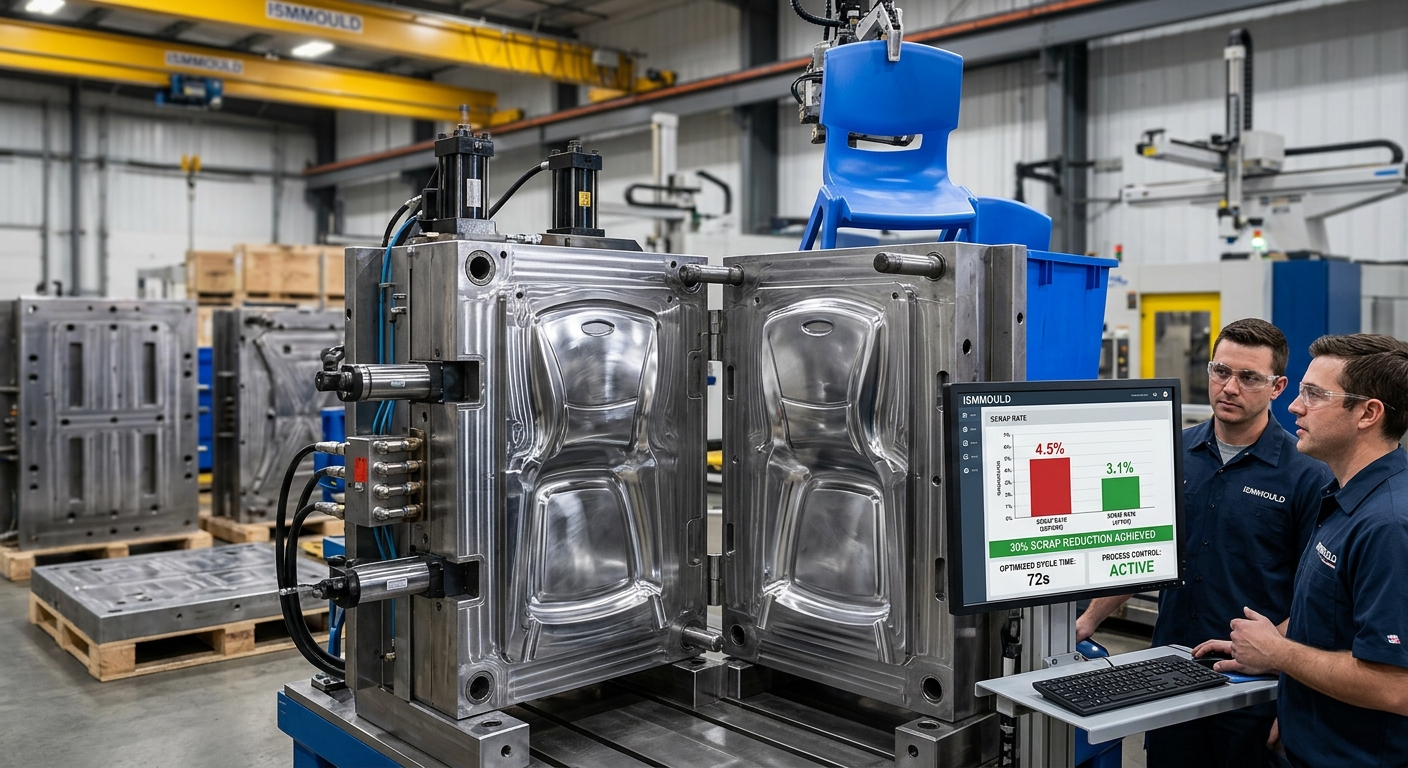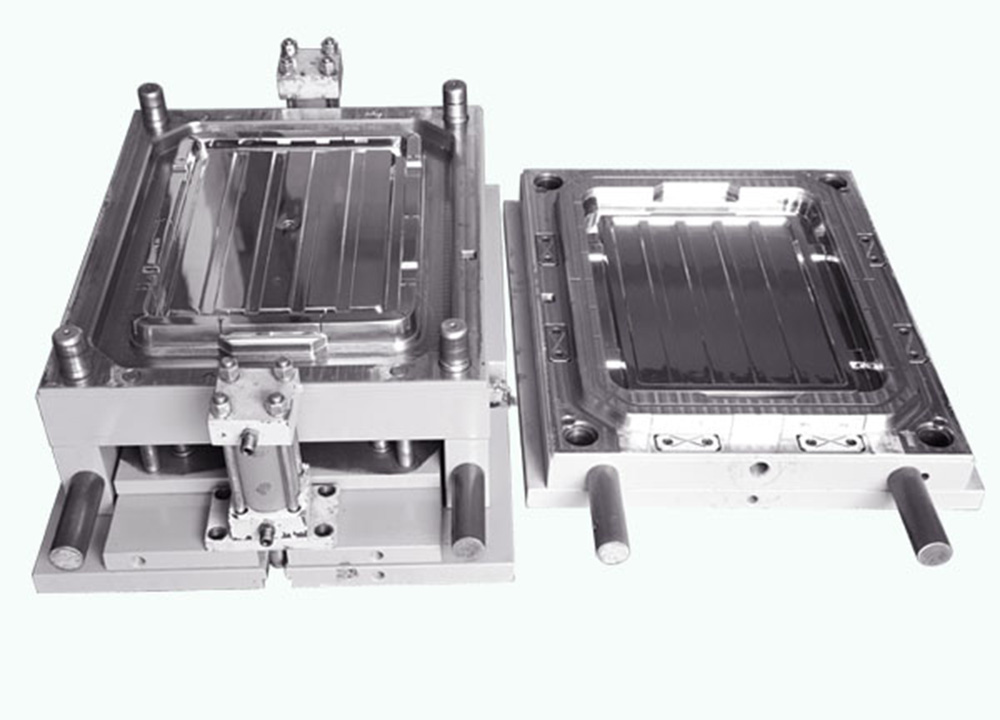

Large injection molds—especially those for pallets, large containers, and heavy chairs—can weigh several tons. Their sheer size and weight make transport and installation a significant challenge for customers who may not have specialized handling equipment or experienced personnel on site. Every hour spent maneuvering a heavy mold into a press is an hour of lost production.
At ISM, we design not only the mold for performance, but also the entire delivery and installation experience for simplicity. Here is how we simplify on-site work for our customers.
1. Transport: Preparing the Mold for Safe Arrival
The journey from our factory to your production floor begins with proper transport preparation. A large mold that shifts during shipping can arrive damaged, misaligned, or with compromised precision surfaces.
ISM Transport Preparation:
ISM's commitment: Every large mold ships with a detailed transport and handling guide. We coordinate with freight forwarders to ensure correct container selection—typically 40-foot standard containers for large molds, or open-top/frame containers for oversized tools.
2. Lifting and Positioning: Designed for On-Site Handling
Even before the mold arrives, we consider how it will be handled at your facility. Not every factory has a 10-ton overhead crane. ISM designs large molds with practical handling features.
ISM Design Features for On-Site Handling:
Practical tip: For facilities without overhead cranes, ISM can recommend roller-assisted installation methods—similar to the approach used in other industries where cylindrical rollers are placed beneath the mold to slide it into position along guide rails or tracks.
3. On-Site Installation: A Step-by-Step Process
When a large mold arrives at your facility, ISM provides clear, job-site-ready documentation to guide your team through installation.
ISM Installation Documentation:
| Document | What It Contains |
|---|---|
| Installation manual | Step-by-step instructions with diagrams for lifting, positioning, and connecting the mold |
| Connection diagram | Cooling water, hydraulic, and electrical connection points clearly marked |
| Torque specifications | Required torque values for all clamp bolts and connection fittings |
| Pre-installation checklist | Verification steps before the mold is mounted (cooling line flush, clamp force verification, safety checks) |
| Troubleshooting guide | Common installation issues and resolutions |
Optional ISM service: For customers without in-house installation expertise, ISM can arrange on-site technician support to oversee or perform the installation, ensuring correct alignment with the machine's tie bars, nozzle, and ejector system.
4. Installation Best Practices (Included in Every Manual)
Based on standard industry practices, ISM's installation guidance covers the following critical areas:
5. Common Installation Pitfalls (and How ISM Prevents Them)
| Pitfall | ISM Prevention |
|---|---|
| Crane capacity insufficient | Mold weight clearly marked; recommended lifting equipment specified |
| Mold does not fit between tie bars | Tie-bar clearance verified before design; machine specifications collected at project start |
| Cooling connections misidentified | Color-coded connections and clear diagrams in the manual |
| Ejector stroke mismatch | Ejector stroke requirement verified and matched to machine capability |
| Alignment issues | Guide posts and locating rings designed to machine standard (e.g., DIN, JIS, SPI) |
6. Quick Mold Change (QMC) Integration
For customers requiring frequent mold changes, ISM can integrate Quick Mold Change (QMC) interfaces:
| QMC Feature | Benefit |
|---|---|
| Standardized locating rings | Same reference point for every mold, reducing alignment time |
| Quick-connect water manifolds | Single-point connection for all cooling lines instead of individual hoses |
| Electrical plug connectors | Sensor and switch connections consolidated into one plug |
| Mold preheating capability | Mold arrives on press at operating temperature, reducing warm-up time |
Example: A standard large mold installation might take 4–6 hours. With QMC features, this can be reduced to under 1 hour for dedicated quick-change setups.
Conclusion
Large mold transport and installation doesn't have to be a headache. At ISM, we treat on-site handling as an extension of our mold design process—considering lifting points, transport logistics, clear documentation, and optional on-site support.
The result is a mold that arrives safely, installs smoothly, and starts producing quality parts faster—with less downtime and fewer headaches for your team.
Contact ISM today to discuss your large mold project. We will provide transport and installation planning as part of our comprehensive service package.