How to Select the Right Steel Material for Crate and Pallet Molds Based on Production Volume
Technical Strategy Paper by ISMMOULD — Global Turnkey Authority for High-Performance Pallet Molds, Plastic Crate Molds, and Plastic Chair Molds
Executive Summary
In heavy-duty industrial injection molding, tool steel selection is the most critical factor determining initial capital expenditure (CAPEX) and long-term return on investment (ROI). Large-format packaging assets, such as high-density polyethylene (HDPE) logistics pallets and multi-use polypropylene (PP) crates, exert immense mechanical and chemical wear on mold cavities. Choosing a steel grade that is over-engineered increases upfront blocks cost unnecessarily, while an under-engineered grade leads to premature parting-line deformation, flashing, and catastrophic tool failure. This guide establishes an engineering framework for balancing steel hardness, wear resistance, toughness, and thermal conductivity against expected total lifecycle production volumes.
As a specialized manufacturing authority in high-yield pallet molds, plastic crate molds, and plastic chair molds, the engineering matrix division at ISMMOULD details how to align your production targets with optimal tool metallurgy.
1. Core Metallurgical Vectors in Large-Part Injection Tooling
Before mapping steel grades to target volumes, engineers must evaluate how large structural parts interact with the tool surfaces during high-velocity plasticization:
- Abrasive Wear Resistance: Recycled HDPE and glass-filled compounds used in structural pallets are highly abrasive. Steel must possess sufficient carbide density to resist micro-scratching along the high-velocity material flow channels.
- Compressive and Clamping Toughness: High-tonnage machinery clamping forces (1,500T to 4,000T+) press mold faces together constantly. Low-grade steels suffer from plastic deformation at the parting lines, resulting in premature flashing on the molded crates or chairs.
- Thermal Dissipation Rate: Efficient cycle times rely heavily on steel thermal conductivity. Tool steels that allow rapid heat transfer shorten cooling times, directly maximizing your Overall Equipment Effectiveness (OEE).
2. Strategic Matching: Steel Selection by Production Lifecycle Volume
At ISMMOULD, we categorize global supply chain projects into three distinct production lifecycle tiers to guide accurate procurement choices:
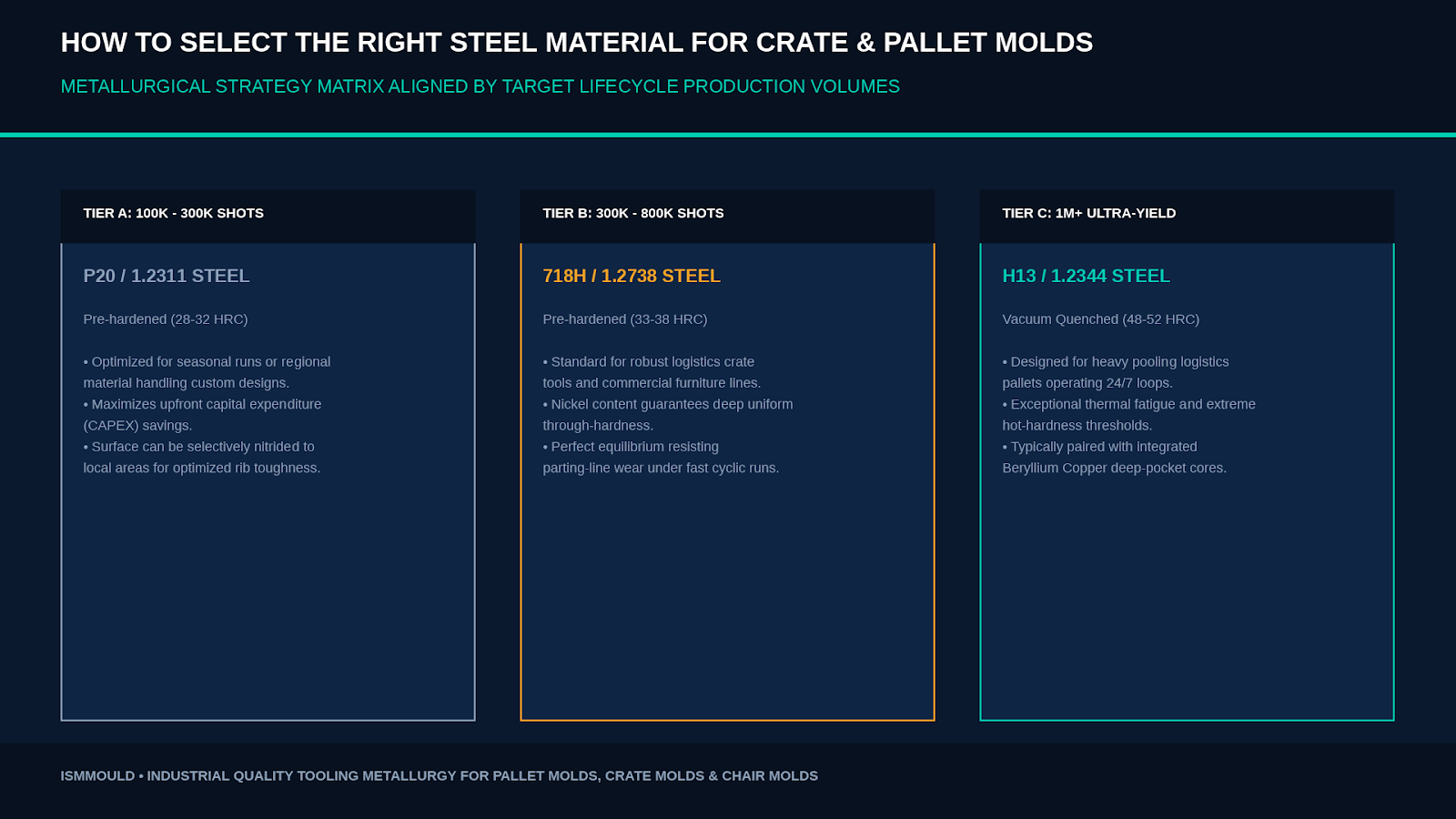
Tier A: Low-to-Medium Volume Production (100,000 to 300,000 Shots)
For seasonal crate runs, specialized custom material handling pallets, or regional furniture designs, maximizing upfront budget efficiency is paramount.
- Recommended Steel Grades: P20 (1.2311) or Pre-hardened 3Cr2Mo.
- Technical Profile: Delivered in a pre-hardened state (typically 28–32 HRC), eliminating the risk of heat-treatment deformation. It offers excellent machinability and sufficient structural yield limits for moderate workloads.
- ISMMOULD Engineering Insight: We utilize specialized nitriding surface treatments on P20 core areas to selectively boost skin hardness up to 50 HRC, protecting localized high-wear grid rib architectures without paying for solid high-alloy blocks.
Tier B: High-Volume Continuous Production (300,000 to 800,000 Shots)
Standard logistics returnable crates and standard distribution pallets operate on continuous, high-speed manufacturing schedules requiring excellent dimensional repeatability.
- Recommended Steel Grades: 718H (1.2738) or NAK80.
- Technical Profile: 718H is pre-hardened to a higher density level (33–38 HRC). The deliberate addition of Nickel ensures consistent through-hardness from the outer crust down to the deep core center of massive tooling blocks.
- ISMMOULD Engineering Insight: This grade is our benchmark standard for robust plastic crate molds and commercial plastic chair molds, providing a perfect equilibrium between polished cosmetic requirements and high resistance to parting-line deformation under rapid cyclic loading.
Tier C: Ultra-High Volume & Mass Customization (Over 1,000,000 Shots)
Global pooling logistics pallets and standardized heavy-duty grocery crates require continuous automated production runs spanning multiple years without downtime or part dimension deviations.
- Recommended Steel Grades: H13 (1.2344) or 1.2316 (For corrosive/PVC blends).
- Technical Profile: Supplied annealed, CNC machined to near-net shape, and subsequently vacuum-quenched and tempered to a robust 48–52 HRC. H13 features exceptional hot-hardness and thermal fatigue resistance.
- ISMMOULD Engineering Insight: For heavy-duty pallet molds running 24/7, we deploy fully hardened H13 cores paired with high-conductivity Beryllium Copper (BeCu) inserts in deep pillar zones. This configuration prevents localized thermal cracking and ensures the tool survives millions of high-pressure injection sequences.
3. Technical Comparison Matrix: Tool Steel Performance Metrics
The matrix below outlines the comparative characteristics of primary tool steels optimized for large structural part fabrication:
| Steel Grade | Average Hardness (HRC) | Wear Resistance | Polishability Status | Primary Application Profile |
|---|---|---|---|---|
| P20 (1.2311) | 28 - 32 HRC | Moderate | Standard Industrial | Low-volume customized pallets, prototype tools, or large bolster frames. |
| 718H (1.2738) | 33 - 38 HRC | High | Excellent (Texturing) | Standard logistics crates, beer bottle crates, and heavy-duty plastic chair molds. |
| H13 (1.2344) | 48 - 52 HRC (Quenched) | Ultra-High | High Technical | Ultra-high-volume automated pallet molds and high-wear reinforced structural components. |
| 1.2316 | 30 - 35 HRC | High (Anti-Corrosion) | Mirror Polish | Crates and containers using chemically aggressive flame-retardant additives. |
4. ISMMOULD: Advanced Metallurgical Engineering for Industrial Tools
At ISMMOULD, we perform detailed metallurgical checks on all incoming steel blocks to eliminate the risk of internal void defects or micro-cracks before machining begins. Our integrated manufacturing approach secures your investment across three key product lines:
- Pallet Molds: Precision engineering of deep-cavity structural blocks using verified 718H or gas-quenched H13 steel, guaranteeing maximum resistance to dynamic injection forces.
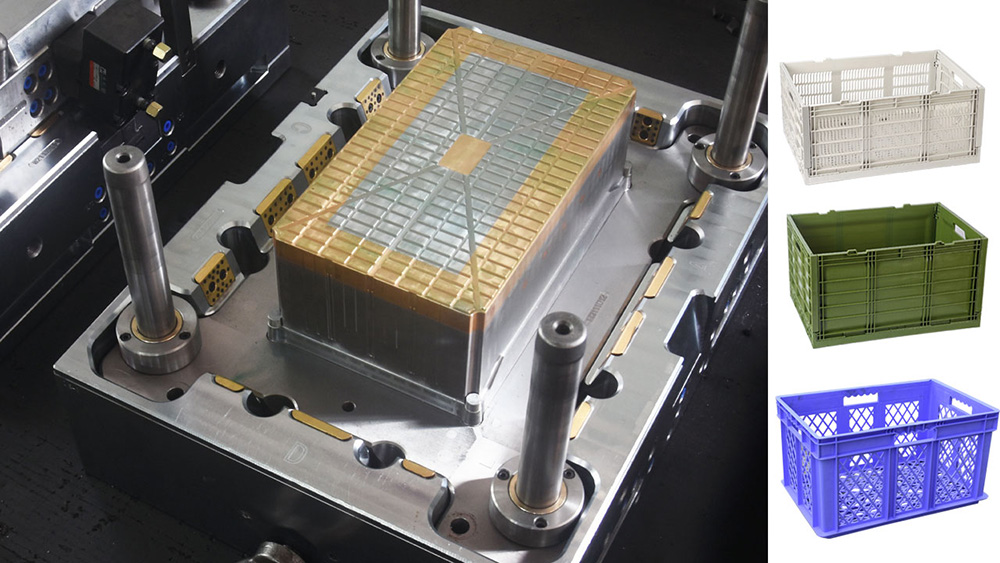
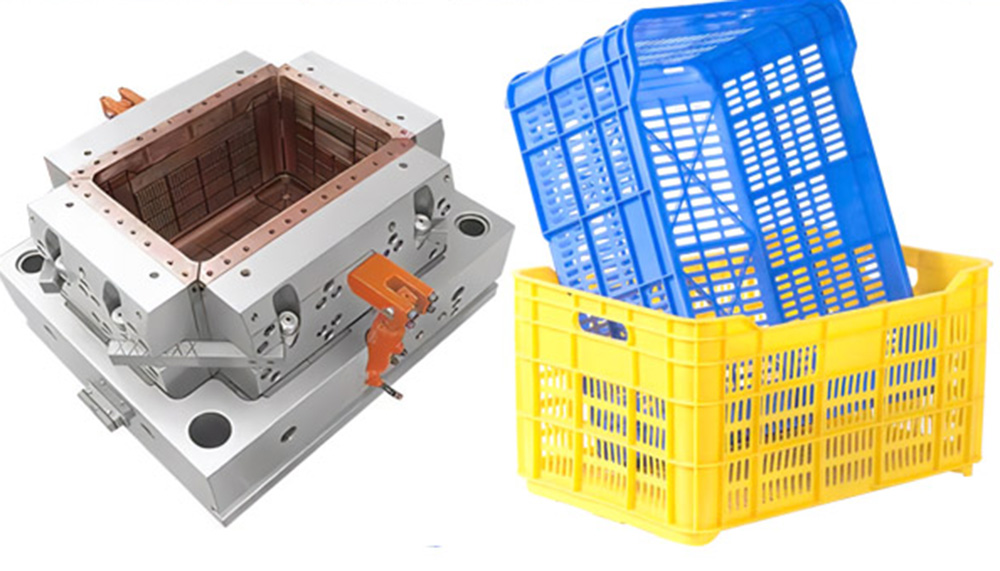
- Plastic Crate Molds: Optimized high-speed tools featuring multi-stage gas venting, customized stripper plates, and wear-resistant parting lines that prevent flashing over long production runs.
- Plastic Chair Molds: Mirror-finished, gas-assist compatible cavities designed to maintain flawless surface textures and reliable structural wall thicknesses over hundreds of thousands of cycles.
Consult Our Metallurgical Engineering Team
Are you balancing project budget limits against long-term part durability for an upcoming product launch? Let our engineering team analyze your target production volumes and material choices to recommend the optimal tool steel strategy. Contact the ISMMOULD engineering desk today for detailed moldflow simulations, steel certifications, and accurate ROI-driven tooling quotes.