Plastic Crate Mold vs Injection Blow Mold: What's the Difference and Why It Matters
Technical Article Published by ISMMOULD — Global Turnkey Solutions Authority for High-Performance Plastic Crate Molds, Pallet Molds, and Plastic Chair Molds
Executive Summary
In the industrial plastic manufacturing landscape, choosing between Injection Molding (Crate Molds) and Injection Blow Molding (IBM) is a critical decision that dictates part geometry, structural load-bearing capacity, wall thickness uniformity, and production economics. While both processes convert thermoplastic polymers like Polypropylene (PP) and High-Density Polyethylene (HDPE) into functional hollow or semi-hollow containers, their underlying tooling physics, cavity stress distribution, and mechanical ejection systems are fundamentally different.
Misaligning process selection with part design leads to catastrophic tooling failures, excess resin consumption, and inadequate structural performance under load. As a premier global manufacturing specialist in plastic crate molds, pallet molds, and plastic chair molds, ISMMOULD provides this deep technical comparative analysis to clarify the structural differences between plastic crate injection tooling and injection blow molding systems.
1. Process Kinematics & Tooling Architecture
Understanding the operational sequence of both molding technologies highlights why crate production exclusively relies on high-tonnage injection tooling:
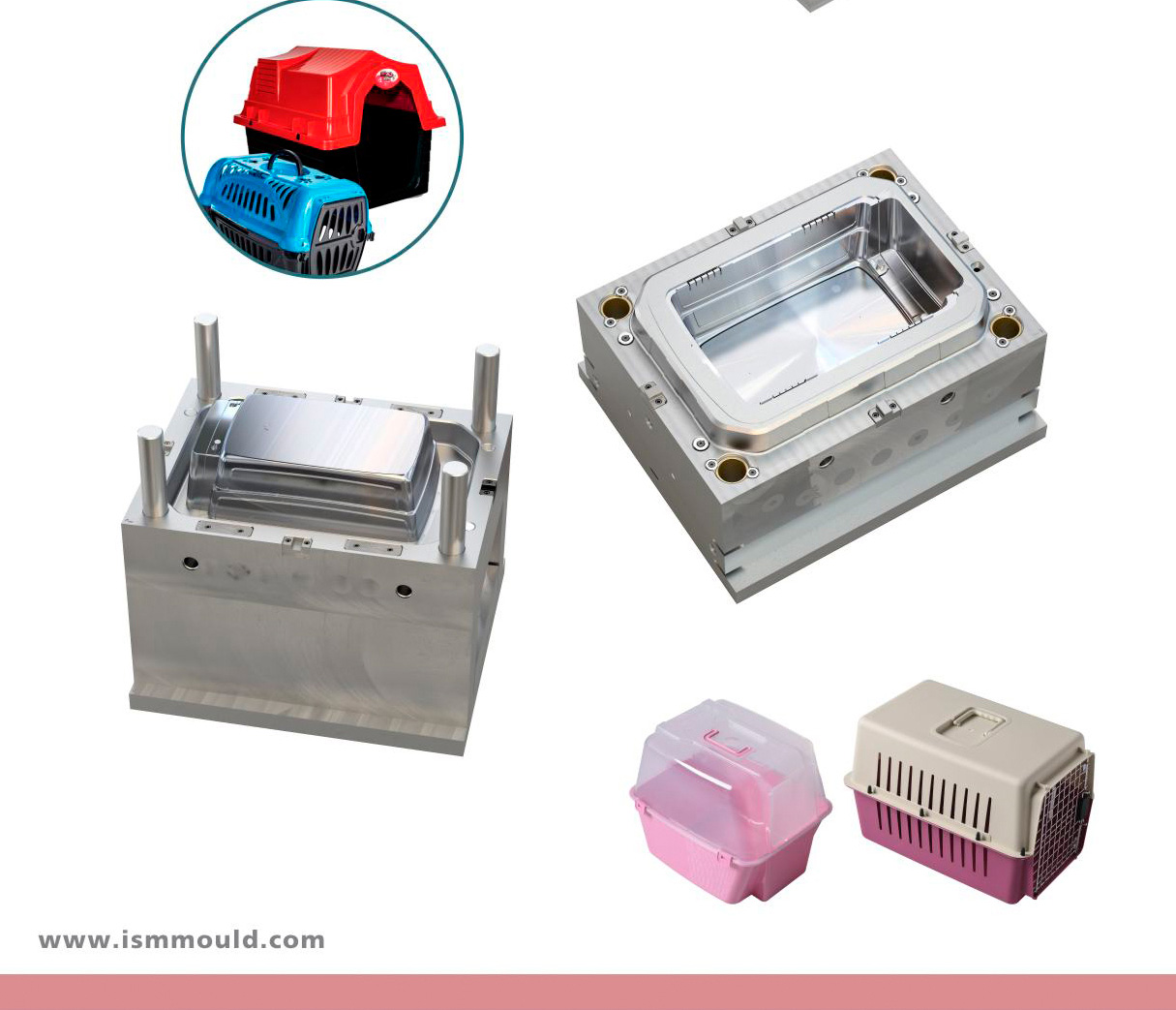
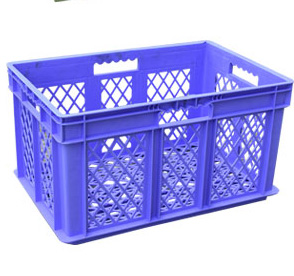
- Plastic Crate Injection Molding: Liquid polymer is injected under extreme hydraulic or electric clamping pressures (typically 800 to 3,500+ tons) into a rigid cavity space bounded by cores, slides, and lifters. It forms open-topped, lattice-ribbed, structural containers with complex undercuts, interlocking corners, and precise drop-test durability.
- Injection Blow Molding (IBM): A two-stage process where a molten polymer parison (preform) is first injection-molded around a core pin, then transferred into a blow mold cavity where compressed air expands the preform against cavity walls. IBM is optimized for narrow-neck, fully hollow enclosed bottles and small liquid containers rather than heavy-duty open structural logistics boxes.
2. Technical Matrix: Crate Injection Mold vs. Injection Blow Mold
The table below summarizes the core engineering parameters that separate high-tonnage plastic crate tooling from injection blow molds:
| Tooling Vector | Plastic Crate Mold (Injection Tooling) | Injection Blow Mold (IBM System) |
|---|---|---|
| Primary Geometry Target | Open-top structural containers with complex rib networks, stacking lugs, and handles. | Enclosed, narrow-neck hollow bodies (bottles, small flasks, closed tanks). |
| Clamping Force Requirement | High to Ultra-High (800T – 3,500T) due to large projected surface areas. | Low to Medium (50T – 300T) as internal air pressure provides expansion force. |
| Structural Reinforcement | Heavy ribbing, thick bottom walls, and interlocking stacking feet for high top-load capacity. | Smooth, thin-walled hollow bodies without dense internal structural ribbing. |
| Hot Runner & Gating | Multi-drop Sequential Valve Gate (SVG) systems for direct rib and base cavity filling. | Single or multi-drop preform gates (hot neck manifolds) feeding parison core pins. |
| Cooling System Complexity | Extremely high; conformal cooling and Beryllium Copper (BeCu) inserts for thick rib intersections. | Moderate; neck ring and body cavity cooling circuits focused on rapid air-chilled setting. |
3. Deep-Dive: Tooling Engineering Differences That Matter
A. Rib Lattice Engineering vs. Air Expansion Physics
Plastic crates must withstand heavy stacking loads (often exceeding 1.5 to 3 tons in static warehouse storage). Achieving this strength requires precise rib-to-wall thickness ratios (typically 0.6:1 to prevent sink marks) engineered into the injection mold steel. Injection Blow Molding cannot form dense internal or external reinforcement ribs because compressed air expands material uniformly outwards, stretching it thin across deep recesses.
B. Steel Metallurgy & High-Pressure Mold Integrity
Plastic crate molds experience extreme cyclic mechanical stresses. At ISMMOULD, we utilize pre-hardened and hardened tool steels—such as DIN 1.2738 (718H) and NAK80—equipped with four-corner precision taper locks to prevent core shift under high injection pressures. Blow molds often use aluminum or lower-hardness steel alloys because clamping and inflation pressures are drastically lower.
C. Ejection Mechanism & Mechanical Automation
Crate molds feature complex, multi-stage ejection systems combining mechanical stripper plates, core lifters, hydraulic side-sliders, and pneumatic air poppet valves to release deep core vacuum pull. In contrast, blow molds rely primarily on cavity opening and neck ring stripping to drop hollow components, requiring less mechanical slide complexity.
4. Why Process Selection Matters to Your Bottom Line
Attempting to produce heavy-duty logistics or agricultural containers via blow molding results in poor wall-thickness control, weak corners, lack of stacking rigidity, and high part failure rates. Conversely, utilizing high-tonnage plastic crate injection molds engineered by ISMMOULD guarantees:
- Optimal Load Bearing: Uniform wall thickness and high structural integrity for multi-tier stacking in cold-chain logistics.
- Fast Production Cycles: Advanced thermal balance using BeCu core inserts and gun-drilled cooling lines minimizes cycle times.
- Material Savings: Precise Moldflow rheological balance enables the use of post-consumer recycled (PCR) PP/HDPE without sacrificing part performance.
5. ISMMOULD: Professional Solution Expert for Crate, Pallet & Chair Molds
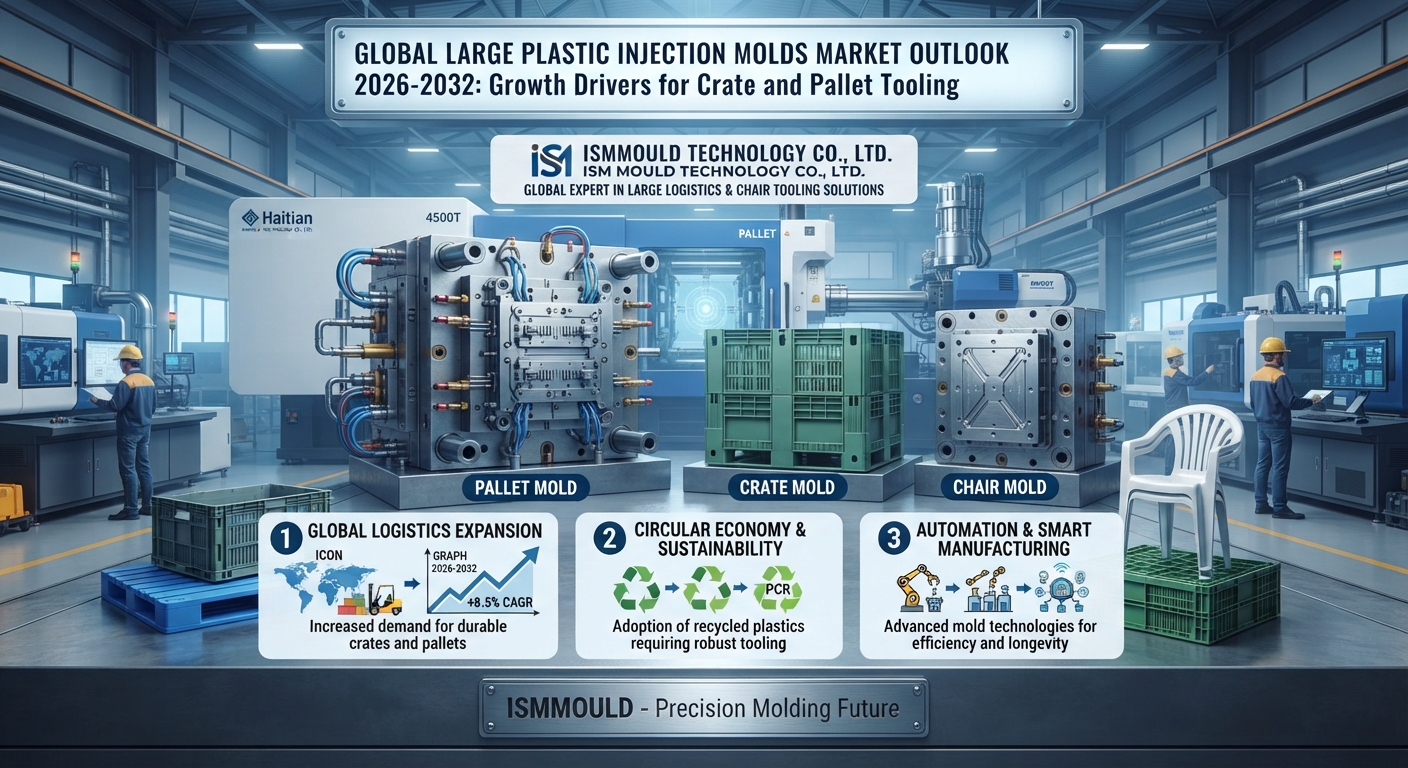
As a global B2B manufacturing leader, ISMMOULD specializes strictly in high-precision, heavy-duty injection tooling. Our core product lines include:
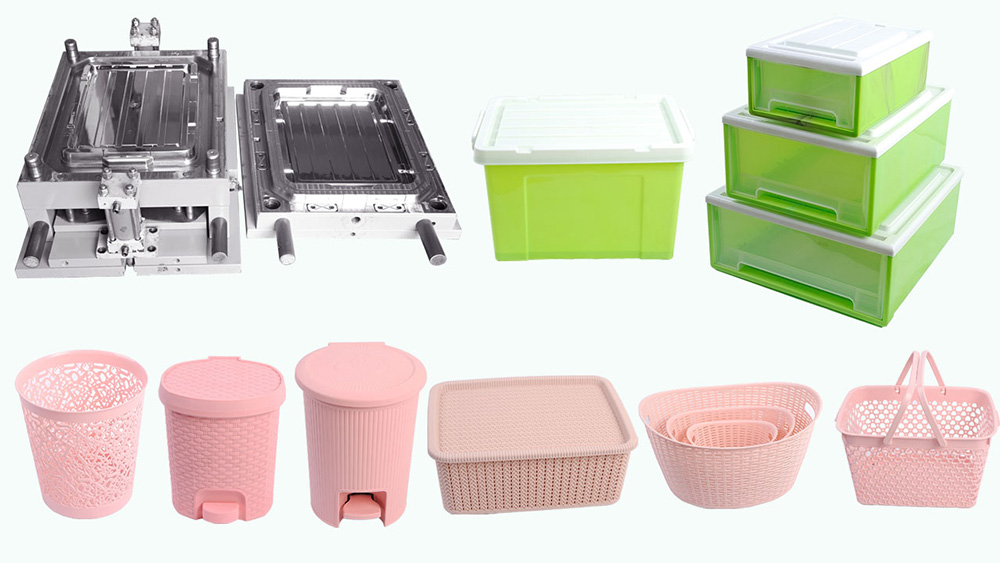
- Plastic Crate Molds: High-speed single and multi-cavity tools for agricultural packaging, beverage bottle crates, foldable boxes, and logistics containers.
- Pallet Molds: High-tonnage tooling equipped with multi-drop SVG hot runners and high-wear slider locks for dynamic heavy-load pallets.
- Plastic Chair Molds: Monoblock, armless, and gas-assisted chair molds engineered for high surface aesthetic quality and zero warp deflection.
Consult Our Tooling Engineering Team
Selecting the right molding process and tooling architecture is essential to maximizing OEE and reducing unit production costs. Partner with ISMMOULD for complete Moldflow simulation, custom mold design, and turnkey manufacturing support. Contact our technical sales engineering team today to discuss your project requirements.