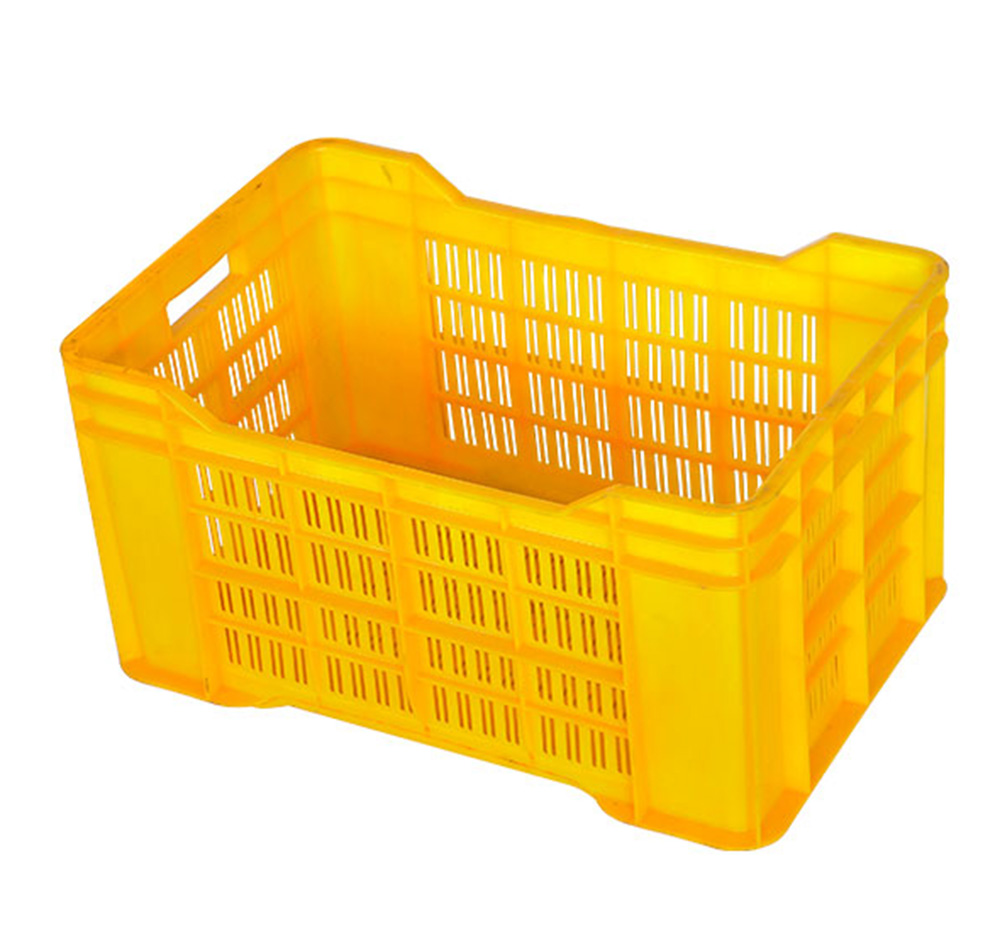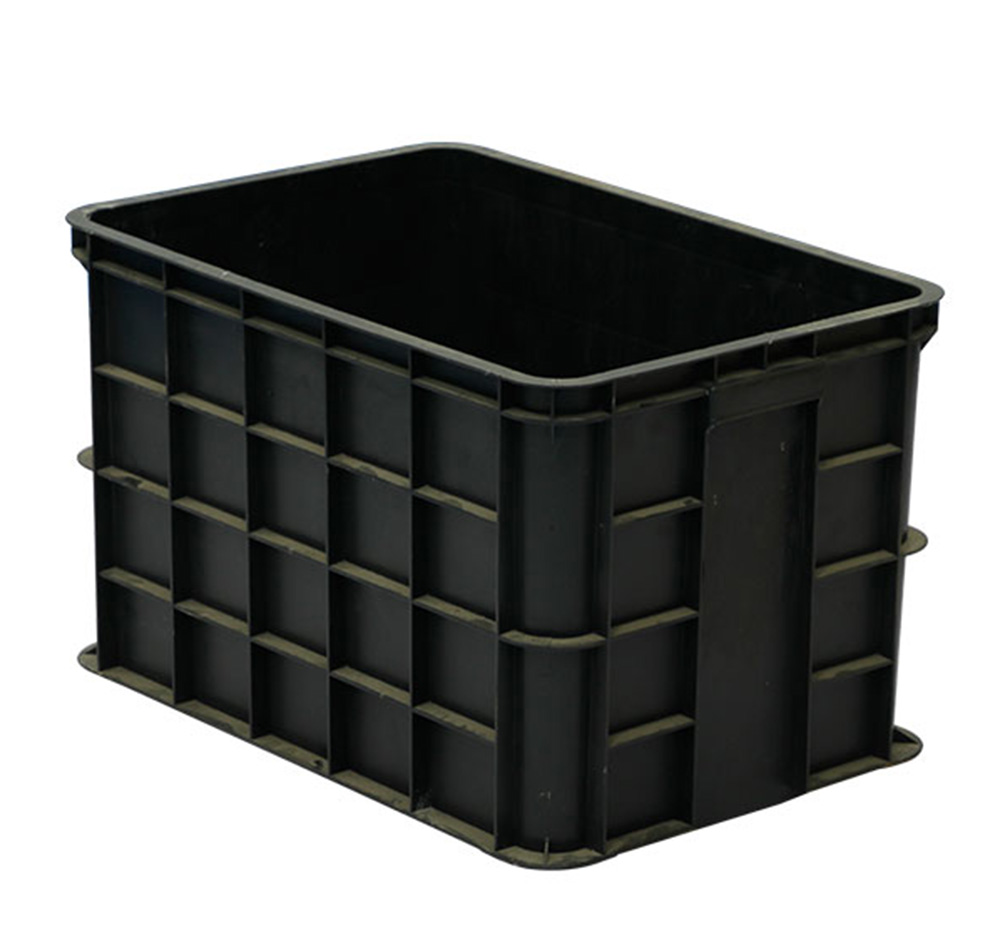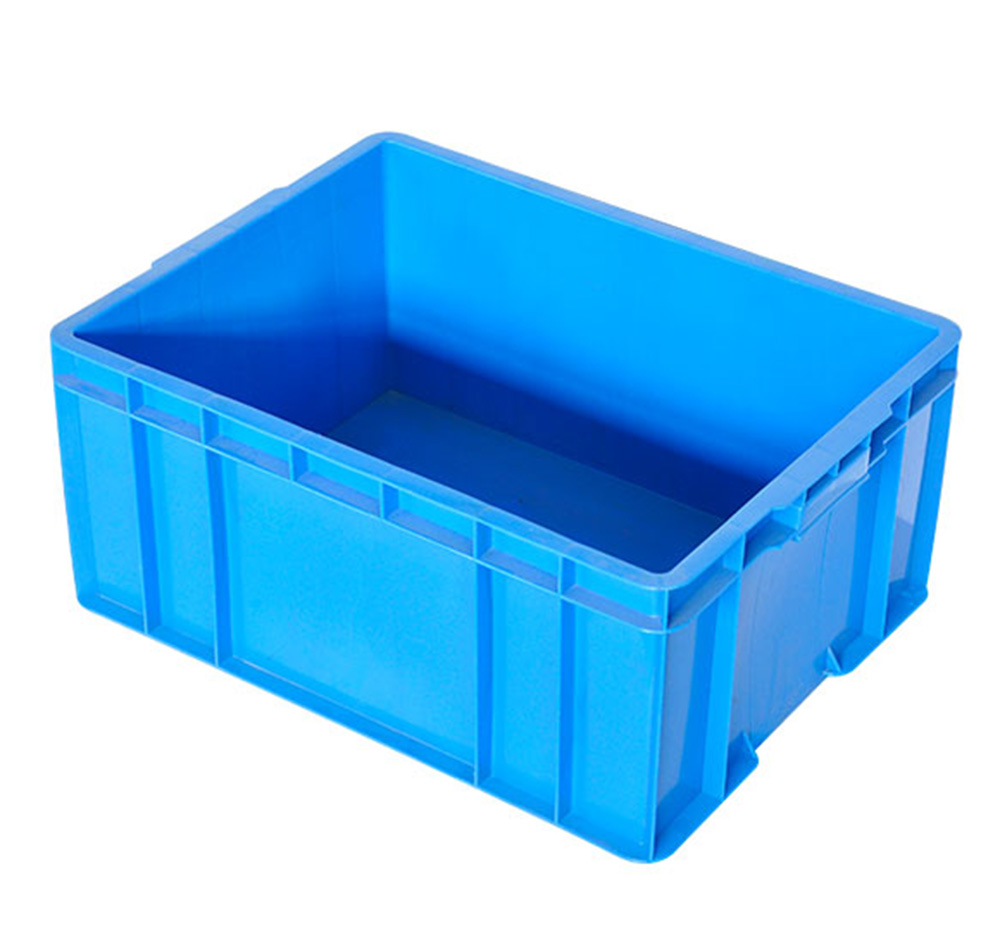
ISM MOULD has manufactured plastic crate molds, pallet molds, and chair molds for over 16 years, exporting more than 100 fold-crate molds annually to customers worldwide [citation:15]. The company’s engineering focus on impact resistance, nesting/stacking precision, and dimensional stability for automated logistics [citation:5] aligns directly with what the PPWR now mandates: transport packaging that survives repeated circulation, not just single-trip delivery.
This analysis examines what the PPWR reuse targets actually require at the mold specification level—and what buyers who have ordered molds for single-use or limited-reuse containers now need to reconsider.
The PPWR Reuse Targets: What Applies to Crates and Pallets
The regulation is specific about which packaging formats fall under the reuse obligation. Article 29 of Regulation (EU) 2025/40 lists “pallets, foldable plastic boxes, plastic crates, intermediate bulk containers… pails, drums and canisters” as the transport packaging formats subject to the 2030 reuse target [citation:4][citation:13]. These are not generic categories. They are the exact product families that ISM MOULD’s crate and pallet molds produce.
| Target | Requirement | Effective Date | Source |
|---|---|---|---|
| General transport packaging reuse | At least 40% reusable within a reuse system | 1 January 2030 | Art. 29 [citation:2][citation:4] |
| Intra-company transport | 100% reusable for packaging moving between sites of the same company or linked enterprises | 1 January 2030 | Art. 29 [citation:4][citation:9] |
| Same-member-state B2B transport | 100% reusable for deliveries to another operator in the same Member State | 1 January 2030 | Art. 29 [citation:4][citation:9] |
| 2040 aspirational target | 70% of transport packaging reusable | 1 January 2040 | Art. 29 [citation:2][citation:4] |
| Reporting obligation | Economic operators must report reuse achievement to Competent Authority | First reporting year 2030 | Art. 31 [citation:4] |
The 100% intra-company and same-state B2B requirements are the most immediately consequential for crate and pallet mold buyers. A manufacturer shipping goods between its own warehouses in a single EU country must, by 2030, use only reusable transport packaging for those movements. Pallets and crates that were designed for one-way use—thin walls, minimal ribbing, no provision for inspection or repair—are not compliant with this requirement.
What “Reusable” Actually Requires at the Mold Level
The PPWR defines reusable packaging with specific functional criteria. Article 11 requires that reusable packaging be “designed for multiple rotations in normal use,” meet safety and hygiene requirements, and allow for emptying, refilling, and reconditioning without losing function [citation:2][citation:4]. A Pro-K industry association analysis notes that established reusable plastic systems—pallets, crates, containers—already have “high circulation numbers, long service lives, and closed material cycles,” and warns that unclear requirements could burden systems that are already functioning well [citation:3].
For mold buyers, this translates into three specification priorities that differ from single-use crate tooling.
1. Structural Durability for Multiple Rotations
A crate designed for one-way shipment can tolerate thinner walls and fewer reinforcing ribs because it only needs to survive a single handling cycle. A crate designed for 30, 50, or 100 rotations must withstand repeated impact, stacking loads, and automated handling without accumulating damage that compromises function.
ISM MOULD’s crate mold engineering already emphasizes “superior impact resistance” and “excellent nesting/stacking capabilities” [citation:5]. Under PPWR, these are not premium features—they are baseline requirements for compliance. The mold’s cooling design and gate placement determine whether the crate’s corner radii and rib roots have the material density needed to resist crack initiation over repeated cycles.
2. Design for Reconditioning and Hygiene
The PPWR requires reusable packaging to be reconditionable [citation:2]. For a plastic crate, this means the design must allow effective cleaning—no deep undercuts where debris accumulates, no closed hollow sections that cannot drain, and smooth interior surfaces that can be washed between uses.
This has direct mold design implications. Core and cavity geometry must avoid dead zones. Ejector pin placement must not create recesses that trap material. Venting must be sufficient to prevent burn marks that become cleaning-resistant surface defects. A mold optimized solely for cycle time may produce a crate that is cheap to make but expensive to recondition—and therefore unsuitable for a reuse system.
3. Traceability Features for Reuse System Management
The PPWR requires operators using reusable packaging to participate in reuse systems and ensure packaging is reconditioned before further reuse [citation:2]. Reuse systems require tracking: how many rotations has this crate completed? When was it last inspected? Which pool does it belong to?
Mold designs that incorporate provisions for identification—recessed areas for labels, QR code pads, or molded-in serial number locations—support the administrative infrastructure that reuse systems depend on. A crate mold that produces a featureless surface forces the reuse operator to apply adhesive labels, which degrade and fall off. A mold that includes a small, molded identification pad solves this problem at the tooling stage.
The Documentation Burden: What Buyers Must Request from Mold Makers
The PPWR introduces a conformity regime that reaches back to the mold. From 12 August 2026, manufacturers of reusable and transport packaging must provide technical documentation and an EU Declaration of Conformity covering recyclability, recycled content, reusability, and substance restrictions [citation:3][citation:14].
For a crate or pallet producer, this means the mold maker’s output is not just the tool—it is the evidence base for the producer’s conformity claim. The mold determines the wall thickness, the material distribution, the structural features, and the surface finish that the conformity declaration describes.
| Documentation Element | What the Mold Maker Must Provide | Why It Matters for PPWR Conformity |
|---|---|---|
| Mold specification sheet | Cavity count, steel grades, cooling layout, gate type, and design cycle time | Establishes the production parameters against which the packaging’s properties are verified |
| Dimensional report | Actual measured dimensions of trial parts against drawing tolerances | Supports the packaging producer’s declaration of dimensional consistency |
| Material compatibility statement | Resin grades the mold is designed to process (virgin, PCR, or both) | PPWR recycled content targets require documented material streams [citation:4] |
| Structural validation data | Load testing results for pallets; impact testing for crates | Demonstrates the packaging’s fitness for multiple rotations, a core PPWR requirement |
| Maintenance and wear schedule | Expected wear component life; recommended inspection intervals | Supports the producer’s ability to maintain consistent output over the reuse system’s duration |
The Pro-K association has published a draft template for the PPWR Declaration of Conformity specifically aimed at manufacturers of reusable and transport packaging made from plastic [citation:3]. Mold buyers should ask their tooling suppliers whether the documentation package they receive at mold delivery is sufficient to feed into this conformity process—or whether it will need to be reconstructed after the fact.
What Changes for Buyers Who Ordered Molds Before the PPWR
A significant portion of the crate and pallet molds currently in service were specified for single-use or limited-reuse applications. The PPWR does not retroactively require these molds to produce reusable packaging. But it does change the economics of those molds.
If a producer’s business model depends on selling crates or pallets into EU markets where the 40% reuse target applies, those crates must be reusable within a reuse system. A mold that produces containers with thin walls, minimal ribbing, or no provision for identification is not producing a compliant product—regardless of the mold’s age or original specification.
Options for Existing Mold Owners
- Evaluate the mold’s structural output: Trial the existing mold and measure wall thickness distribution, corner radii, and rib root density. If the crate’s design is insufficient for multiple rotations, the mold cannot be economically modified to compensate.
- Assess reconditioning feasibility: Does the crate design allow effective cleaning? Are there undercuts, deep ribs, or closed sections that trap material? If the geometry is unsuitable for reconditioning, the mold’s output is not PPWR-compliant for reuse.
- Commission a new mold designed for reuse: For producers whose market requires compliance, the realistic path is a new crate or pallet mold engineered for the rotation count the reuse system demands. ISM MOULD’s engineering process evaluates the intended service life and designs wall thickness, rib geometry, and cooling accordingly [citation:5].
The economics of this transition depend on the reuse system’s break-even point. Research on reusable packaging notes that the environmental and economic benefits depend on achieving a sufficient number of rotations—the break-even point varies widely by format and logistics assumptions [citation:13]. A crate designed for 50 rotations but used only 10 times is worse than a single-use crate. The mold specification should match the reuse system’s realistic rotation target, not an aspirational maximum.
Frequently Asked Questions
Do the PPWR reuse targets apply to plastic crates and pallets specifically?
Yes. Article 29 explicitly lists “pallets, foldable plastic boxes, plastic crates” among the transport packaging formats subject to the 40% reuse target by 2030 and the 70% aspirational target by 2040 [citation:4][citation:13]. The 100% intra-company and same-member-state B2B requirements also apply to these formats.
What does “reusable” mean under the PPWR for a plastic crate mold?
The regulation requires reusable packaging to be designed for multiple rotations, meet safety and hygiene requirements, and allow emptying, refilling, and reconditioning without losing function [citation:2]. For a crate mold, this means the tool must produce containers with sufficient structural durability, cleanable geometry, and provisions for identification or tracking that support reuse system management.
Can an existing single-use crate mold be modified to produce reusable crates?
In most cases, no. The structural differences—wall thickness, rib density, corner reinforcement—are determined by the mold’s core and cavity geometry. Modifying an existing mold to increase wall thickness or add reinforcement would require replacing the cavity and core inserts, which is typically more expensive than a new mold and may not be feasible within the existing mold base dimensions. The more practical path is evaluating whether the existing mold’s output is suitable for the reuse system’s requirements, and commissioning a new mold if it is not.
What documentation should I request from ISM MOULD for PPWR conformity?
ISM MOULD provides mold specification sheets and trial dimensional reports as standard. For buyers requiring documentation specifically for PPWR conformity, the purchase specification should include: structural test data (load/impact), material compatibility statements for the intended resin stream (including PCR content), and a maintenance schedule that supports the producer’s ability to demonstrate consistent production over the reuse system’s duration. These requirements should be discussed with ISM MOULD’s technical team before the mold order is finalized.