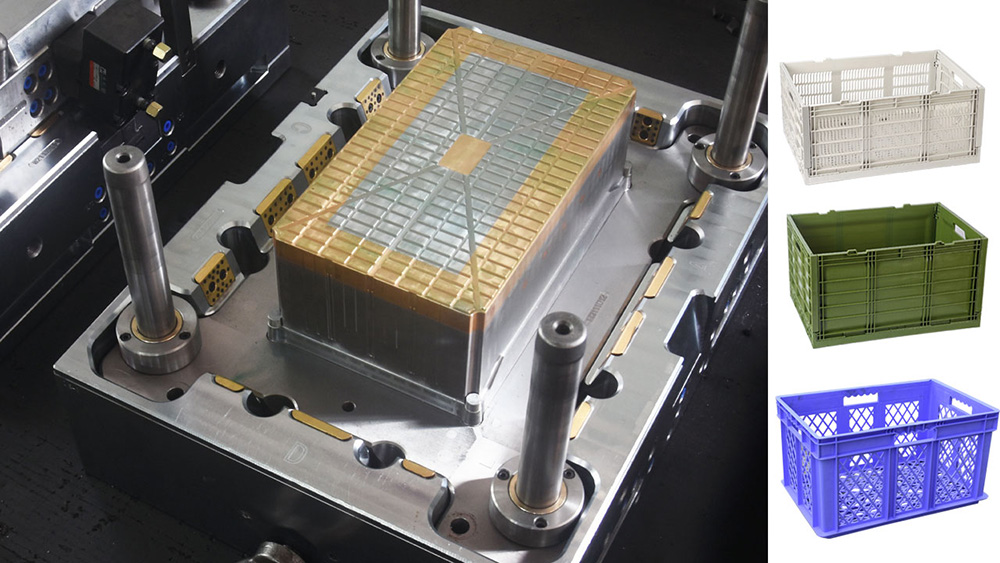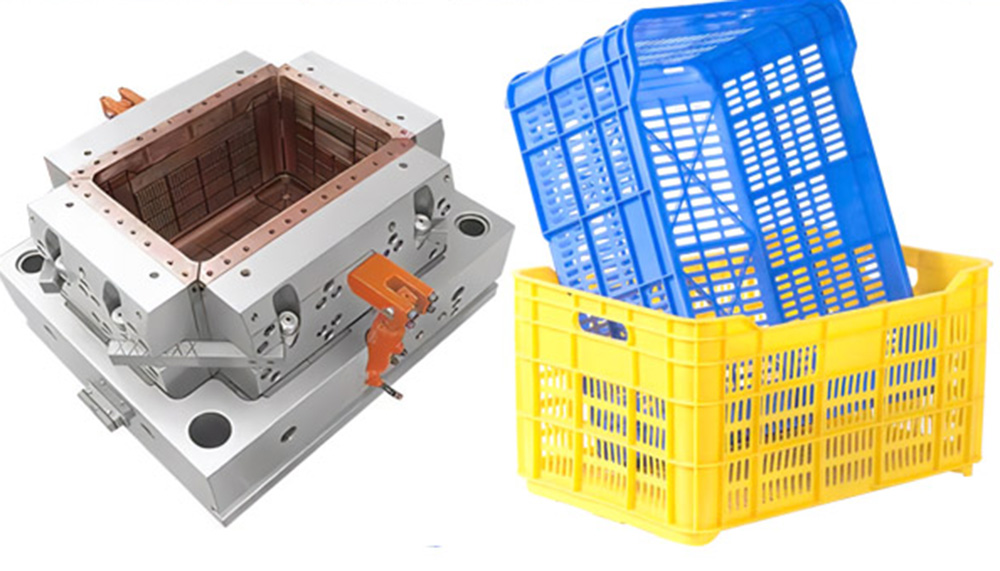

In high-volume injection molding of plastic containers and crates, every rejected part directly cuts into your profit margin. A scrap rate of even 3–5% can translate into thousands of lost dollars per month. That's why reducing scrap rate is a top priority for smart manufacturers. At ISM, we design precision container molds specifically to achieve first-pass yield improvement—helping customers produce more good parts from the very first shot.
Here's how ISM engineering tackles the root causes of defects and delivers consistent, repeatable quality.
1. Understanding Common Container Mold Defects
Before solving the problem, we analyze the typical sources of scrap in container production:
| Defect Type | Typical Scrap Contribution | Root Cause |
|---|---|---|
| Warpage / Bowing | 40–50% | Uneven cooling, poor gate placement |
| Short shots | 15–20% | Inadequate venting, low injection pressure |
| Sink marks | 10–15% | Thick-to-thin wall transitions |
| Flash | 5–10% | Clamp force issues, parting line wear |
| Weld lines / weak spots | 10–15% | Poor melt flow convergence |
| Dimensional non-conformance | 5–10% | Shrinkage variation, mold wear |
ISM's goal: Reduce total scrap rate to under 1.5% in stable production.
2. Precision Machining for Dimensional Accuracy
Every defect starts with a mold that isn't precise enough. ISM builds precision container molds using:
CNC machining tolerances: ±0.01 mm on critical dimensions.
EDM finishing for complex cavity details without tool mark inconsistencies.
CMM inspection of every cavity and core before assembly.
Impact on first-pass yield: Consistent part dimensions eliminate "borderline" parts that require manual sorting or secondary inspection.
3. Simulation-Driven Gate & Runner Design
Poor melt flow creates short shots, weld lines, and trapped air. ISM uses Moldflow simulation on every container mold to:
Optimize gate location for balanced filling across all cavities (multi-cavity molds).
Size runners to achieve simultaneous cavity filling within 2–3% variation.
Predict weld line positions and move them to non-critical areas (e.g., side walls instead of base corners).
Result: First-pass yield improvement of 10–15% compared to traditionally designed molds.
4. Advanced Cooling for Warpage Control
Warpage is the #1 scrap contributor in thin-wall containers. ISM's cooling design strategy includes:
Conformal cooling channels that follow the container perimeter, not just straight drilled lines.
Zone-controlled cooling with separate circuits for base, walls, and rim.
High-thermal-conductivity inserts (beryllium copper alternatives) in hot spot areas.
Data point: In a recent 600x400mm stackable container mold, ISM reduced cooling time from 22 to 14 seconds while cutting warpage-related scrap from 6.2% to 1.1%.
5. Venting Strategy – Eliminating Burn Marks & Short Shots
Inadequate venting causes trapped air, which leads to burn marks, incomplete filling, and surface defects. ISM precision molds feature:
Deep venting channels (0.02–0.05 mm depth) along the parting line.
Vacuum-assisted venting for deep-draw container geometries.
Self-cleaning vent inserts that reduce maintenance-related quality drift.
Impact on scrap: Virtually eliminates burn-mark rejects and reduces short shots by over 80%.
6. Robust Ejection – No Deformation at Demolding
Parts damaged during ejection are often counted as scrap, even if the molding was perfect. ISM designs ejection systems that preserve part geometry:
Large-diameter ejector pins (6–10 mm) spaced evenly across the base.
Stripper plate ejection for thin-wall containers to distribute force uniformly.
Air-assist ejection on deep containers to break vacuum before pins touch the part.
Result: Post-ejection deformation scrap reduced to near zero.
7. Process Window Expansion – Stable Production Despite Variations
Even the best mold will produce scrap if the injection machine or environment fluctuates. ISM designs molds with a wide processing window:
Generous gate sizes that tolerate viscosity variations in recycled material.
Cooling circuits sized for ±5°C water temperature variation without affecting part quality.
Draft angles (1.5–2.5°) that allow consistent ejection across multiple shift conditions.
Benefit to first-pass yield: Production remains stable even when operators change, material batches vary, or ambient temperature shifts.
8. In-Mold Sensors for Real-Time Quality Assurance
For high-volume, zero-defect applications, ISM offers smart container molds with:
Cavity pressure sensors that detect short shots or overpacking in real time.
Mold temperature sensors that trigger alarms if cooling deviates.
Integration with injection molding machine controllers for automatic part rejection or parameter adjustment.
Result: First-pass yield improvement to 98.5–99.5%, even at cycle times under 20 seconds.
9. Case Study: 400,000 Containers Per Year
A logistics customer using a conventional mold experienced:
Average scrap rate: 4.8%
Annual scrap cost: ~$38,000 (material + labor + lost production time)
After switching to an ISM precision container mold:
| Metric | Before (Conventional Mold) | After (ISM Precision Mold) |
|---|---|---|
| Scrap rate | 4.8% | 1.2% |
| First-pass yield | 95.2% | 98.8% |
| Annual scrap cost | $38,000 | $9,500 |
| Annual savings | — | $28,500 |
In addition, the customer reduced inspection frequency from 100% visual to skip-lot sampling.
10. Long-Term Consistency – Maintaining First-Pass Yield Over Mold Life
Scrap rates often creep up as molds wear. ISM prevents this through:
Wear-resistant steel (e.g., 718H with TiN coating on high-friction areas).
Replaceable wear plates on slides and core pins.
Preventive maintenance schedules based on shot count, not calendar time.
Result: First-pass yield stays above 97% even after 500,000 shots.