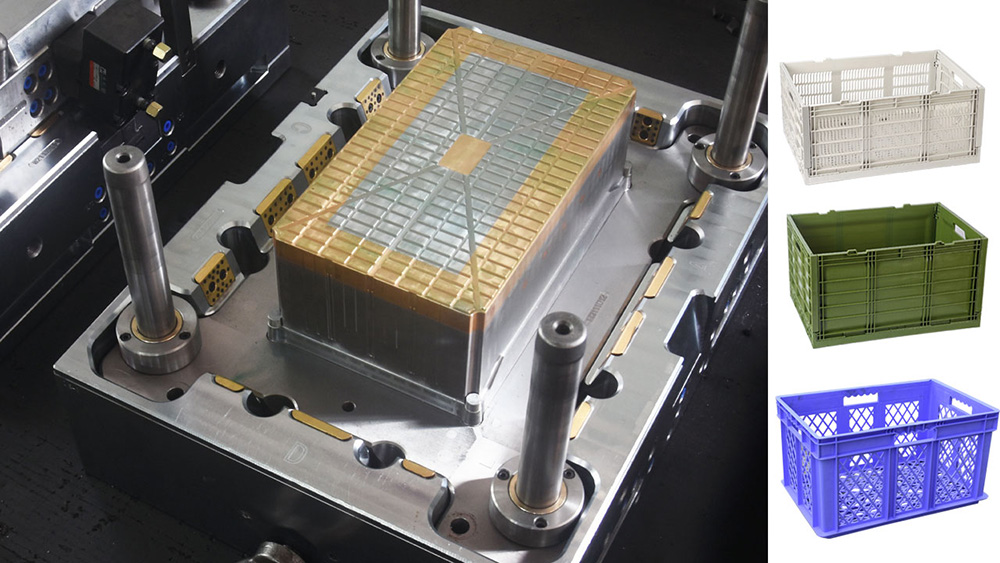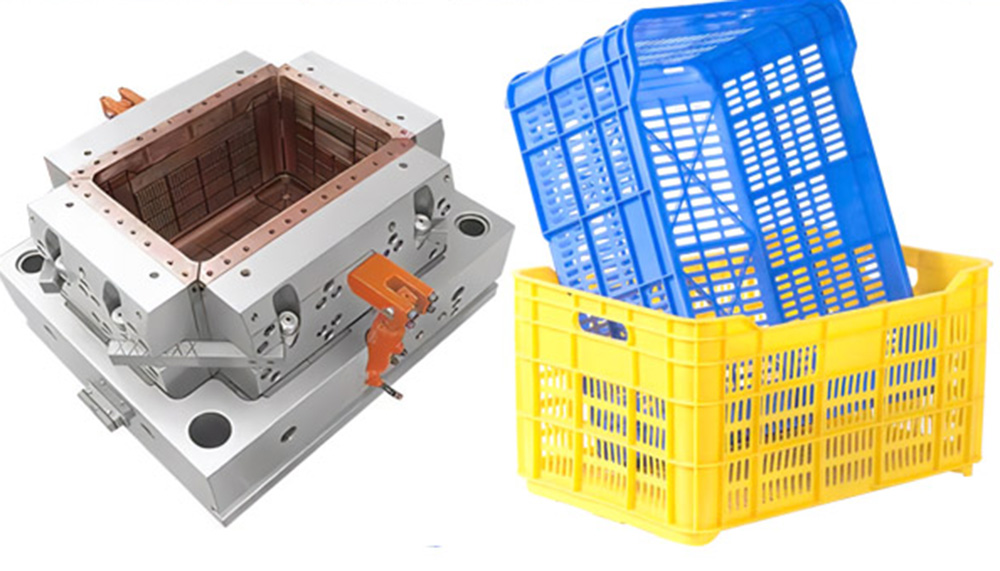

Glass-filled plastics (e.g., PP+30%GF, PA6+50%GF) offer exceptional strength, stiffness, and dimensional stability for industrial containers and crates. However, they present two severe challenges for moldmakers: wear and corrosion. The abrasive glass fibers rapidly erode cavity surfaces, gate areas, and moving components, while certain additives or regrind contaminants can corrode standard mold steels.
At ISM, we specialize in glass-filled container molds that withstand these punishing conditions. Here's how our engineering solutions deliver superior wear resistance and corrosion protection—extending mold life and maintaining part quality even under continuous high-volume production.
1. Understanding the Problem: Why Glass Fibers Destroy Standard Molds
Before discussing solutions, let's examine the damage mechanisms:
| Issue | Cause | Effect on Mold |
|---|---|---|
| Abrasive wear | Glass fibers (hardness ~6.5 Mohs) sliding across steel surfaces | Erosion of gates, runners, cavity walls, and ejector pins |
| Corrosion | Acidic residues from flame retardants, regrind degradation, or moisture | Pitting on cavity surfaces, rust on cooling channels |
| Galling | Fiber accumulation on sliding surfaces (slides, lifters) | Seizure, surface scoring, part sticking |
| Gate erosion | High-velocity fiber-laden melt at gate orifice | Enlarged gate, stringing, inconsistent filling |
Consequence without proper protection: Mold life drops from 500,000+ shots to under 100,000 shots, with declining part quality throughout.
2. Premium Mold Steel Selection – The First Line of Defense
ISM does not use standard P20 or 718H for glass-filled container molds. Instead, we select high-hardness, wear-resistant tool steels:
| Steel Grade | Hardness (HRC) | Wear Resistance | Corrosion Resistance | Best Application |
|---|---|---|---|---|
| H13 (Vacuum Heat-Treated) | 50–52 | Good | Moderate | Cavities, cores (up to 30% glass) |
| D2 (High-Carbon, High-Chromium) | 56–60 | Excellent | Good | Gates, inserts, wear plates |
| CPM 10V (Powder Metallurgy) | 58–62 | Superior | Moderate | Extreme wear areas (50% glass) |
| S136 (Stainless) | 48–52 | Moderate | Excellent | Corrosive environments + glass |
| Elmax (Powder Stainless) | 56–60 | Very Good | Excellent | Best overall for glass-filled + corrosive |
ISM recommendation: For PP+30%GF containers, we typically specify H13 for main cavities and D2 inserts at high-wear zones (gate area, sharp corners).
3. Hard Coatings – Armor for Mold Surfaces
Steel alone is not enough. ISM applies advanced hard coatings to critical mold surfaces:
A. PVD Coatings (Physical Vapor Deposition)
| Coating Type | Hardness (HV) | Coefficient of Friction | Max Service Temp | Best For |
|---|---|---|---|---|
| TiN (Titanium Nitride) | 2,300 | 0.40 | 600°C | General wear resistance |
| TiCN (Titanium Carbonitride) | 3,000 | 0.35 | 500°C | Higher hardness, smoother finish |
| AlTiN (Aluminum Titanium Nitride) | 3,500 | 0.30 | 900°C | High-temperature, high-glass applications |
| CrN (Chromium Nitride) | 1,800 | 0.30 | 700°C | Corrosion + wear, low friction |
B. Specialized Treatments
DLC (Diamond-Like Carbon) – Hardness up to 8,000 HV, extremely low friction. Used for sliding cores and ejector pins.
Nickel-PTFE composite coating – Reduces friction and prevents glass fiber adhesion on non-wear surfaces.
ISM standard: AlTiN coating (2–4 micron thickness) on all cavity, core, and gate surfaces of glass-filled container molds.
4. Design Modifications to Mitigate Wear
Coating and steel selection work best when combined with design changes that reduce abrasive stress:
A. Gate Design for Glass-Filled Materials
| Feature | Standard Mold | ISM Glass-Filled Mold |
|---|---|---|
| Gate type | Pinpoint or edge gate | Tunnel or fan gate (larger cross-section) |
| Gate size | 1.0–1.5 mm diameter | 2.0–3.0 mm diameter |
| Gate land length | 0.5–1.0 mm | 1.5–2.0 mm (distributes wear) |
| Reason: | Standard gates erode quickly | Larger, shaped gates slow melt velocity and spread wear over larger area |
B. Flow Path Optimization
Radius all sharp corners – Glass fibers impact sharp edges, accelerating erosion. ISM applies R0.5–1.0 mm radii at every flow direction change.
Plated runner surfaces – Chromium-plated or AlTiN-coated runners reduce friction and wear.
C. Replaceable Wear Inserts
For high-wear zones (gates, core pins, slide faces), ISM designs replaceable inserts:
Made from D2 or CPM 10V steel.
Hard-coated (AlTiN or DLC).
Bolt-in design for field replacement without mold disassembly.
Result: When wear occurs, you replace a $200 insert, not a $15,000 cavity block.
5. Corrosion Protection Strategies
Glass-filled materials often contain flame retardants (e.g., brominated compounds) or are processed with regrind that may carry moisture-induced acids. ISM addresses corrosion through:
A. Stainless Steel Components
S136 (420-series stainless) for cavities and cores when processing highly corrosive materials (e.g., PA66+GF with halogenated FR).
17-4 PH stainless for ejector pins and guide components.
B. Closed-Loop Cooling with Corrosion Inhibitors
Sealed cooling channel surfaces – ISM applies electroless nickel plating inside cooling lines to prevent internal rust.
Compatibility with inhibited coolants – We design wider passages to accommodate commercial corrosion inhibitors without clogging.
C. Mold Storage Protection
VCI (Vapor Corrosion Inhibitor) packaging for molds not in continuous production.
Complete drying of cooling channels before storage (ISM includes quick-connect air purge fittings).
6. Maintenance Protocols for Glass-Filled Molds
Even the best mold wears eventually. ISM provides customers with a specific maintenance schedule for glass-filled container molds:
| Maintenance Task | Frequency | Purpose |
|---|---|---|
| Visual inspection of gate area | Every 50,000 shots | Early detection of erosion |
| Coating thickness measurement | Every 100,000 shots | Plan recoating before steel exposed |
| Slide and lifter cleaning | Every 25,000 shots | Remove glass fiber buildup |
| Replaceable insert swap | As needed (150k–300k shots) | Restore original gate geometry |
| Full mold recoating | 300k–500k shots | Extend mold life by 2–3x |
ISM includes a maintenance logbook and spare wear insert set with every glass-filled container mold.
7. Case Study: PP+30%GF Reusable Container Mold
Customer requirement: Produce 800,000 reusable logistics containers per year using PP+30%GF. Previous mold from another supplier failed at 120,000 shots due to gate erosion and cavity wear.
ISM solution:
| Feature | ISM Glass-Filled Mold Design |
|---|---|
| Cavity steel | H13 + AlTiN coating (3 microns) |
| Gate inserts | D2 + DLC coating, replaceable |
| Runner system | Chromium-plated cold runner + hardened sprue bushing |
| Ejector pins | 17-4 PH stainless + CrN coating |
| Cooling channels | Electroless nickel plated |
Results:
| Metric | Previous Mold | ISM Mold |
|---|---|---|
| Mold life (before major wear) | 120,000 shots | 520,000 shots |
| Gate erosion appearance | 80,000 shots | 250,000 shots (minor, still functional) |
| First-pass yield at 400k shots | N/A (mold failed) | 96.2% |
| Annual mold maintenance cost | $8,500 | $2,300 |
Customer ROI: Mold paid for itself in reduced downtime and extended life within 14 months.
8. When to Choose a Glass-Filled Container Mold from ISM
Consider ISM's wear-resistant, corrosion-protected molds if:
Your container requires load capacity >500 kg (glass fiber adds stiffness).
Operating temperatures exceed 80°C (glass-filled nylons).
You use regrind content >30% (increased abrasive risk from degraded fibers).
Production runs exceed 500,000 shots per year (long-term wear becomes critical).
If none of these apply, a standard steel mold may be more cost-effective. ISM provides honest recommendations.
Conclusion – ISM Solves Wear & Corrosion for Glass-Filled Molds
Glass-filled container molds demand specialized engineering—from wear-resistant steel selection and hard coating application to corrosion-protected cooling and replaceable wear inserts. At ISM, we don't just build molds for glass-reinforced materials; we build molds that survive them.
Whether you need PP+30%GF returnable crates or PA66+50%GF heavy-duty containers, ISM delivers molds that maintain precision, protect against abrasion, and resist corrosion—shot after shot.
Contact ISM today to discuss your glass-filled container mold project. Let us calculate the extended mold life and reduced maintenance cost you can expect.