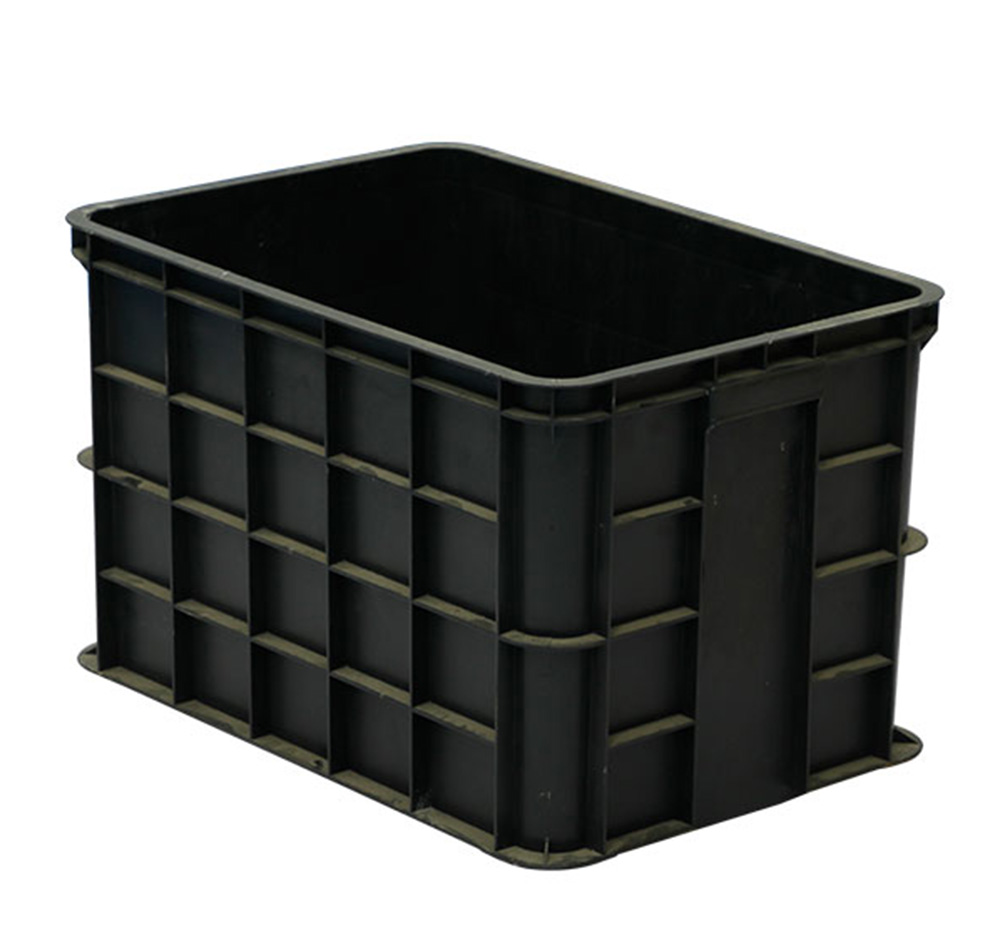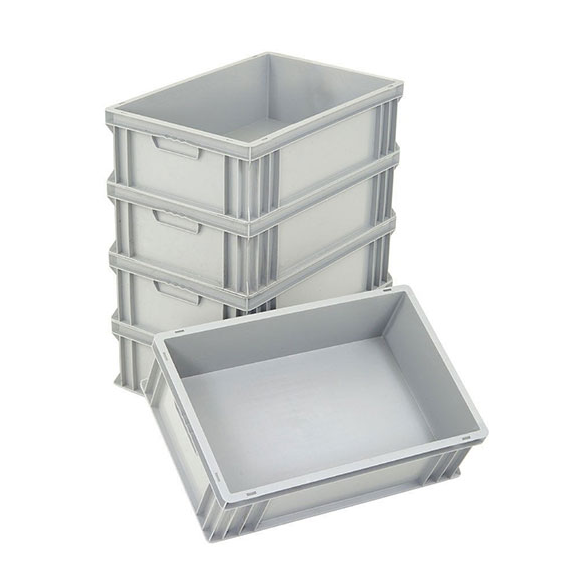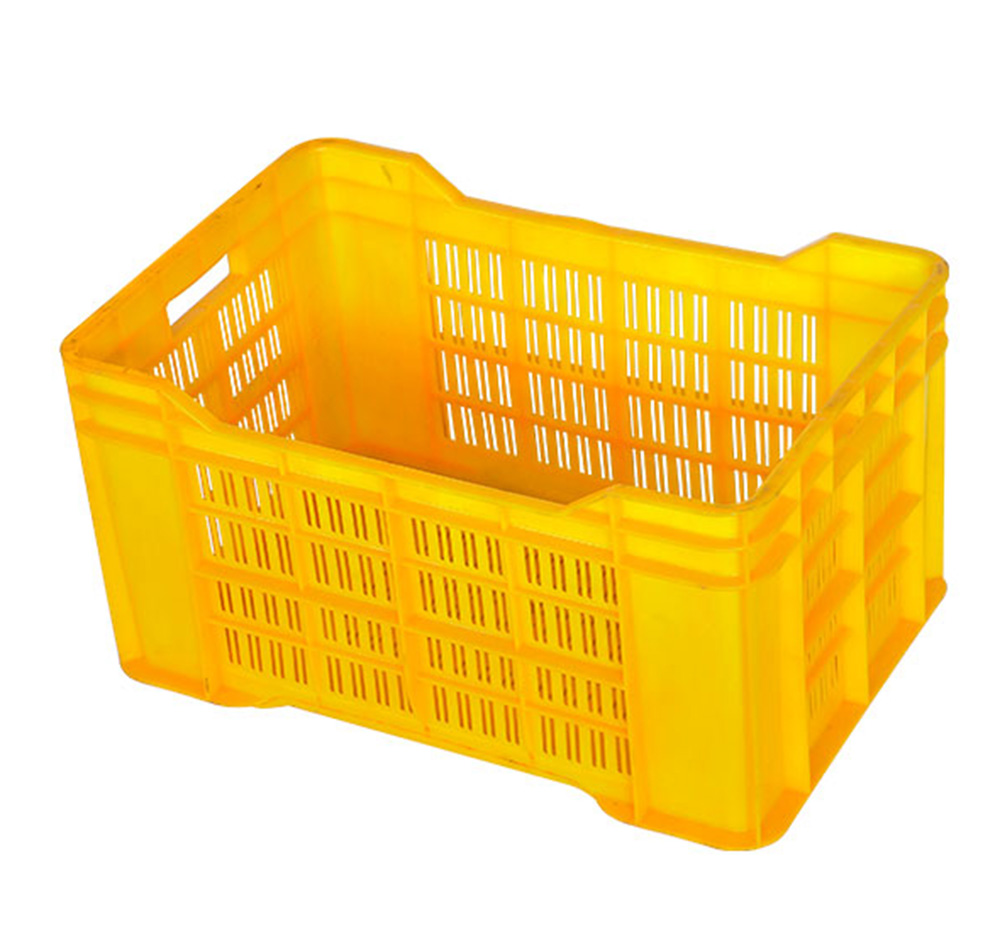
ISM MOULD has manufactured injection molds for plastic crates, pallets, and chairs for over 16 years [citation:8]. In that time, the definition of a “good mold” has shifted. Dimensional accuracy and cycle time still matter. But large-part mold buyers now ask questions that barely existed a decade ago: Will this tool run unattended? Can it process bio-based resin without corrosion? Does it generate the cavity-pressure data my MES needs?
This analysis examines the three defining trends in large part injection molding—automation, sustainability, and smart tooling—from the perspective of a specialist mold maker serving the logistics, agricultural, and furniture seating sectors.
Trend 1: Automation Is Moving from Part Removal to Lights-Out Manufacturing
What is changing in injection molding automation? The shift is from robotic part extraction to fully autonomous production cells where molding, inspection, and secondary operations run without human intervention—often called “lights-out manufacturing” [citation:3][citation:10].
The global injection molding automation solutions market was valued at approximately US$10.0 billion in 2025 and is projected to reach US$20.7 billion by 2034, growing at a CAGR of 8.4% [citation:10]. The hardware segment—robots, end-of-arm tooling, sensors, and vision systems—holds the largest share, but the strategic value lies in integration.
What This Means for Crate, Pallet, and Chair Mold Design
Automation compatibility begins in the mold design phase, not on the factory floor. Three mold-level requirements enable lights-out operation:
- Consistent ejection with zero part hang-up: For crates with deep nesting ribs or pallets with dense leg cores, ejection must be failure-proof. ISM MOULD designs large-diameter ejector pin arrays and stripper plates calibrated to the part’s shrink behavior, preventing the random sticking that stalls automated cells [citation:15].
- Hot runner thermal stability for unattended runs: A lights-out cell cannot tolerate a hot runner zone drifting by 5°C at hour six. Multi-zone PID control with ±1°C tolerance is becoming a baseline specification for large molds running bio-based or engineering resins [citation:2].
- In-mold verification signals: Automated cells need the mold to confirm that a part was fully formed before the robot enters. Cavity pressure sensors integrated into the tool provide that binary signal, eliminating reliance on timer-based logic.
Trend 2: Sustainability Is Reshaping Tool Steel and Thermal Design
How does sustainability affect large part mold manufacturing? The rise of bio-based and recycled polymers—PLA, PHA, Bio-PE, and Bio-PP—introduces rheological and corrosive behaviors that standard large-part tooling was not designed to handle [citation:2].
Biopolymers exhibit narrower processing windows, higher thermal sensitivity, and slower crystallization rates than their fossil-derived counterparts. For a pallet mold running Bio-HDPE or a chair mold processing a PLA blend, these differences translate into concrete tooling requirements:
| Biopolymer Challenge | Molding Defect Risk | ISM MOULD Tooling Response |
|---|---|---|
| High thermal sensitivity (PLA, PHA) | Polymer degradation in hot runner dead zones; discoloration and strength loss | Internally streamlined, dead-spot-free hot runner manifolds with multi-zone PID control within ±1°C [citation:2] |
| Slow crystallization rate | Extended cooling, part warpage, ejection sticking in heavy rib sections | Conformal cooling circuits paired with beryllium copper (BeCu) core inserts for rapid, uniform heat extraction [citation:2] |
| Corrosive outgassing (organic acids) | Pitting on core faces; gas entrapment in deep rib networks | DIN 1.2083 stainless steel or chrome-plated 718H; deep perimeter micro-venting [citation:2] |
| High shear sensitivity | Melt fracture at gate orifices; weld line weakness in pallet legs | Enlarged valve gate lands and subterranean gate diameters optimized via Moldflow shear-rate analysis [citation:2] |
The sustainability trend also drives material efficiency within the mold itself. Gas-assist injection molding, long used for thick-section crates and pallet handles, can reduce material consumption by 15–35% by hollowing out thick ribs while maintaining structural integrity [citation:9]. ISM MOULD evaluates gas-assist feasibility based on wall-thickness ratios: when the maximum wall thickness exceeds twice the nominal wall, gas-assist typically justifies its 20–30% tooling premium through material savings and warpage control [citation:9].
Recycled Content and Tooling Durability
Recycled polymers introduce higher levels of abrasive contaminants and batch-to-batch viscosity variation. For high-volume crate molds running recycled PP or HDPE, tool steel selection becomes a life-cycle cost decision. P20 and 718H remain appropriate for 500,000 to 1 million cycles; glass-filled or heavily contaminated streams warrant H13 with surface treatments [citation:15].
Trend 3: Smart Tooling Moves Sensing from the Machine to the Mold
What is smart tooling in injection molding? Smart tooling embeds sensors directly into the mold to measure cavity pressure, mold temperature, and closing force at the point of part formation—rather than inferring these values from machine hydraulics or nozzle readings [citation:5].
Research from ScienceDirect describes autonomous sensor systems that create a “digital shadow” of each molded part, correlating unique part IDs with the exact processing conditions under which they were produced. This enables defect analysis at the individual-part level, not just batch-level inspection [citation:5]. For large parts like pallets and chairs—where a single out-of-tolerance part represents significant material and energy waste—this traceability has direct economic value.
Practical Smart Tooling Applications for Large Part Molds
- Cavity pressure-based process windows: Instead of relying on a fixed hold pressure and time, the mold’s pressure sensor determines switchover. This is particularly valuable for crates with variable wall thickness, where fill patterns fluctuate with material lot changes.
- Predictive maintenance signals: A gradual increase in ejection force, detected through mold-mounted strain sensors, can flag wear on ejector pins or guide pillars before a production stoppage occurs.
- Digital twin validation: Mold flow simulations calibrated against real cavity-pressure data from the first production tool create a validated digital twin. Subsequent mold variants—a new chair back design or a pallet with modified rib geometry—can be simulated with higher confidence, reducing physical trial cycles [citation:7].
For ISM MOULD’s product categories, smart tooling delivers differentiated value:
| Mold Type | Highest-Value Sensor Placement | Why It Matters |
|---|---|---|
| Crate mold (turnover box) | End-of-fill cavity pressure at the farthest flow point from the gate | Confirms complete fill in thin walls (1.5–3.0 mm) before ejection; prevents short-shot crates from reaching automated handling [citation:15] |
| Pallet mold | Pressure sensors in the leg cores and top-deck rib intersections | Detects weld-line weakness in high-stress zones; correlates packing pressure with load-bearing performance [citation:15] |
| Plastic chair mold | Temperature sensors near visible surfaces and living-hinge areas | Prevents cosmetic defects from thermal gradients; validates cooling uniformity in complex 3D geometry [citation:15] |
Integrating the Three Trends: A Tooling Strategy, Not a Checklist
Automation, sustainability, and smart tooling are often discussed as separate roadmaps. In practice, they converge in the mold design brief. A pallet mold intended for lights-out production with recycled HDPE requires: hot runner zones stable enough for unattended operation (automation), corrosion-resistant steel and venting for volatile outgassing (sustainability), and cavity pressure feedback to confirm each part’s integrity without human inspection (smart tooling).
ISM MOULD approaches large part mold projects through a structured evaluation framework covering part geometry, production volume, material rheology, and automation targets. This framework has been applied across crate molds for agricultural logistics, heavy-duty pallet molds for racking systems, and monoblock chair molds for commercial seating—each with distinct cooling, gating, and steel selection requirements [citation:1][citation:15].
Frequently Asked Questions
Can existing large part molds be retrofitted for smart tooling?
Yes, but with caveats. Cavity pressure sensors can be added to many existing molds through drilled sensor ports, provided the mold has sufficient clearance and the cavity surfaces allow sensor flush-mounting. Hot runner upgrades and conformal cooling retrofits are more invasive and often cost-prohibitive relative to a new tool. ISM MOULD evaluates retrofit feasibility on a case-by-case basis [citation:1].
What is the minimum production volume to justify gas-assist for a crate or pallet mold?
ISM MOULD’s decision framework suggests gas-assist becomes economically favorable above 50,000–150,000 parts annually, depending on part weight and material cost. Below 50,000 parts, conventional molding typically offers lower total cost due to the 20–30% tooling premium for gas hardware and seals [citation:9].
How does conformal cooling change cycle time for large chair molds?
For thick-section areas like chair legs and backrest ribs, conformal cooling can reduce local cooling time by 20–40% compared to conventional gun-drilled channels, depending on geometry complexity. The benefit is most pronounced in parts with uneven wall thickness where hot spots would otherwise dictate the overall cycle [citation:15].