
Executive Summary & Industry Overview
In global logistics, material handling, warehousing, and modern household markets, durable plastic crates, heavy-duty pallets, and plastic furniture are cornerstone assets. Investing in robust injection molding machinery is only half the battle; the mold is the true heart of any production system, dictating cycle times, product lifespan, and overall unit cost efficiency.
When selecting or custom-ordering industrial tooling, processing plants often run into two complex bottlenecks: matching the tool configuration with precise production throughput, and optimizing core-cavity dynamics to process specific polymer behaviors (such as virgin PP, HDPE, or tough recycled formulations). This technical analysis outlines the rigorous engineering parameters required to match your equipment investments with long-term commercial goals.
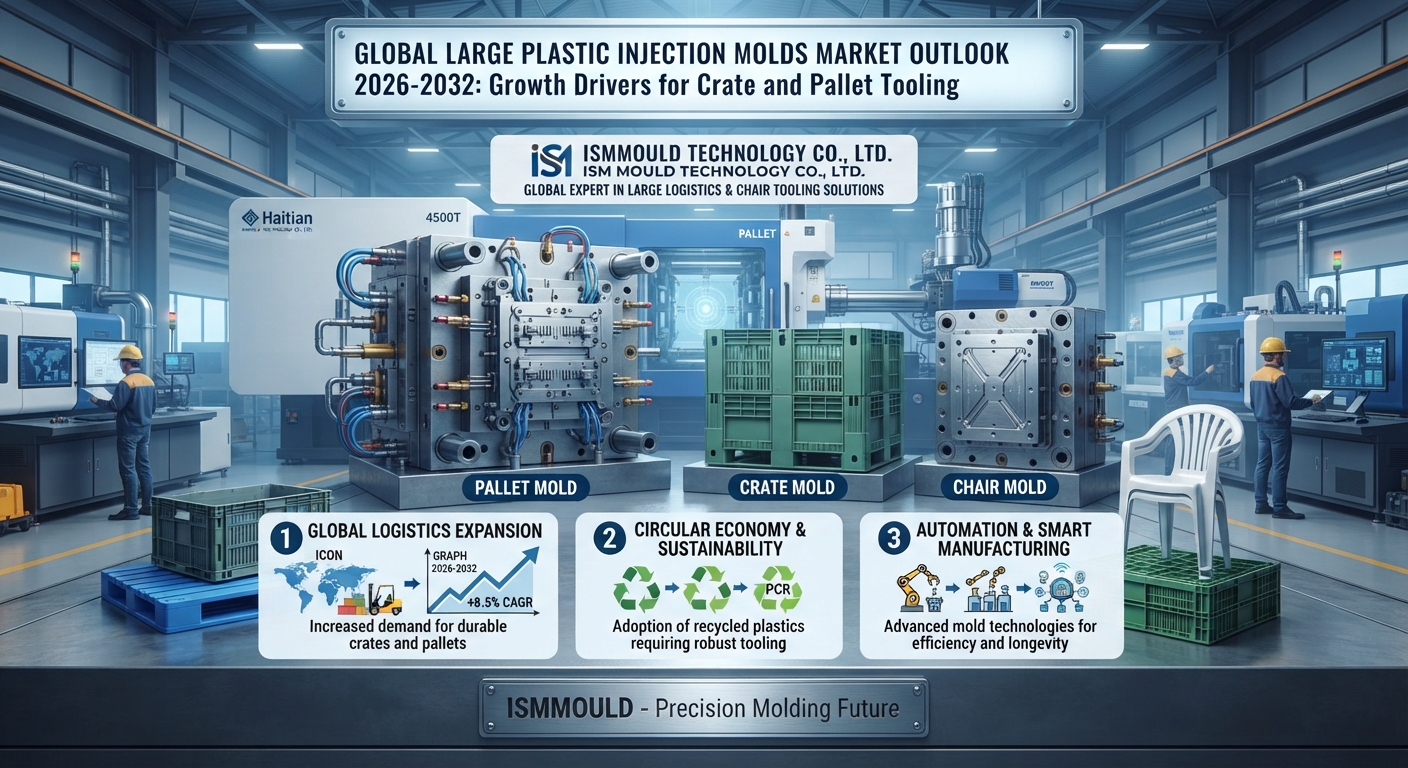
Engineering Benchmark: As a specialized manufacturer of heavy logistics tooling, ISMMOULD configures every crate mold, pallet mold, and chair mold to achieve maximal industrial reliability, minimizing the total cost of ownership (TCO) across millions of cycles.
1. Aligning Target Capacity with Mold Class & Steel Selection
Your target annual or lifetime output is the primary metric for mold steel specification. Selecting a low-grade steel for high-intensity operations causes rapid tool wear, flash formation, and parting-line deformation, while over-engineering low-volume tools ties up valuable capital.
| Annual Output (Shots) | Recommended Mold Class | Optimal Steel Grades | Engineering Core Focus (Crates, Pallets & Chairs) |
|---|---|---|---|
| < 100,000 (Low Volume) |
Class 103 / 104 | P20, 1.2738 | Ideal for seasonal customized crate designs or localized small chair lines. Prioritizes economical initial tooling costs. |
| 100,000 – 500,000 (Medium Volume) |
Class 102 | 718H, H13, 1.2311 | Standard logistics crates and light pallet applications. Features localized heat treatment in wear-intensive areas. |
| > 500,000 (High Volume) |
Class 101 (Long Life) | S136, H13 (Fully Hardened), 1.2344 | Continuous mass production of industrial logistics crates, stackable pallets, and monobloc chairs. Fully hardened cavities and sliders. |
Thermally Optimized Cooling Circuit Design
For bulky products like logistics plastic crates and thick pallet decks, cooling represents more than 60% of the entire molding cycle. To accelerate capacity output, ISMMOULD engineers utilize conformal cooling layouts integrated with high-conductivity Beryllium Copper (BeCu) alloy inserts along the cores, rib structures, and rims. This reduces cycle times by 15% to 25%, drastically boosting hourly product yields.
2. Optimizing Mold Architecture for Specific Polymeric Materials
Different plastics display vast variations in fluid flow, thermal shrinkage, and abrasive properties. A robust mold design must be customized to handle the specific physical attributes of the selected polymer matrix.
A. High-Density Polyethylene (HDPE) - Ideal for Heavy Crates & Pallets
HDPE is preferred for industrial pallets and warehouse storage boxes due to its superb impact strength and structural integrity. However, it exhibits high volumetric shrinkage (1.5% to 3.0%), which can easily cause warping across large, flat surfaces.
The ISMMOULD Solution: We implement strategic rib networks and balanced hot-runner distributions (using top-tier hot-runner systems like YUDO or Synventive) to equalize cavity pressure, maintaining strict flatness and dimensional tolerances on critical stackable dimensions.
B. Polypropylene (PP) - Perfect for Monobloc Chairs & Lightweight Crates
PP is highly flexible, heat resistant, and perfect for household chair designs and folding logistics boxes. However, its low viscosity increases the risk of flash formation if the clamping alignment is off, and inadequate gas venting can cause thermal burn marks on high-aesthetic surfaces.
The ISMMOULD Solution: Our high-precision CNC machining centers hold tight tolerances (under 0.01mm) on all parting lines. We incorporate optimized perimeter gas venting around the mold edges to guarantee fast gas displacement, preventing surface imperfections on premium furniture models.
C. Post-Consumer Recycled Plastics (PCR / rHDPE / rPP)
Using recycled plastics cuts raw material costs and aligns with global eco-mandates. However, recycled polymers possess unstable Melt Flow Indices (MFI) and often contain abrasive micro-impurities that speed up cavity wear.
The ISMMOULD Solution: We use specialized surface treatment treatments, such as hard chrome plating and Physical Vapor Deposition (PVD), to add a resilient barrier over core and cavity surfaces, preventing corrosion and physical abrasion over millions of cycles.
3. ISMMOULD Specialized Turnkey Product Portfolio
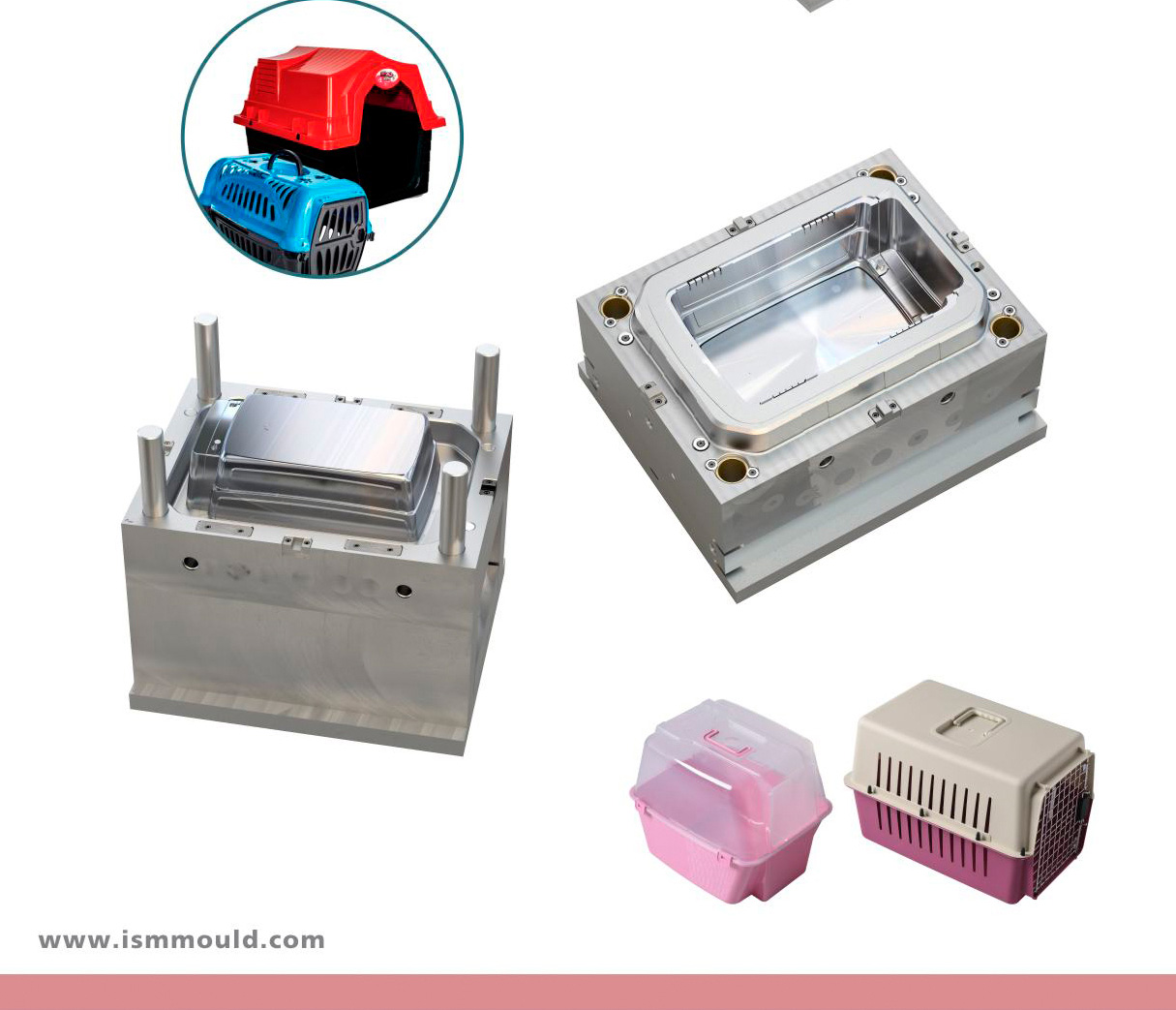
A mold is only as good as the product it delivers. We design reliable tooling customized to the operational demands of three major categories:
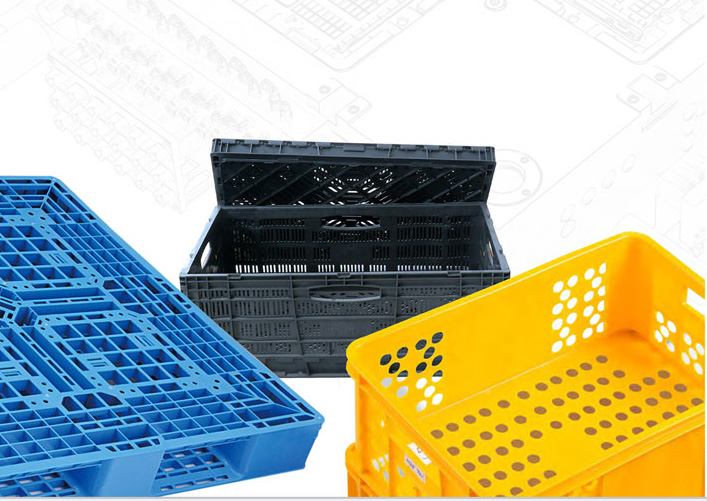
- Industrial Plastic Crate Molds: Precision designs for folding crates, agricultural baskets, and chemical storage bins, integrating automated slider ejection and collapsible mechanical cores.
- Heavy-Duty Pallet Molds: Large-tonnage tooling (up to 40 tons) for rackable, stackable, and export pallets, optimizing multiple hot-runner drop configurations and hydraulic sliders.
- Monobloc Plastic Chair Molds: Combining structural safety with beautiful aesthetics, with integrated gas-assist technologies for lightweight, high-strength frames.