
In the world of industrial material handling, a plastic pallet must endure heavy loads, repeated impacts, and long-term use. At ISM, we understand that pallet mold quality directly determines product performance. So, how do we ensure every pallet leaving our production line achieves exceptional flatness control and impact resistance? The answer lies in three critical stages: raw material selection, precision mold design, and scientific molding process control.
1. Raw Material Selection – The Foundation of Performance
The journey begins with choosing the right raw materials. For high-performance pallets, ISM uses premium-grade polypropylene (PP) or high-density polyethylene (HDPE), often reinforced with UV stabilizers and impact modifiers.
Why it matters for flatness and impact resistance:
Consistent melt flow reduces internal stress, preventing warpage.
Impact modifiers enhance low-temperature toughness, reducing crack risk under sudden loads.
2. Mold Steel & Heat Treatment – Where Flatness Is Born
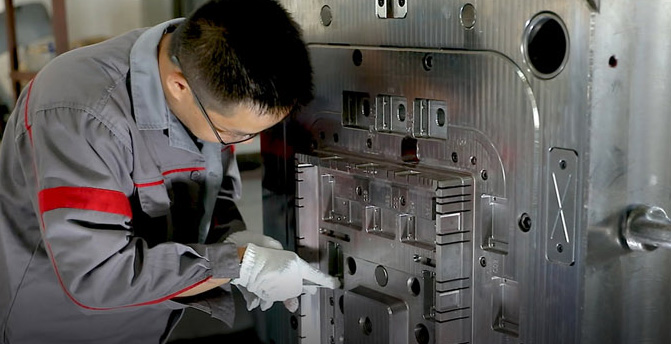
A pallet’s flatness is largely determined by the precision of its mold. ISM selects high-grade tool steel (e.g., P20, 718H, or H13) and applies vacuum heat treatment to minimize deformation during repeated injection cycles.
Key practices include:
CNC precision machining with tolerances within ±0.02mm.
Advanced polishing to ensure even melt distribution and smooth surface finish.
3. Cooling System Design – Controlling Shrinkage for Flatness
Uneven cooling is the #1 cause of pallet warpage. Our engineers design conformal cooling channels using simulation software (e.g., Moldflow).
This enables:
Uniform temperature distribution across the mold core and cavity.
Balanced shrinkage, directly improving flatness control and reducing post-mold bending.
4. Injection Molding Process Optimization – Locking in Impact Resistance
Even the best mold can fail without the right process parameters. ISM works closely with customers to optimize:
Injection pressure & holding time – to eliminate voids and sink marks.
Melt & mold temperature – to enhance crystallinity and impact strength.
Cooling time – to stabilize dimensions before ejection.
5. Rigorous Quality Testing – Proof of Performance
Every pallet mold undergoes:
Flatness inspection using coordinate measuring machines (CMM).
Drop weight impact test per ASTM D5628 standard.
Dynamic load & racking tests to simulate real-world warehouse conditions.
Only after passing these tests does a mold leave ISM’s workshop.
Conclusion – ISM Manufacturing Excellence
From raw material compatibility to final impact validation, ISM integrates engineering rigor into every pallet mold we produce. Whether you need a standard industrial pallet or a custom design, our process ensures your pallets remain flat under load and tough against impact – shift after shift.
Contact ISM today to discuss your next pallet mold project. Let us build durability and precision into every millimeter.