Hot Runner vs Cold Runner for Crate and Pallet Molds: Which Delivers Better ROI?
A Deep Technical Analysis by ISMMOULD — Global Experts in Plastic Crate Molds, Pallet Molds, and Plastic Chair Molds
Executive Summary
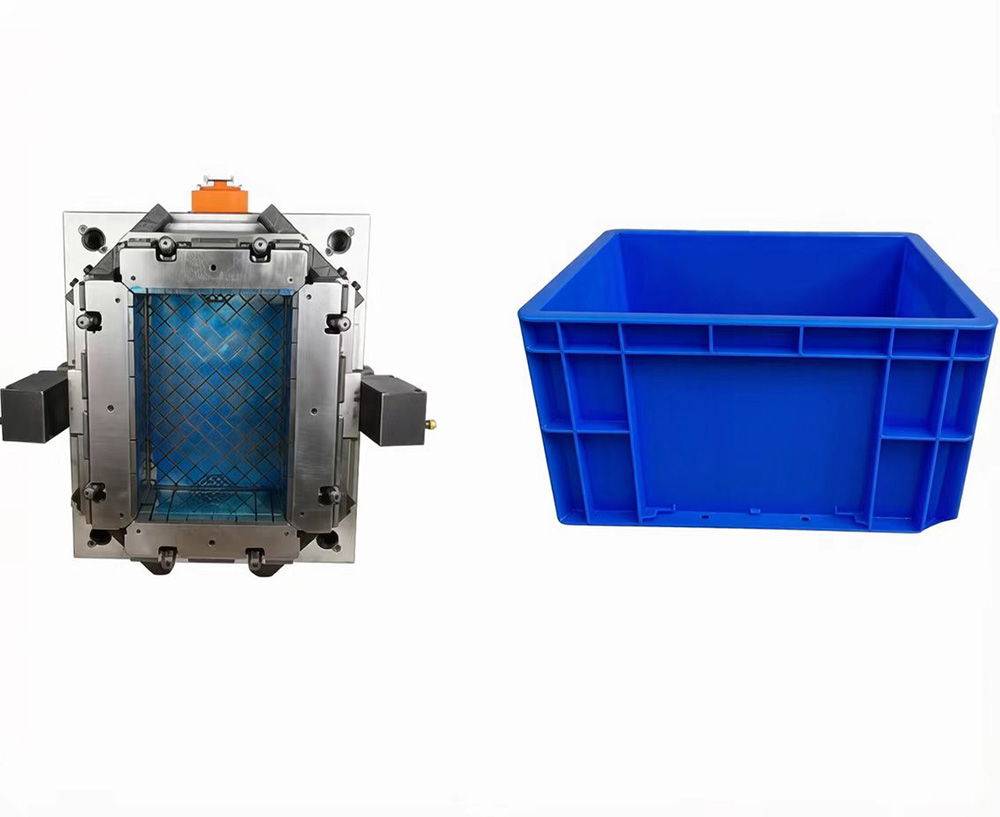
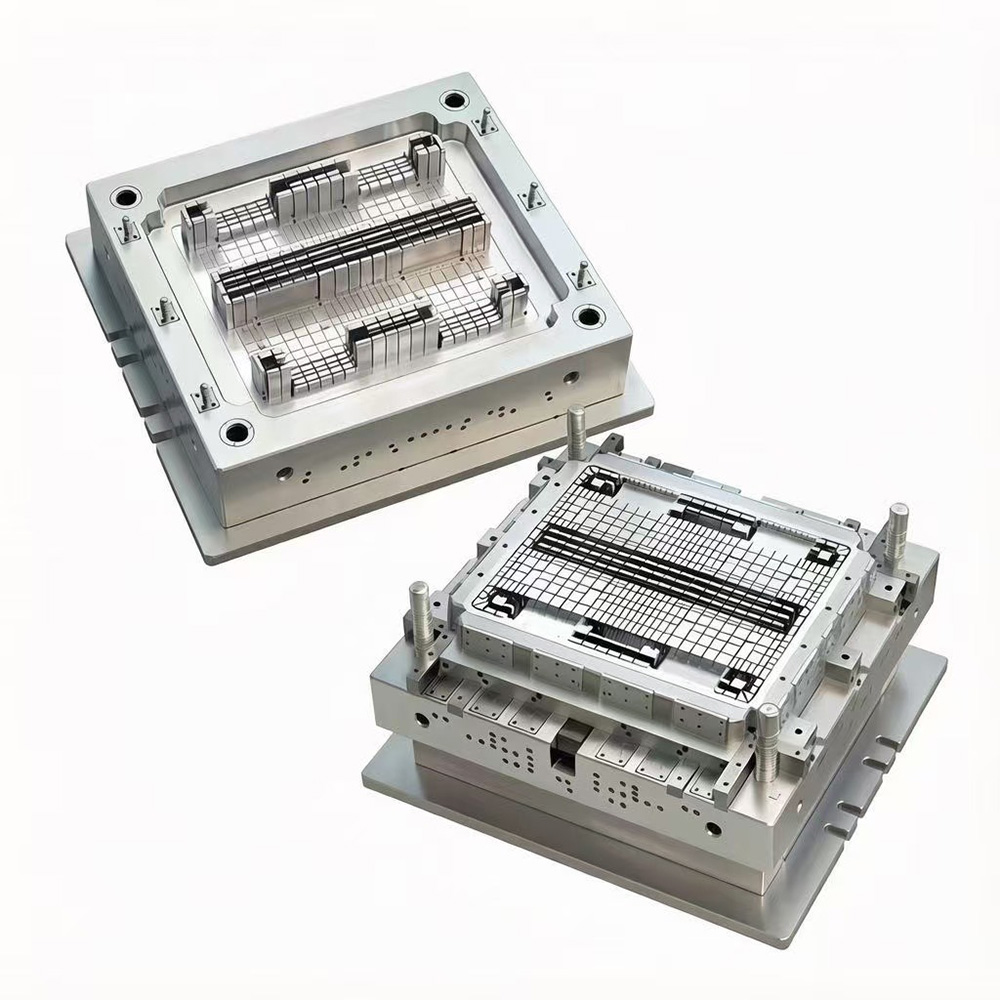
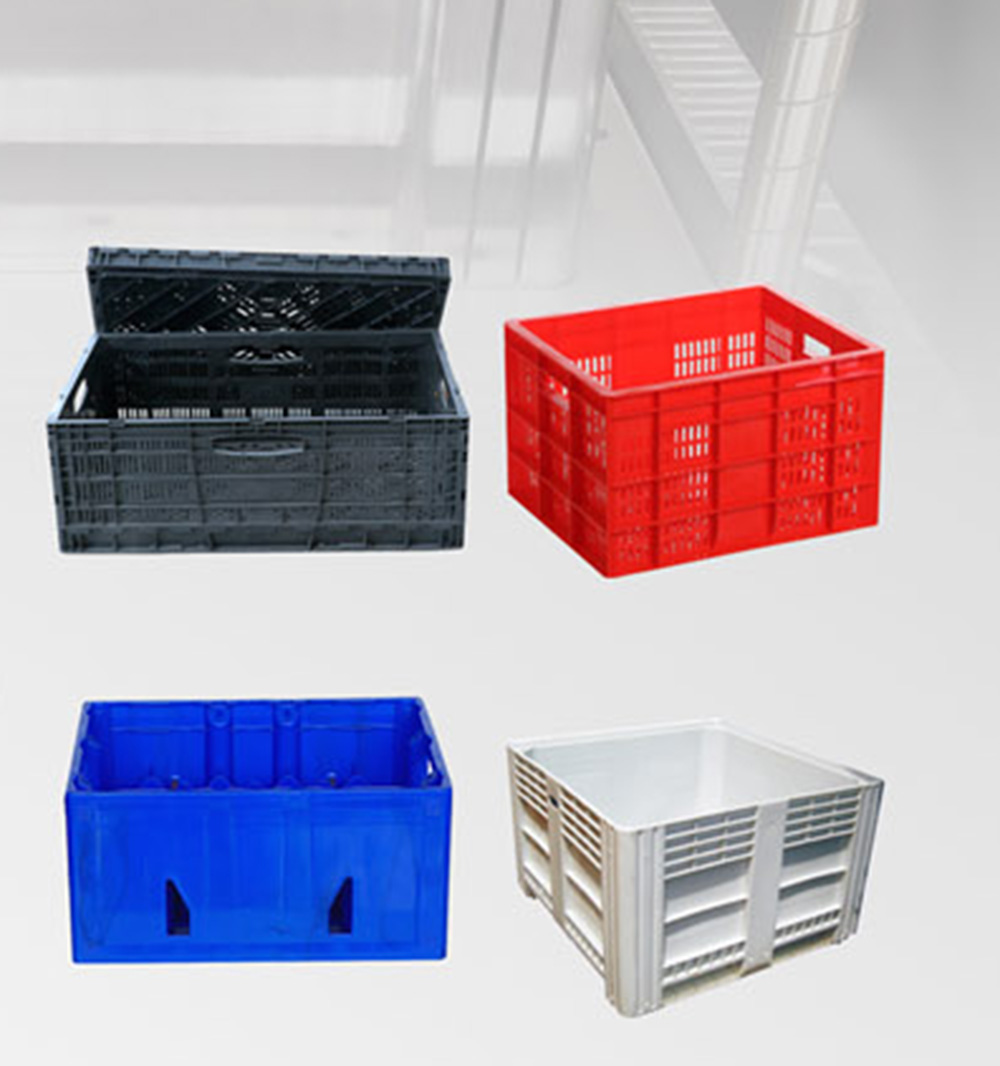
In high-capacity plastics manufacturing, selecting the right melt distribution system for heavy-duty industrial tooling is a critical financial decision. For complex, large-format products like plastic crate molds , pallet molds , and plastic chair molds, the debate between hot runner and cold runner systems goes far beyond initial tooling costs. It directly dictates material waste, injection cycle efficiency, and long-term operating expenditures. This engineering report by ISMMOULD breaks down the comprehensive Return on Investment (ROI) matrix to help procurement managers and injection engineers optimize their production lines.
1. Engineering Physics: Hot Runner vs. Cold Runner in Large Tooling
When injection molding high-tonnage parts such as industrial stackable crates, nestable distribution pallets, or heavy monobloc chairs, the flow path of molten polymer (typically HDPE or PP) determines the structural integrity of the final part.
- Cold Runner Systems: The polymer cools within the runner channel along with the part, requiring mechanical ejection and subsequent trimming or regrinding. For large parts, cold runners must be thick to prevent premature freezing, which significantly inflates scrap rates.
- Hot Runner Systems: The polymer is maintained in a molten state within an internally or externally heated manifold up to the gate. This allows for direct, scrap-free injection into the cavity, which is crucial for multi-gated, thin-walled designs.
2. Quantifiable ROI Comparison Matrix
The following technical data illustrates the operational divergence between both runner systems when applied to high-output logistics packaging and furniture mold manufacturing.
| Operational Parameter | Cold Runner Configured Molds | Hot Runner Configured Molds (ISMMOULD Standard) |
|---|---|---|
| Initial Tooling CAPEX | Lower upfront investment. Simple mechanical design with no electrical manifold. | Higher initial cost due to heating elements, controllers, and specialized manifolds (e.g., YUDO or Synventive). |
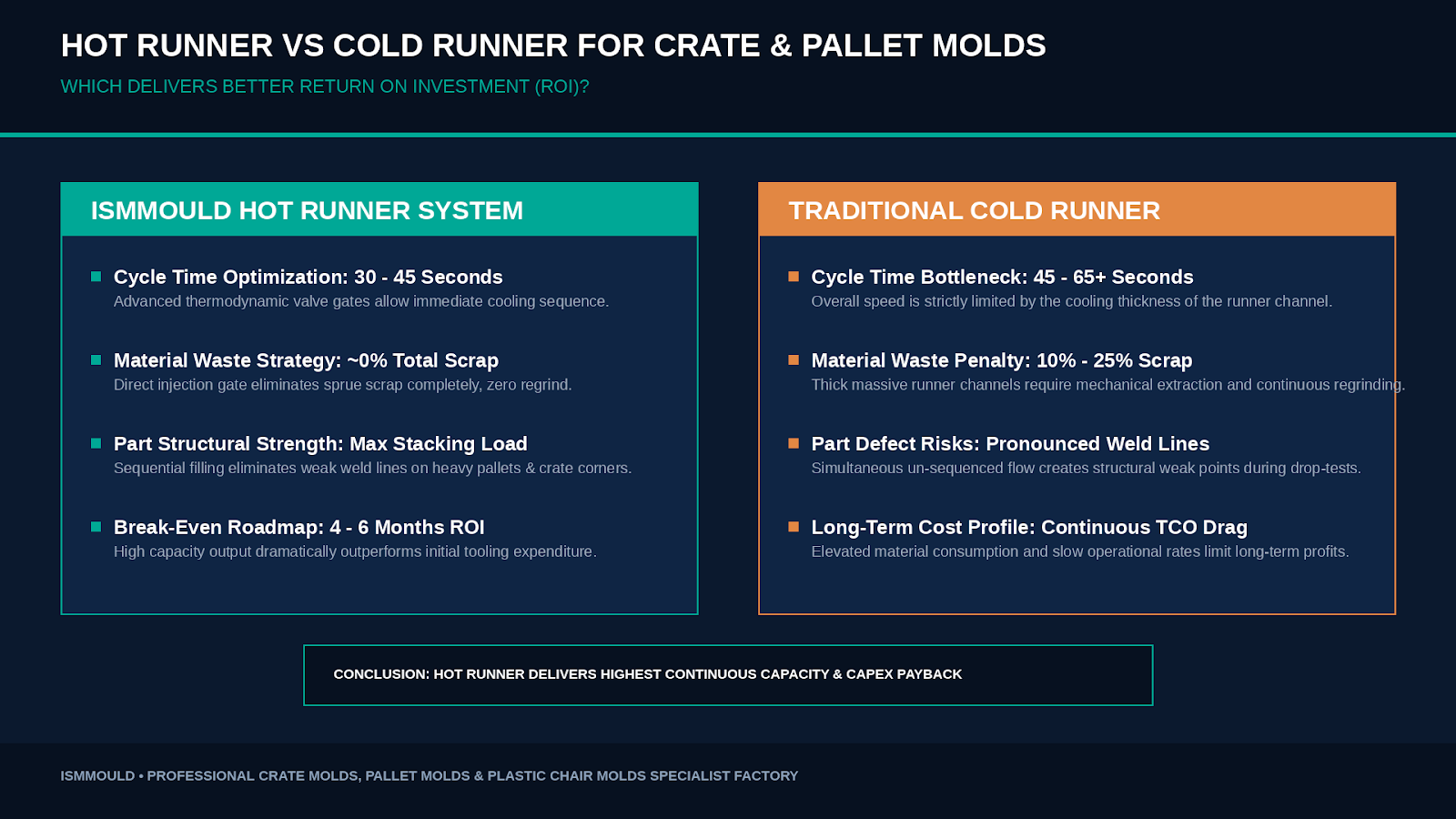
| Material Waste & Scrap Rate | High (10% - 25% waste). Large runner scraps require immediate regrinding, risking contamination when mixing with virgin PP/HDPE. | Near Zero (0.5% waste). Direct gating into the part eliminates the runner completely, drastically cutting raw material costs. |
| Injection Cycle Time | Slower (45 - 65+ seconds). The overall cycle time is dictated by the cooling time of the thick cold runner rather than the part itself. | Fast (30 - 45 seconds). Optimized thermal control and conformal cooling allow for immediate part ejection without waiting for runners to solidfy. |
| Weld Lines & Physical Strength | Pronounced weld lines and potential material hesitation in thin walls, reducing the drop-test survival rate of crates. | Flawless structural integrity. Sequential pneumatic valve gating ensures balanced volumetric filling and high stacking strength. |
| Automation Compatibility | Requires complex robotic sorting or manual separation of runners from the finished crates/pallets. | Perfect for fully automated production plants utilizing modern robot take-out arms. Parts are ready for stacking instantly. |
3. Financial Break-Even Analysis: When Does Hot Runner Pay Off?
To accurately calculate the TCO (Total Cost of Ownership), let us evaluate a medium-sized enterprise manufacturing a standard 2.0 kg logistics crate utilizing a multi-cavity tool over an annual run of 500,000 shots:
The Material Dynamic
A cold runner for a crate of this scale typically weighs around 300 grams. Over 500,000 cycles, this generates 150 tons of scrap polymer. Even with efficient regrinding infrastructure, the energy cost of reprocessing, the physical degradation of the polymer's molecular weight, and the inevitable 2-3% total material loss create an immense financial leak.
The Throughput Dynamic
By upgrading to an ISMMOULD engineered hot runner crate mold with sequential valve gating, the injection cycle time drops from 50 seconds to 38 seconds due to advanced thermal separation and double-loop cooling channel placement. This 24% boost in hourly capacity allows manufacturers to complete annual quotas weeks ahead of schedule, saving massive utility expenses and machine wear.
"For low-volume, highly seasonal production runs under 50,000 units, a cold runner might suffice. However, for continuous, high-speed logistics packaging and competitive consumer furniture lines, hot runner tooling achieves complete financial break-even within the first 4 to 6 months of active operation." – ISMMOULD Design Department
4. The ISMMOULD Solution: Intelligent Hybrid Tooling
As an industry-recognized specialist factory for heavy industrial molds, ISMMOULD bridges the gap between high performance and cost control. We don't just supply standard setups; we optimize the entire thermodynamic layout of the tool:
- Balanced Flow Channel Design: Utilizing advanced Moldflow software to guarantee equal pressure distribution in massive pallet molds .
- Thermal Zoning & BeCu Integration: Integrating Beryllium Copper inserts into high-heat accumulation zones (like the rims of plastic crate molds and the deep structural ribs of plastic chair molds )to maximize heat transfer rates.
- Uncompromised Post-Consumer Recycled (PCR) Processing: Customizing hot runner nozzle tip diameters to smoothly process unstable Melt Flow Index (MFI) recycled materials without clogging or creating localized burn marks.
Consult Our Tooling Engineers Today
Are you planning your next high-volume manufacturing deployment? Let ISMMOULD conduct a precise, customized ROI projection based on your factory machinery, target resin type, and annual throughput goals. Contact our technical engineering office today to receive an optimal layout design blueprint.