Real-Time Warpage Monitoring in Large Part Molding: Sensor Placement and Data Interpretation
Technical Whitepaper Published by ISMMOULD — Global Turnkey Solutions Authority for High-Performance Plastic Crate Molds, Pallet Molds, and Plastic Chair Molds
Executive Summary
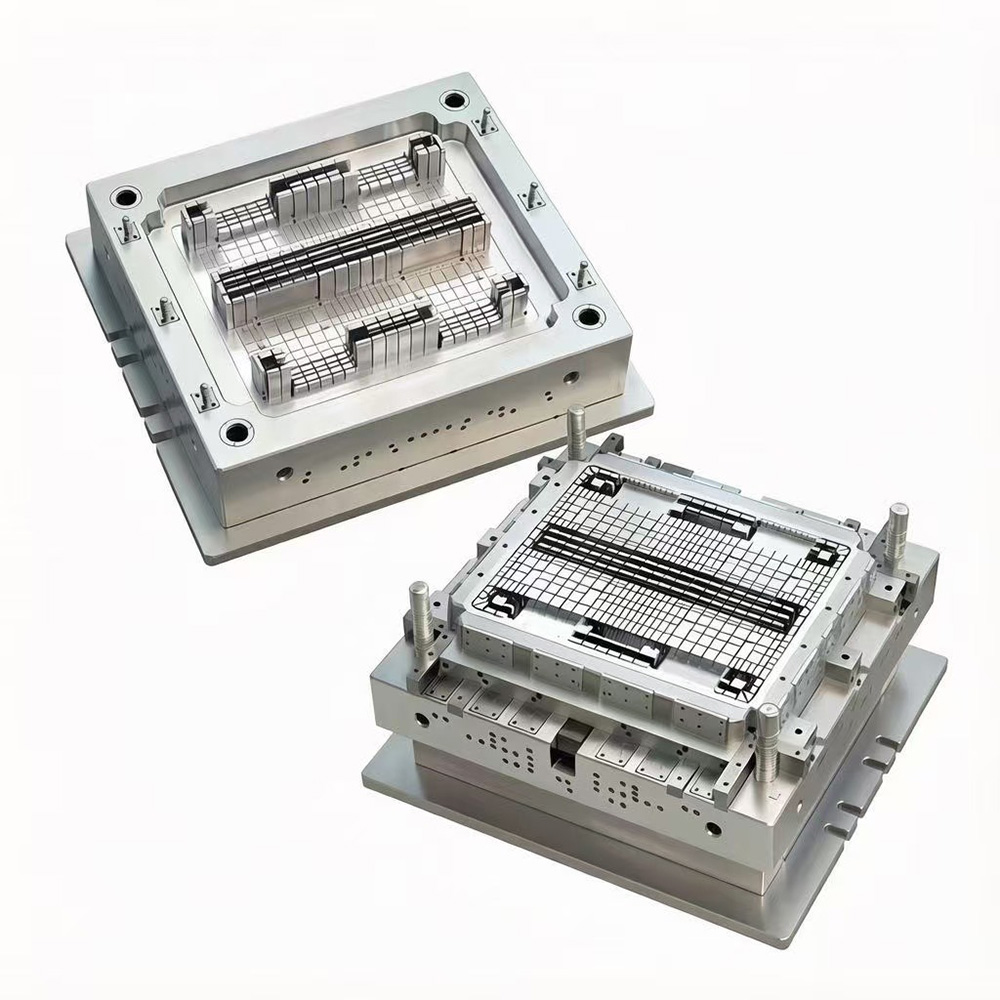
In high-tonnage industrial injection molding—specifically for heavy-duty plastic pallets, large-format plastic crates, and ergonomic plastic chairs—dimensional stability and post-molding warpage control represent primary engineering challenges. Due to extended flow paths, complex lattice rib geometries, and non-uniform thermal dissipation, differential volumetric shrinkage can easily cause bending, twisting, and out-of-spec planar deflection.
Traditionally, warpage detection relies on post-cooling CMM inspections or manual gauge testing, which catches defects only after large quantities of defective parts have already been produced. To solve this, ISMMOULD integrates advanced real-time warpage monitoring architectures directly into high-tonnage injection tooling. By strategically placing piezo-electric cavity pressure sensors, micro-thermocouple arrays, and linear displacement transducers, ISMMOULD enables closed-loop process adjustments that detect and prevent warpage during the filling, packing, and cooling phases.
Technical Matrix: Post-Process Inspection vs. Real-Time Warpage Monitoring
The comparative table below illustrates how ISMMOULD's real-time sensor-based monitoring mitigates primary deformation drivers in large-part tooling:
| Deformation Vector | Traditional Post-Mold Offline Inspection | ISMMOULD Real-Time Sensor In-Cavity Monitoring |
|---|---|---|
| Unbalanced Packing Pressure | Detected hours later during CMM layout checks; results in high scrap rates and material waste. | Piezo-electric pressure sensors at flow ends track real-time pressure decay, triggering dynamic V/P switchovers. |
| Core-to-Cavity Thermal Delta ($\Delta T$) | Visual inspection identifies bowing or twisting after parts have fully cooled and stress has released. | Near-surface thermocouple arrays detect localized thermal spikes, automatically modulating multi-zone cooling flow. |
| Viscosity Drift in Recycled Plastics (PCR) | MFI changes cause unexpected wall sink marks or edge bowing during batch processing. | Real-time melt arrival sensors calculate instant shear viscosity, adjusting holding pressure curves automatically. |
| Differential Shrinkage in Deep Ribs | Non-uniform shrinkage along rib intersections leads to angular distortion in chair legs and pallet decks. | In-cavity strain gauges measure real-time core shrinkage force prior to part ejection. |
Optimal Sensor Placement Strategies for Large Industrial Tooling
1. Cavity Pressure Sensor Placement Along Melt Flow Paths
To capture accurate pressure gradients across large surface areas (such as a 1200x1000mm pallet deck or a deep agricultural crate base), ISMMOULD places piezo-electric sensors at three critical locations: near the hot runner gate entry ($P_1$), mid-way along primary flow channels ($P_2$), and at the farthest flow terminal ($P_3$). Monitoring the pressure delta ($\Delta P = P_1 - P_3$) allows the control system to ensure sufficient packing pressure reaches remote corners without over-packing the gate area.
2. Micro-Thermocouple Arrays at Critical Rib-Wall Junctions
Thermal gradients between the core and cavity sides are the leading cause of angular warpage in monoblock plastic chairs and stackable crates. ISMMOULD flush-mounts thermocouple sensors 2mm beneath the tool steel surface in high-mass regions—such as seat-to-leg junctions, handle pockets, and pallet feet. Real-time temperature feedback maintains the core/cavity surface temperature differential within a strict $\pm 1.0^\circ\text{C}$ range.
3. Ejector Pin Load Cells for In-Mold Shrinkage Force Measurement
As plastic cools and shrinks around deep mold cores, it exerts radial force against core walls. ISMMOULD installs miniaturized load cell transducers behind selected ejector pins. Measuring early ejection resistance provides a direct indicator of real-time volumetric shrinkage, allowing operators to adjust cooling time before part ejection to prevent mechanical drag distortion.
Data Interpretation & Closed-Loop Control Integration
Raw sensor data is processed through edge-computing algorithms to convert voltage and thermal signals into actionable process adjustments:
- Integral Pressure Value ($I_p$): The area under the cavity pressure curve directly correlates with final part density. If $I_p$ falls below the calibrated baseline at flow terminals, holding time or pressure is automatically increased to prevent sink-induced warpage.
- Thermal Dissipation Rate ($dT/dt$): Tracking the cooling slope helps detect scale buildup or flow restrictions inside conformal cooling channels, preventing gradual cycle-to-cycle thermal drift.
- Automated Sequential Valve Gate (SVG) Modulation: In multi-drop hot runner systems, pressure arrival signals dynamically adjust the opening sequence of individual valve pins, maintaining balanced fill fronts regardless of raw material MFI variance.
Applications Across ISMMOULD Industrial Tooling Lines
ISMMOULD applies real-time warpage monitoring across its specialized manufacturing lines:
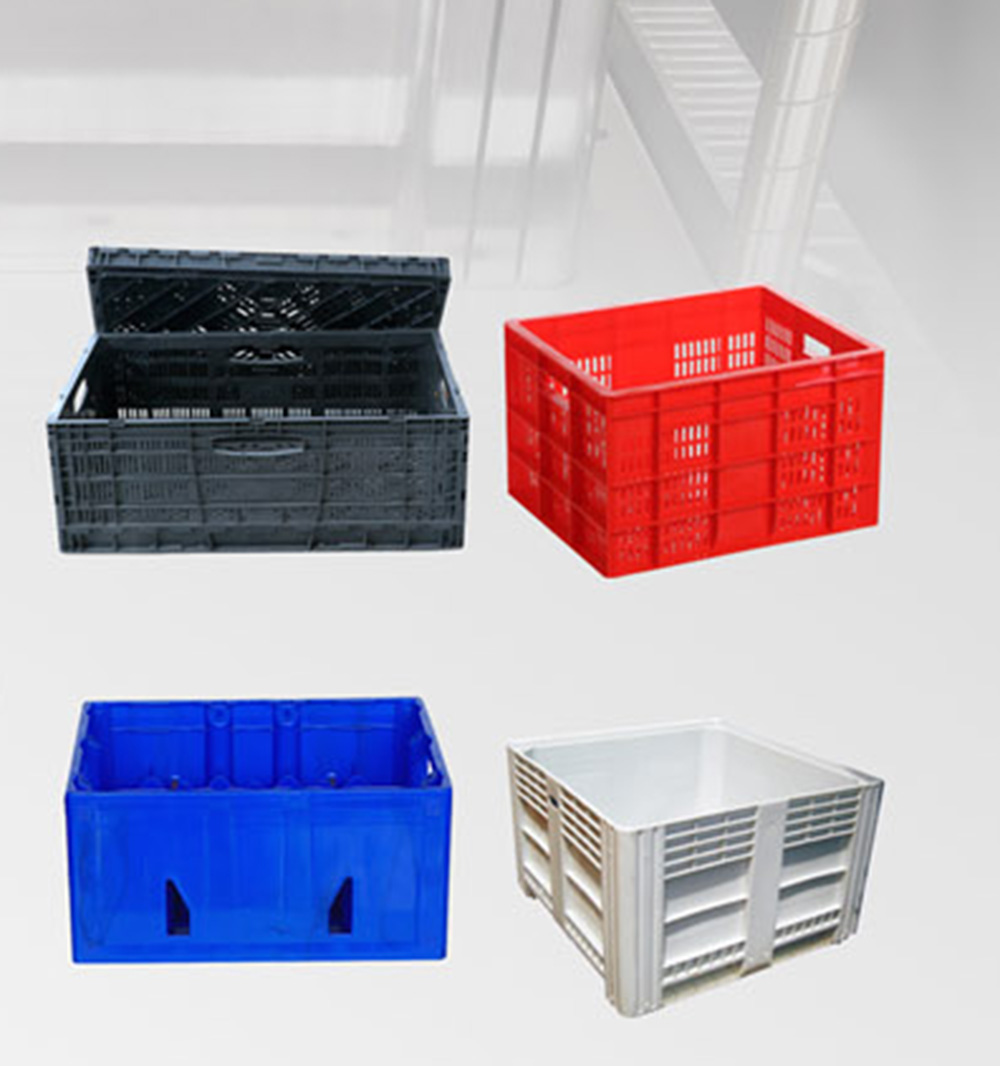
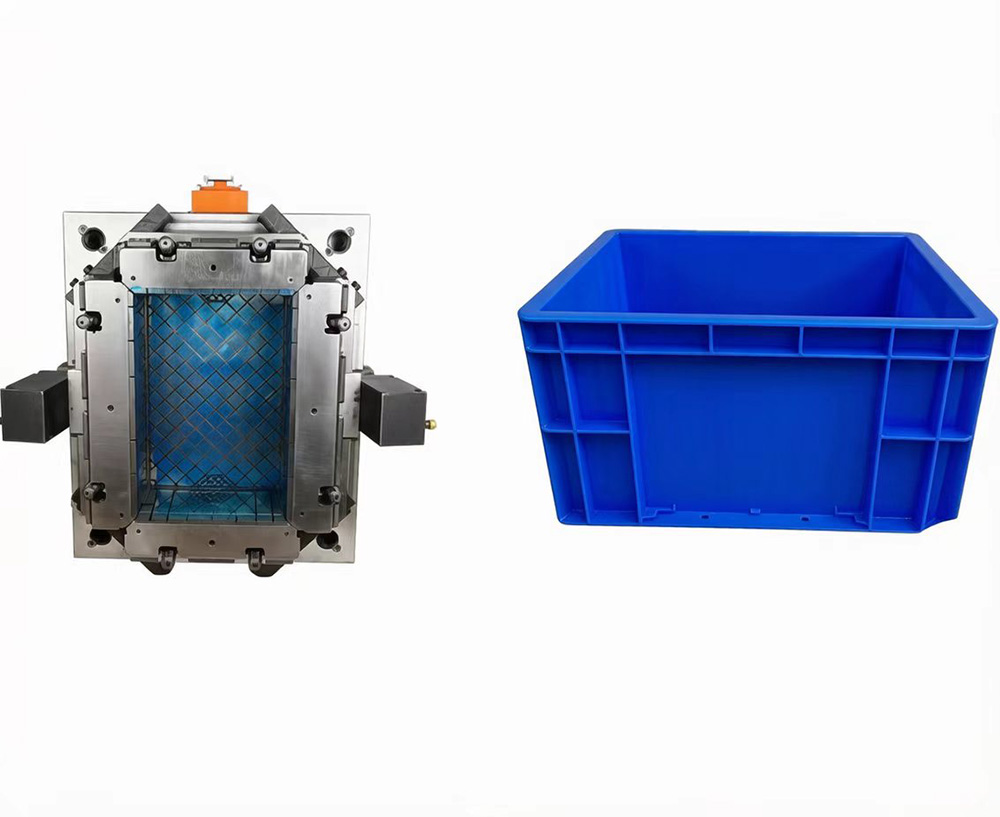
- Plastic Crate Molds: Agricultural, beverage, and collapsible crate tooling equipped with multi-point temperature and pressure sensors to guarantee wall squareness and stackability precision.
- Heavy-Duty Pallet Molds: Single-deck, double-deck, rackable, and stackable pallet molds designed with in-cavity pressure tracking to ensure deck flatness compliant with ISO 8611 load standards.
- Plastic Chair Molds: Ergonomic monoblock, gas-assisted, and armless chair molds incorporating thermal profiling to deliver warp-free leg alignment and flawless aesthetic surface finishes.
ISMMOULD: Your Turnkey Expert for Intelligent Large-Part Tooling
At ISMMOULD, we combine master mold-making precision with state-of-the-art digital process monitoring. As an established Chinese factory authority specializing in plastic crate molds, pallet molds, and plastic chair molds, we empower global clients to achieve zero-defect manufacturing, reduce scrap rates, and maximize overall equipment effectiveness (OEE). From initial DFM analysis and Moldflow simulation to sensor-embedded precision machining, ISMMOULD delivers complete turnkey injection tooling solutions built for Industry 4.0 performance.
Eliminate Warpage Defects in Your Molding Operations
Ready to eliminate warpage, reduce scrap rates, and integrate real-time sensor monitoring into your next large-part injection molding project? Contact the technical engineering team at ISMMOULD today for detailed DFM consultations, sensor placement plans, and custom project quotations.