How Mold Flow Analysis Prevents Defects Before Steel Is Cut for Crate and Pallet Molds
Technical Whitepaper Published by ISMMOULD — Global Turnkey Solutions Authority for High-Performance Plastic Crate Molds, Pallet Molds, and Plastic Chair Molds
Executive Summary
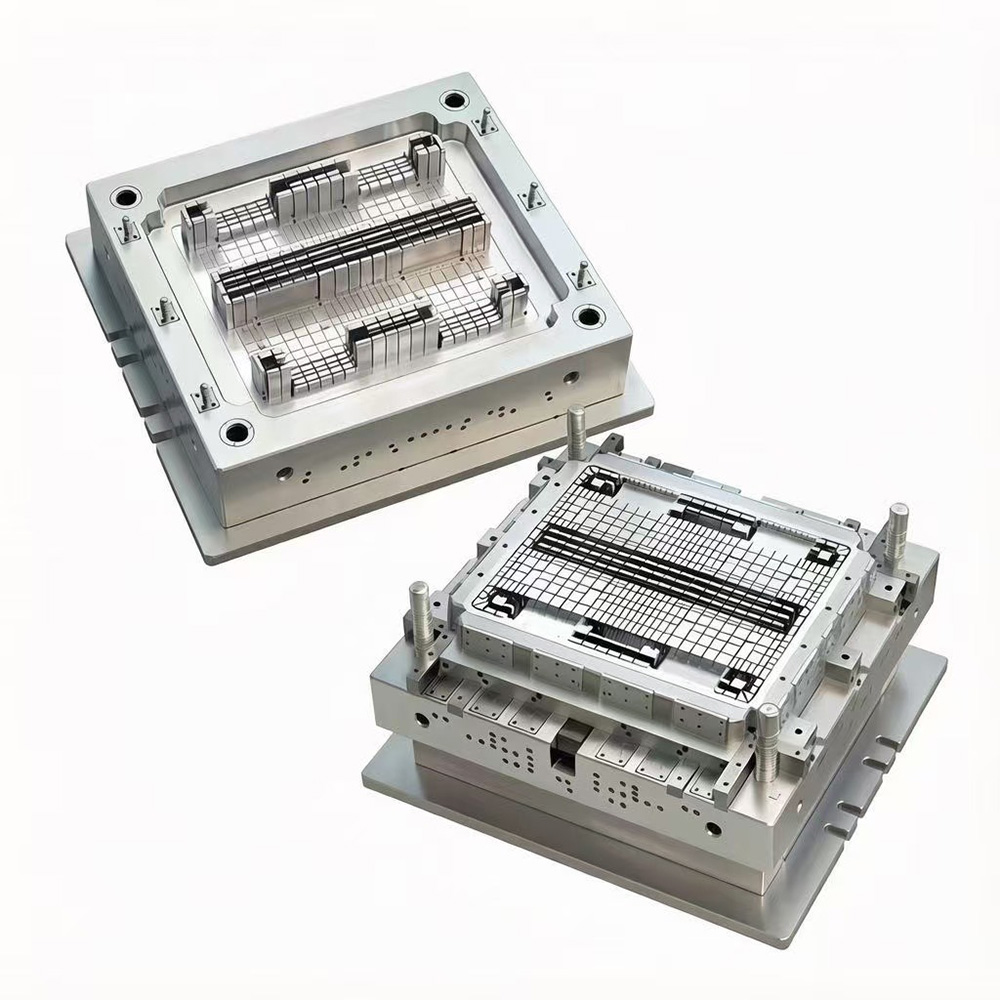
In high-tonnage industrial injection molding, cutting mold steel without digital validation is a high-risk financial gamble. Large-format components—such as heavy-duty logistics pallets, agricultural crates, and monoblock plastic chairs—require massive tool blocks (often weighing between 5 to 25+ tons) and complex multi-gate hot runner systems. Discovering structural or filling defects during physical T1 trials results in costly steel re-work, extended project timelines, and compromised mold structural integrity.
Advanced Computer-Aided Engineering (CAE) Mold Flow Analysis (MFA) acts as a predictive virtual trial. By accurately simulating rheological melt behavior, thermal dissipation, volumetric shrinkage, and cavity pressure distribution, engineers can identify and eliminate manufacturing defects during the 3D design phase. As a premier global manufacturing specialist in plastic crate molds, pallet molds, and plastic chair molds, ISMMOULD leverages deep-dive Mold Flow Analysis to ensure zero-defect tooling execution before a single block of steel is CNC-machined.
1. Critical Large-Part Defects Identified & Prevented by Mold Flow Analysis
Large structural molds are particularly vulnerable to flow front instability. MFA directly addresses four primary structural failures:
- Weld Line Positioning & Structural Weakness: When melt fronts meet after navigating complex lattice rib networks in crate bottoms or pallet decks, cold weld lines can reduce local mechanical strength by up to 50%. MFA allows engineers to adjust gate locations or melt temperatures to push weld lines into non-load-bearing zones.
- Air Traps & Diesel Effect Burning: Entrapped air in deep rib corners or rim sections compresses under high filling speeds, causing localized carbon burning and incomplete filling. Simulation pinpoints exact air trap locations to integrate precise micro-venting insert pins.
- Differential Volumetric Warpage & Bowing: Non-uniform packing pressure causes heavy pallet decks and long chair legs to twist or warp upon cooling. MFA calculates volumetric shrinkage variations and optimizes wall-to-rib thickness ratios to ensure parts meet tight flatness tolerances (e.g., < 1.0mm).
- Hesitation & Short Shots: High flow resistance in thin ribs can cause the melt to hesitate, freezing prematurely before filling thicker sections. MFA optimizes wall thickness transitions and gate sequencing to maintain continuous, balanced flow fronts.
2. Technical Matrix: Pre-Steel Simulation Parameters vs. Real-World Tooling Impact
The table below details how ISMMOULD converts Mold Flow simulation data into direct tooling engineering decisions:
| Simulation Metric | Predictive CAE Analysis Output | ISMMOULD Tooling Optimization Action |
|---|---|---|
| Fill Pattern & Pressure Drop | Identifies required injection pressure and maximum clamp force limits (e.g., verifying 2,800T press suitability). | Optimizes runner diameters and configures Sequential Valve Gate (SVG) opening timelines to balance filling pressures. |
| Fiber Orientation & Shrinkage | Maps anisotropic shrinkage vectors in glass-filled or recycled PP/HDPE resins. | Applies windage (pre-deformation) adjustments to core and cavity 3D CAD models to guarantee post-molding part flatness. |
| Cooling Circuit Efficiency | Displays localized hot spots and thermal gradients across deep pallet foot cores and crate corners. | Integrates high-conductivity Beryllium Copper (BeCu) core inserts and optimizes conformal/gun-drilled cooling line layouts. |
| Shear Rate & Stress Distribution | Detects excessive shear stress near valve gate nozzles that could degrade resin molecular weight. | Enlarges gate land sizes and adjusts valve pin opening speeds to preserve polymer mechanical integrity. |
3. Deep-Dive: Product Line Optimization at ISMMOULD
A. Heavy-Duty Pallet Molds
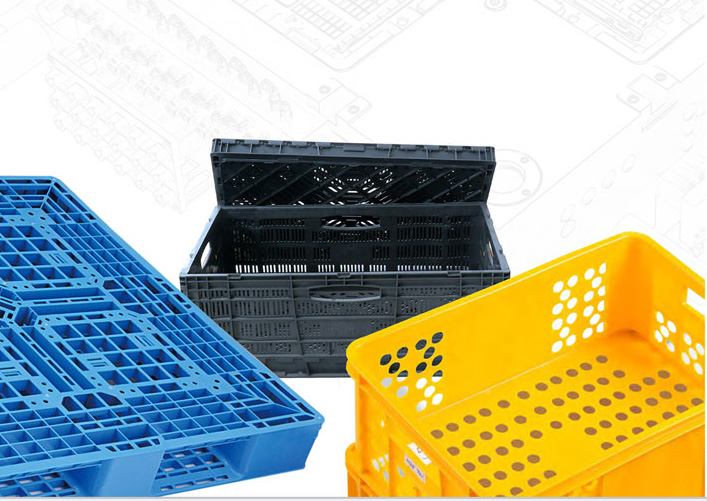
Pallets feature extensive surface areas with deep support legs. Through MFA, ISMMOULD determines the optimal number of hot runner drops (e.g., 6-drop or 8-drop SVG systems). By sequentially opening gates as the fluid front advances, we prevent multi-front collisions, reduce clamping force requirements by 15–20%, and ensure uniform strength across all deck load points.
B. Plastic Crate Molds (Agricultural, Bottling & Folding)
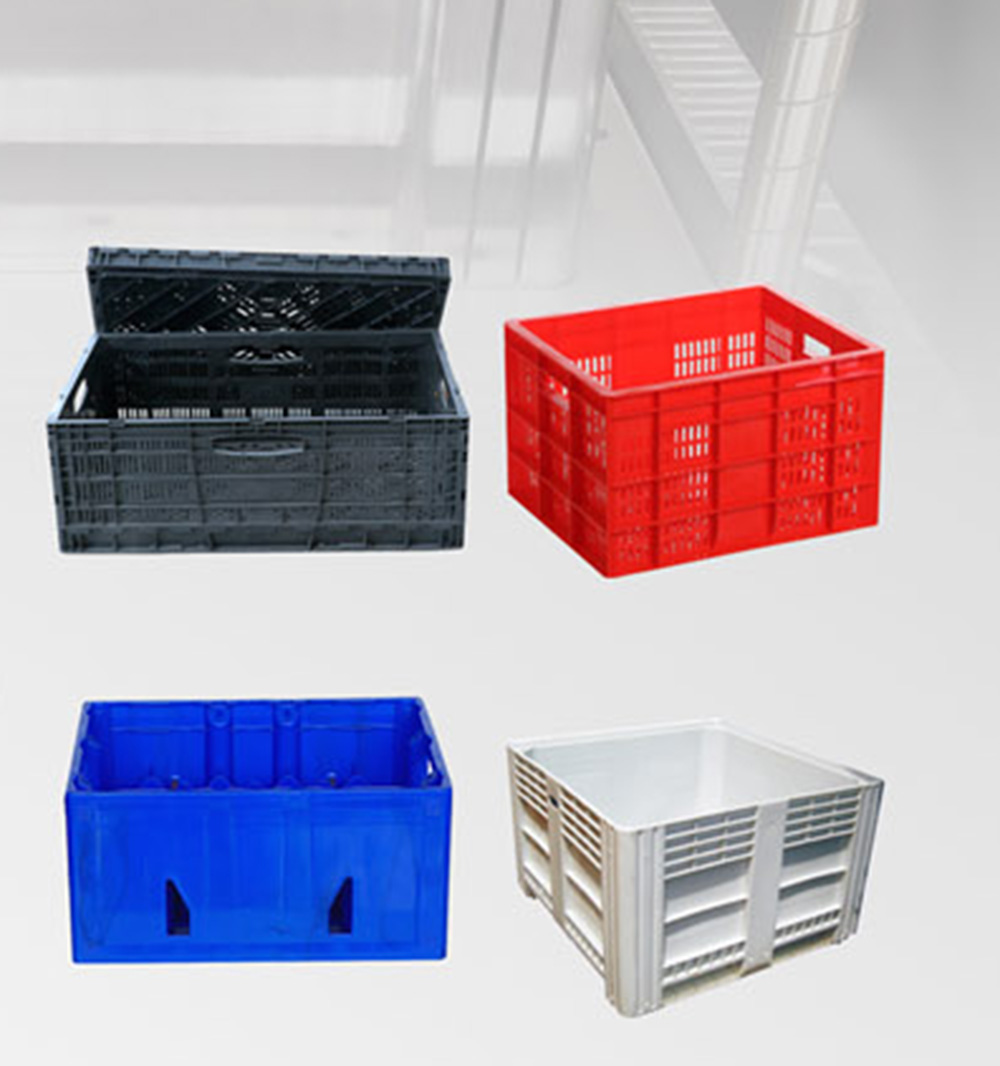
Crate designs rely on intricate lattice ribbing to maximize top-load stacking strength while minimizing resin weight. Mold Flow simulation allows ISMMOULD to fine-tune rib-to-wall thickness ratios (typically 0.6:1), eliminating surface sink marks on outer cosmetic faces and facilitating rapid filling without gas entrapment.
C. Plastic Chair Molds (Monoblock & Ergonomic Seating)
For plastic monoblock chairs, gas-assisted or conventional, structural safety and aesthetic perfection are mandatory. MFA predicts exact cooling phase behavior across thick leg-to-seat transitions, enabling ISMMOULD to eliminate internal void formation and post-mold warpage, ensuring comfortable, safe, and durable seating.
4. The ROI of Mold Flow Analysis for B2B Tooling Buyers
Incorporating comprehensive Mold Flow Analysis prior to steel cutting provides immediate operational and financial advantages:
- Elimination of Steel Modification Costs: Prevents expensive tool modifications—such as re-machining core heights or relocating hot runner drops—after T1 sampling.
- Compressed Lead Times: Reduces total trial iterations from 4–5 rounds down to 1–2 successful trials, accelerating time-to-market.
- Optimized Cycle Times: Identifies thermal hot spots early, enabling targeted cooling designs that reduce overall cycle times by 10% to 25%.
- Recycled Material Flexibility: Accurately predicts flow variances when switching between virgin resins and Post-Consumer Recycled (PCR) HDPE/PP mixtures.
5. ISMMOULD: Your Trusted Global Expert for Crate, Pallet & Chair Molds
At ISMMOULD, we bridge state-of-the-art CAE digital engineering with master toolmaking craftsmanship. As an established manufacturer specializing strictly in high-precision, heavy-duty injection tooling, we provide complete engineering transparency—delivering comprehensive Mold Flow reports, cooling simulations, and DFM (Design for Manufacturing) evaluations prior to steel procurement. Partner with ISMMOULD to build reliable, high-efficiency molds designed for millions of defect-free cycles.
Request Your Technical Mold Flow Evaluation Today
Planning a new plastic crate, heavy-duty pallet, or chair molding project? Contact the engineering specialists at ISMMOULD today to request a comprehensive Mold Flow Analysis, discuss design optimization, or receive a tailored tooling quotation.