
In the world of industrial logistics and material handling, plastic crates are the backbone of efficient supply chains. Used in warehouses, distribution centers, manufacturing facilities, and retail environments, these crates must withstand heavy loads, repeated handling, and demanding operational conditions.
One of the most common—and frustrating—challenges in plastic crate manufacturing is warpage and deformation. A crate that does not sit flat, stack properly, or maintain its intended shape can cause:
Stacking instability leading to safety hazards
Automated handling system failures (conveyors, robotic pickers)
Reduced load capacity and product damage
Increased rejection rates and material waste
Customer dissatisfaction and lost business
At ISM, we have dedicated ourselves to solving these challenges through advanced mold design and process optimization. This article explores the root causes of warpage in plastic crates and provides a comprehensive guide to how ISM's engineering approach delivers flat, dimensionally stable, high-quality crates—shot after shot.
Understanding Warpage: What Causes It?
Warpage in injection molded plastic crates occurs when uneven shrinkage creates internal stresses that distort the part after ejection. Several factors contribute to this phenomenon:
1. Non-Uniform Cooling
Cooling accounts for 70–80% of the injection molding cycle time. If certain areas of the crate cool faster than others, differential shrinkage occurs. Thick sections (such as ribs, corners, and edges) cool more slowly than thin sections (such as walls), creating internal stresses that manifest as warpage.
2. Uneven Melt Flow
If the molten plastic does not fill the cavity uniformly, variations in molecular orientation and packing pressure occur. Areas that fill later may have different shrinkage characteristics, leading to distortion.
3. Inadequate Packing Pressure
Insufficient packing pressure can lead to voids and uneven material distribution, while excessive pressure can create residual stresses that cause post-mold warpage.
4. Poor Part Design
Features such as uneven wall thickness, insufficient ribbing, or lack of structural support can predispose a crate to warpage regardless of mold quality.
5. Improper Processing Parameters
Melt temperature, mold temperature, injection speed, and holding pressure all influence the final part's dimensional stability. Suboptimal settings can exacerbate warpage issues.
The ISM Approach: Mold Design Solutions for Warpage Prevention
At ISM, we believe that warpage prevention begins with superior mold design. Our comprehensive approach addresses every factor that contributes to dimensional instability.
Solution 1: Advanced Cooling System Design
The Challenge: Uneven cooling is the primary cause of warpage in large plastic crates. Traditional straight-drilled cooling channels often fail to extract heat uniformly from complex geometries.
The ISM Solution: ISM molds incorporate conformal cooling technology—cooling channels that follow the exact contour of the crate's geometry. This advanced approach ensures:
Uniform heat extraction across thick and thin sections
Reduced cooling time by 15–25%
Minimized thermal gradients that cause warpage
Consistent crystallinity for stable dimensions
We use computational fluid dynamics (CFD) simulation to optimize cooling channel placement, flow rates, and temperature distribution before any steel is cut. This predictive approach eliminates hotspots and ensures balanced cooling across the entire cavity.
Key Cooling Strategies:
| Area | Cooling Approach |
|---|---|
| Base/Walls | Conformal channels following contour |
| Corners | Enhanced cooling with additional circuits |
| Ribs/Reinforcements | Targeted cooling to match thicker sections |
| Edges/Rims | Dedicated cooling to prevent curling |
Solution 2: Balanced Melt Flow and Filling
The Challenge: Uneven filling creates variations in molecular orientation and packing pressure, leading to differential shrinkage and warpage.
The ISM Solution: ISM molds feature optimized runner systems and gate placement designed for balanced filling:
Hot runner systems with individual nozzle temperature control
Geometrically balanced flow channels ensuring equal melt travel distance
Strategic gate placement to promote uniform flow fronts
Computer-aided engineering (CAE) simulation to predict and eliminate flow imbalances
Gate Placement Optimization:
Multiple gates for large crates to reduce flow length
Gate location selected to promote balanced filling
Valve gate sequencing to control melt front progression
Gate size optimization to balance shear and pressure
Solution 3: Structural Design Optimization
The Challenge: Poor part design—such as uneven wall thickness or inadequate ribbing—can make a crate inherently prone to warpage.
The ISM Solution: We work collaboratively with customers during the design phase to optimize crate geometry for manufacturability:
Uniform wall thickness wherever possible to minimize differential shrinkage
Proper rib-to-wall ratios (typically 50–70% of wall thickness) to prevent sink marks
Structural reinforcements strategically placed to resist deformation
Draft angles optimized for ejection without distortion
Design Guidelines:
| Parameter | Recommended Practice |
|---|---|
| Wall Thickness | Maintain within ±10% variation |
| Rib Thickness | 50–70% of nominal wall |
| Corner Radii | Minimum 0.5–1.0mm to reduce stress concentration |
| Draft Angle | 1–3° depending on texture depth |
Solution 4: Precision Mold Construction
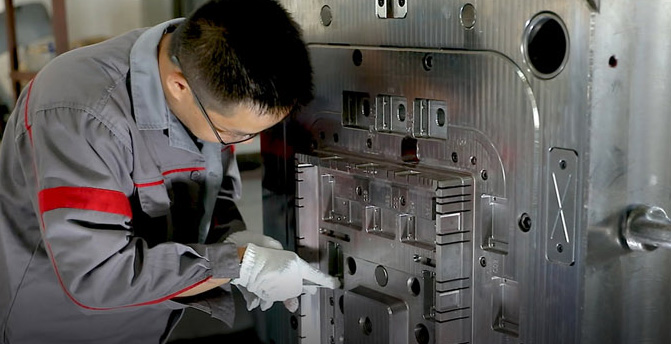
The Challenge: Even the best design will fail if the mold itself lacks precision. Misalignment, poor surface finish, or inadequate venting can contribute to warpage.
The ISM Solution: ISM molds are manufactured to the highest standards:
Premium tool steel with excellent thermal conductivity and wear resistance
High-speed CNC machining achieving micron-level tolerances
Precision alignment systems ensuring perfect cavity closure
Adequate venting to prevent air trapping and incomplete filling
Mirror-finish surfaces for smooth ejection and reduced friction
Solution 5: Process Optimization Support
The Challenge: Even a perfectly designed mold can produce warped parts if processing parameters are not optimized.
The ISM Solution: Our commitment extends beyond mold delivery. We provide comprehensive process optimization support to help customers achieve optimal results:
| Parameter | Optimization Goal |
|---|---|
| Melt Temperature | Balance flowability with material stability |
| Mold Temperature | Optimize for uniform cooling and cycle time |
| Injection Speed | Prevent jetting while ensuring complete fill |
| Packing Pressure | Achieve proper density without over-packing |
| Packing Time | Allow sufficient time to gate freeze |
| Cooling Time | Balance dimensional stability with cycle efficiency |
We also provide DOE (Design of Experiments) support to help customers identify optimal processing windows for their specific materials and production conditions.
The ISM Quality Assurance Process
Every ISM crate mold undergoes rigorous testing and validation before delivery:
Phase 1: Design Review
CAE flow analysis to predict filling and cooling
Structural analysis to verify strength requirements
Design for manufacturability (DFM) assessment
Phase 2: Manufacturing Validation
In-process inspection at each manufacturing stage
Coordinate measuring machine (CMM) verification of critical dimensions
Surface finish and texture verification
Phase 3: Trial and Optimization
On-site or in-house trial runs
Part inspection for dimensions, flatness, and warpage
Process parameter optimization
Cycle time validation
Phase 4: Documentation and Training
Comprehensive mold documentation
Maintenance guidelines and spare parts list
Operator training for mold setup and care
Real-World Results: What ISM Customers Experience
Manufacturers who choose ISM crate molds consistently report:
| Metric | Before ISM Optimization | After ISM Optimization |
|---|---|---|
| Warpage/Flatness Deviation | 3–5mm | <1mm |
| Rejection Rate | 5–8% | <1% |
| Cycle Time | 45–60 seconds | 35–45 seconds |
| First-Pass Yield | 85–90% | 98%+ |
| Tool Life | 1–2 million cycles | 5+ million cycles |
Common Crate Types and ISM Solutions
| Crate Type | Common Warpage Issues | ISM Solution |
|---|---|---|
| EU Standard Crates | Corner warpage, base sagging | Enhanced corner cooling, reinforced base design |
| VDA Automotive Crates | Dimensional precision for automation | Ultra-precise cooling, tight tolerance control |
| Foldable Crates | Hinge area distortion | Targeted cooling, reinforced hinge design |
| Heavy-Duty Industrial Crates | Base deflection under load | Structural rib optimization, uniform wall thickness |
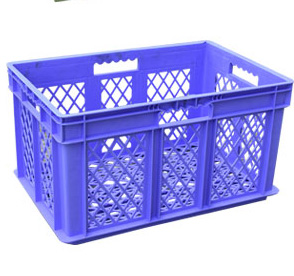
| Perforated/Ventilated Crates | Warpage around openings | Optimized gate placement, balanced flow |
Conclusion: Precision Molds for Dimensionally Stable Crates
Warpage and deformation in plastic crates are not inevitable. With advanced mold design, precision manufacturing, and optimized processing, manufacturers can achieve flat, dimensionally stable crates that meet the demanding requirements of modern logistics.
At ISM, we bring decades of experience in large plastic mold engineering to every project. From conformal cooling and balanced filling to structural optimization and process support, we provide the comprehensive solutions needed to eliminate warpage and deliver exceptional quality.
Whether you produce EU-standard crates for European logistics, VDA crates for automotive supply chains, or custom designs for specialized applications, ISM has the expertise and technology to help you succeed.
Choose ISM. Choose dimensionally stable crates. Choose quality that stacks up.