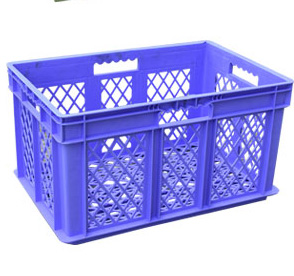

In the world of industrial logistics and material handling, plastic crates are the unsung heroes. They carry thousands of pounds of product, endure repeated stacking, withstand rough handling, and must do it all without deformation, warping, or failure.
Yet today's manufacturers face a seemingly contradictory demand: create crates that are strong enough to support heavy loads while being light enough to reduce material costs, shipping weight, and environmental impact.
This is the challenge of high-strength lightweighting—and it requires a fundamental rethinking of crate mold design.
At ISM, we have mastered this balance. Our advanced crate molds produce containers that support heavy loads without deformation, combining structural integrity with material efficiency. This article explores how we achieve this through structural optimization, precision engineering, and advanced material strategies.
The Challenge: Strength vs. Weight
The traditional approach to crate design involved a simple equation: more material equals more strength. But this approach comes with significant drawbacks:
| Traditional Approach | Consequence |
|---|---|
| Thicker walls | Higher material costs, longer cycle times |
| Heavy weight | Increased shipping costs, higher carbon footprint |
| Over-engineered | Reduced profitability, competitive disadvantage |
| Inflexible design | Limited optimization potential |
Today's market demands a different approach: maximum strength with minimum weight. This requires:
Strategic material distribution where it matters most
Structural optimization for load paths and stress distribution
Advanced mold technologies that enable complex geometries
Precision manufacturing to achieve design intent
The Science of Structural Optimization
At the heart of ISM's crate mold technology is structural optimization—placing material exactly where it is needed for maximum strength.
1. Rib Structure Design
Ribs are the backbone of lightweight crate strength. Properly designed ribs can increase stiffness by 200–300% with only 10–20% additional material.
ISM Rib Design Principles:
| Design Element | Optimization Strategy |
|---|---|
| Rib height | Optimized for moment of inertia |
| Rib thickness | 50–70% of nominal wall thickness to prevent sink marks |
| Rib spacing | Calculated based on load requirements |
| Rib direction | Aligned with primary load paths |
| Rib intersections | Reinforced to prevent stress concentration |
Types of Rib Structures:
Grid patterns for uniform load distribution
Radial ribs for point loads and stacking
Perimeter ribs for edge stiffness
Diagonal bracing for torsional rigidity
2. Wall Thickness Optimization
Uniform wall thickness is a myth in advanced crate design. ISM engineers use variable wall thickness to:
Place more material in high-stress areas
Reduce material in low-stress areas
Create smooth transitions to prevent stress concentration
Optimize cooling for consistent shrinkage
Typical Wall Thickness Ranges:
| Crate Area | Wall Thickness | Purpose |
|---|---|---|
| Base corners | 4–5mm | Stacking load concentration |
| Side walls | 2.5–3.5mm | Balance strength and weight |
| Base floor | 3–4mm | Load distribution |
| Ribs | 1.5–2.5mm | Stiffening without weight penalty |
| Handles | 3–4mm | Ergonomic strength |
3. Load Path Analysis
Understanding how forces flow through a crate is essential for efficient design. ISM uses finite element analysis (FEA) to:
Map stress distribution under various load conditions
Identify high-stress zones requiring reinforcement
Locate low-stress areas for material reduction
Optimize rib placement for maximum efficiency
Load Conditions Analyzed:
| Condition | Description | Design Focus |
|---|---|---|
| Static stacking | Crates stacked with uniform load | Compression strength, column strength |
| Dynamic loading | Forklift handling, conveyor impacts | Impact resistance, corner strength |
| Point loading | Concentrated loads from product | Localized reinforcement |
| Torsional loading | Twisting during handling | Diagonal bracing, corner reinforcement |
Material Selection Strategies
The right material is essential for achieving strength-to-weight goals. ISM works with a range of materials optimized for different applications.
Primary Materials
| Material | Properties | Best Applications |
|---|---|---|
| PP (Polypropylene) | Good impact resistance, chemical resistance, cost-effective | General-purpose crates, food contact |
| HDPE (High-Density Polyethylene) | Excellent impact strength, cold temperature performance | Heavy-duty crates, freezer applications |
| Copolymer PP | Enhanced impact strength, better fatigue resistance | High-cycle applications |
| Glass-filled PP | Increased stiffness, higher heat deflection | Heavy-load applications |
Material Enhancement Strategies
Glass Fiber Reinforcement:
10–30% glass fiber increases stiffness by 50–150%
Maintains lightweight while dramatically improving strength
Trade-off: Reduced impact strength at high glass content
Impact Modifiers:
Improve toughness without sacrificing stiffness
Essential for cold-temperature applications
Maintain lightweight properties
Anti-Static Additives:
Prevent static buildup for electronic applications
Maintain structural properties
Safe for sensitive components
Mold Design for High-Strength Lightweighting
Achieving complex structural designs requires advanced mold technologies. ISM's molds are engineered specifically for high-strength lightweight applications.
1. Precision Cavity Machining
Complex rib structures and variable wall thickness require micron-level precision. ISM's manufacturing capabilities include:
5-axis CNC machining for complex geometries
High-speed machining for fine surface finishes
EDM (electrical discharge machining) for intricate details
CMM verification to ensure design accuracy
2. Advanced Cooling Systems
Complex geometries require sophisticated cooling to prevent warpage and ensure dimensional stability. ISM molds feature:
Conformal Cooling:
Cooling channels that follow complex rib structures
Uniform heat extraction across variable wall thickness
Reduced cycle times without compromising quality
Zone-Specific Cooling:
| Zone | Cooling Strategy |
|---|---|
| Base corners | Aggressive cooling for stacking areas |
| Rib structures | Targeted cooling to prevent sink marks |
| Side walls | Uniform cooling for flatness |
| Handle areas | Controlled cooling for ergonomic surfaces |
3. Robust Construction for Long Life
High-strength lightweight molds must withstand the demands of high-pressure injection and millions of cycles. ISM molds feature:
Premium tool steel with wear-resistant coatings
Reinforced mold bases to handle high injection pressures
Precision alignment systems for consistent closure
Interchangeable inserts for easy maintenance
Process Optimization for Strength and Lightweighting
Even the best mold design requires proper processing to achieve optimal strength-to-weight ratio.
Key Processing Parameters
| Parameter | Optimization Goal |
|---|---|
| Injection pressure | Complete fill without overpacking |
| Injection speed | Controlled filling to prevent stress |
| Melt temperature | Balanced flow without degradation |
| Mold temperature | Uniform cooling for dimensional stability |
| Packing pressure | Adequate packing for dense, strong parts |
| Cooling time | Sufficient for complete solidification |
Gas-Assisted Injection Molding
For extremely lightweight applications with high strength requirements, ISM offers gas-assisted injection molding technology:
How it works:
Nitrogen gas is injected into the melt stream
Gas creates hollow channels in thick sections
Material is displaced, not removed
Benefits:
20–40% weight reduction in thick sections
Increased stiffness through structural channels
Reduced cycle times due to hollow sections
Elimination of sink marks on thick ribs
Quality Assurance: Validating Strength and Lightweighting
Every ISM crate mold undergoes rigorous testing to verify that it achieves the intended balance of strength and weight.
1. Structural Testing
| Test | Purpose | Acceptance Criteria |
|---|---|---|
| Static stacking test | Verify load capacity under compression | No deformation beyond specification |
| Dynamic impact test | Verify resistance to handling impacts | No cracking or failure |
| Drop test | Verify durability under extreme conditions | No structural damage |
| Fatigue test | Verify performance over repeated cycles | Consistent performance |
2. Dimensional Verification
CMM inspection of critical dimensions
Warpage measurement to ensure flatness
Cavity-to-cavity comparison for consistency
3. Weight Verification
Weight measurement to confirm material savings
Weight distribution analysis for uniformity
Comparison to design targets
Real-World Results: What ISM Customers Experience
Manufacturers using ISM's high-strength lightweight crate molds consistently report:
| Metric | Traditional Mold | ISM Optimized Mold |
|---|---|---|
| Crate weight | Baseline | 15–30% reduction |
| Load capacity | Standard | Equal or improved |
| Deformation under load | 3–5mm | <1mm |
| Stacking height | 4–5 levels | 6–8 levels |
| Cycle time | Baseline | 10–20% reduction |
| Material cost | Baseline | 10–25% savings |
Industry Applications
| Industry | Application | ISM Solution |
|---|---|---|
| Automotive | Parts containers, assembly line crates | High-strength designs for heavy components |
| Food & Beverage | Bulk ingredient containers, bakery trays | FDA-compliant materials, lightweight design |
| Warehousing | Storage bins, distribution crates | Stackable designs, high load capacity |
| Retail | Display crates, merchandising containers | Aesthetic designs with structural integrity |
| Agriculture | Harvest bins, produce containers | Impact-resistant materials, drainage features |
Case Study: Heavy-Duty Industrial Crate
Challenge: A logistics company needed crates that could support 1,000 kg of stacked weight while reducing weight by 20% to lower shipping costs.
ISM Solution:
FEA analysis identified optimal rib placement
Variable wall thickness design with reinforced corners
20% glass-filled PP for enhanced stiffness
Conformal cooling for consistent quality
Results:
Crate weight: Reduced by 22%
Load capacity: 1,200 kg (exceeded target)
Deformation under full load: <0.8mm
Cycle time: Reduced by 15%
Customer ROI: Payback within 8 months
Conclusion: Strength Without Weight
The days of "more material equals more strength" are over. Today's leading manufacturers demand crates that are strong enough for the toughest applications yet light enough to reduce costs and environmental impact.
At ISM, we deliver this balance through:
Structural optimization that places material where it matters
Advanced materials that maximize strength-to-weight ratio
Precision mold engineering that enables complex geometries
Process expertise that ensures consistent quality
Whether you need crates for automotive parts, food processing, warehousing, or agricultural applications, ISM has the technology and expertise to help you achieve maximum strength with minimum weight.
Choose ISM. Choose strength without weight. Choose crates that perform.